
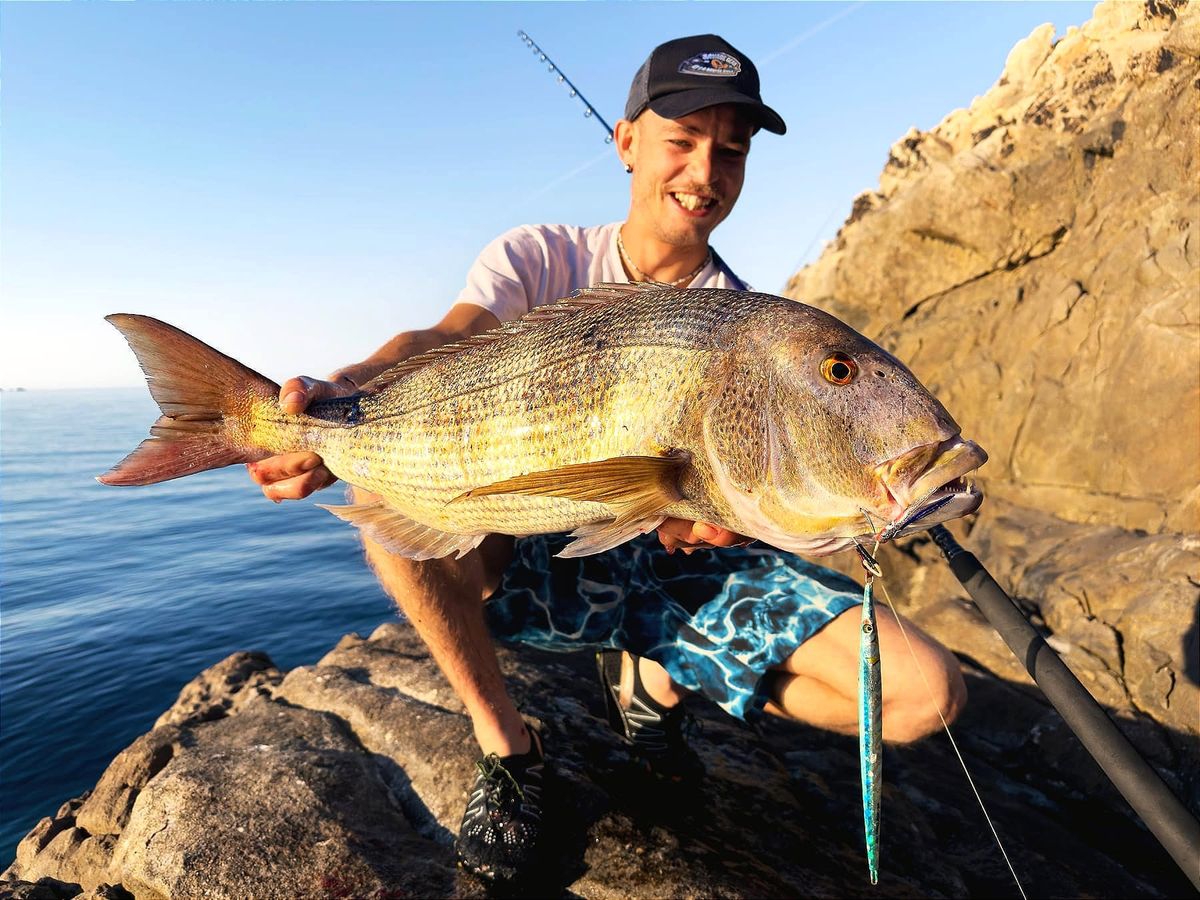
Che sia da un’alta scogliera o dal molo in una zona portuale, lo shore jigging è la tecnica di spinning più efficace per i grossi predatori. Canna, mulinello e filo devono essere della massima qualità.
foto in alto: Christian Laconi con un bellissimo dentice, pescato a inizio luglio da una scoglera del sud ovest sardo. Per l’occasione l’artificiale vincente è stato un long jig, armato con un unico amo in testa.
Partiamo subito con la domanda fondamentale: cos’è lo shore jigging? È una tecnica di spinning pesante, praticata in scogliere profonde o su moli artificiali a picco sul mare. È mirata a grosse prede, ai predatori più grandi del nostro mare quali ricciole, dentici, tonni, cernie, lampughe e barracuda. Si pratica utilizzando canne più potenti e più lunghe rispetto al classico spinning, mulinelli più grossi e esche più pesanti e delle volte anche più voluminose. Consiste nel lanciare un metal jig, facendolo cadere fino a toccare il fondo, per poi risalire con vigorose jiggate fin quasi alla superficie, a seconda della preda che vogliamo insidiare.

Canne da shore - La canna è il cuore dell'attrezzatura. Deve rispondere a esigenze tecniche specifiche, volte a garantire la capacità di lancio e la corretta gestione delle prede più grosse e combattive, come quelle che abbiamo già elencato. Il parametro fondamentale da tenere in considerazione è la lunghezza; canne tra 2,70 e 3,30 metri garantiscono lanci lunghi e precisi e favoriscono la gestione di una eventuale preda, anche impegnativa, da postazioni alte e impervie, come le scogliere. Le canne per il Mare Nostrum si possono dividere in due grandi categorie: light e strong. Le prime si usano con esche che non superano i 50 grammi. Le strong sono le più usate perché meglio si prestano al combattimento con grosse prede e hanno un range di potenza che varia da 60 a 150 grammi e in alcuni casi anche oltre.
Azione di pesca - Sono da preferire le canne che hanno un fusto con azione "media", spesso indicate con il termine moderate, moderate-fast, mentre non sono adatte quelle fast o extra-fast. Infatti, queste ultime sono troppo rigide e non conferiscono all’esca un nuoto naturale, "strappandola" con colpi molto bruschi che ne diminuiscono l’efficacia. Inoltre una canna troppo rigida è più faticosa da gestire e ci si stanca molto prima. Al contrario, le canne moderate attutiscono e assecondano le jerkate garantendo un nuoto ottimale e naturale al metal jig. Il fusto con azione progressiva fa si che lo sforzo si distribuisca su tutto il fusto e questo fa stancare i pesci durante il combattimento e velocizza il recupero.
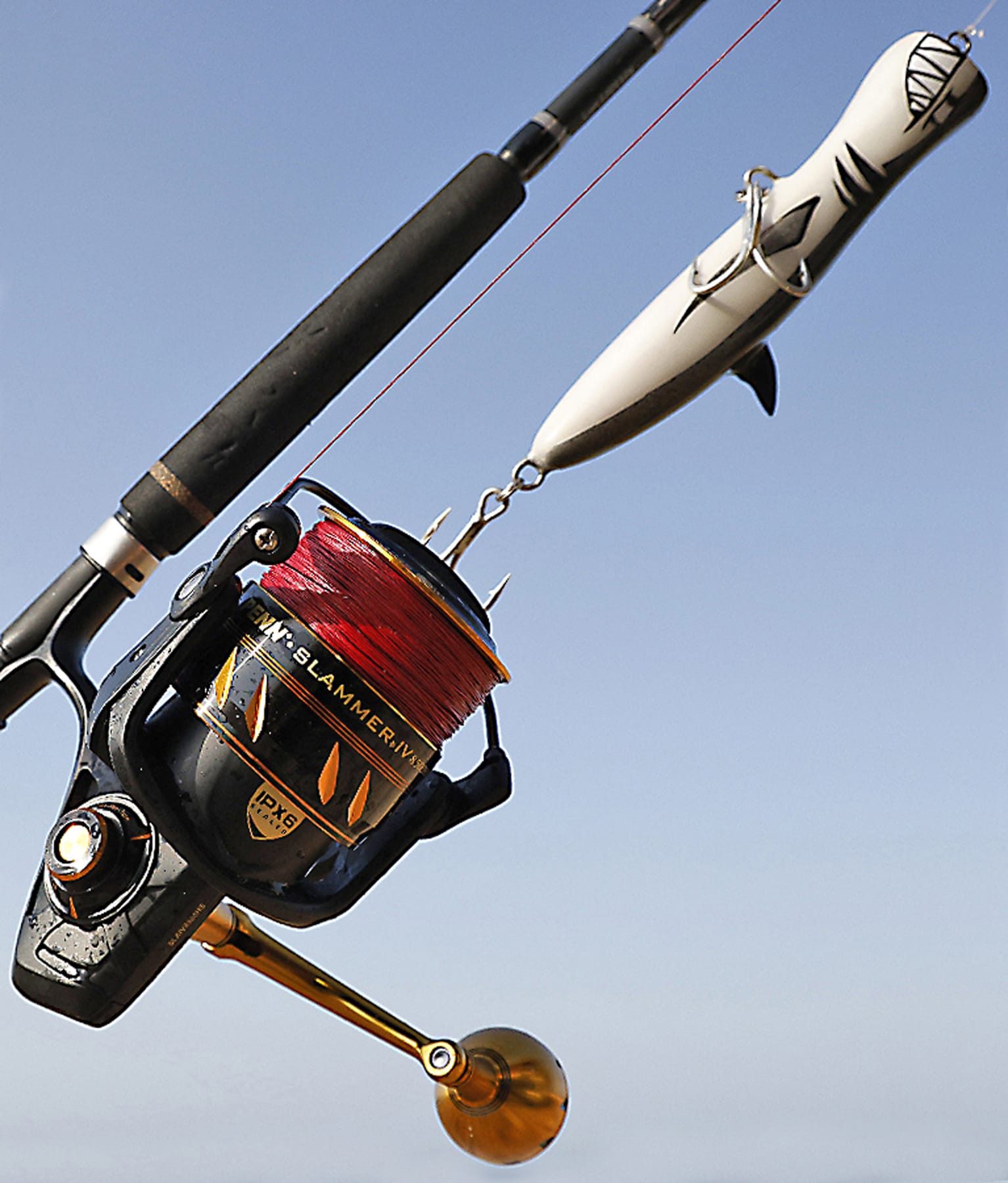
Mulinelli - Il mulinello per lo shore jigging deve rispettare tre caratteristiche fondamentali: taglia, meccanica, capacità di filo. La taglia supera i 5000, arrivando a 10000 nei modelli più grossi. Personalmente consiglio una via di mezzo, tra 6000 e 8000. La meccanica deve essere molto affidabile e robusta. Lo shore è una pesca che mette a dura prova il mulinello, specie nella frizione. E poi tutta la meccanica deve sopportare le sollecitazioni date dal continuo lancio di esche pesanti e dai combattimenti con grosse prede. Infine, una buona capacità di filo in bobina, con un minimo di 250 metri, è necessaria per contrastare le lunghe fughe dei pesci più grandi.
Rapporto di recupero - Il rapporto di recupero del mulinello, è molto importante. Si consiglia un valore di 5.7:1 (nei mulinelli Shimano sono i modelli HG), mentre è sconsigliato un rapporto di recupero più veloce, come il 6.1:1 (modelli XG). Può andare bene anche il 4.8:1 (modelli PG) ma il modello HG è quello che si adatta meglio alla tecnica e al giusto recupero degli artificiali. Anche la frizione e la sua taratura sono aspetti da studiare con attenzione. Un errore molto comune per chi pratica questa pesca è non trovare il giusto equilibrio nella regolazione della frizione. Nel dettaglio, se si chiude troppo la frizione e arriva lo strike di un pesce davvero grosso, si rischia una gestione approssimativa del pesce e la conseguente rottura del filo. Al contrario, se si lascia la frizione troppo “lenta” si corre il pericolo di non allamare bene il pesce e causare la nefasta slamata, senza avere mai il vero controllo nel recupero della preda. Un drag consigliato per lo strike e per un buon controllo della preda durante il combattimento, per chi pesca in Mediterraneo, si aggira tra i kg 3 e 5.
Trecciati e terminali - I trecciati utilizzati per lo shore jigging hanno un diametro compreso tra il Pe 2 (mm 0,23) e Pe 4 (mm 0,33); se poi il target è il tonno rosso si arriva a PE 3 (mm 0,28). Devono essere morbidi e di alta qualità per resistere a eventuali sfregamenti sulle rocce durante i combattimenti. È importante sottolineare che più il filo è grosso, minore è la gittata, e più aumenta l’attrito con l'acqua, compromettendo la regolarità del nuoto e la gestione del jig in caso di forti correnti o forte vento. Al trecciato in bobina si aggiunge il terminale in fluorocarbon. Questo varia a seconda del target e del fondale in cui si pesca. Si parte da uno 0,50 per pesci più sospettosi o acqua molto limpida, fino ad arrivare allo 0,70 per grossi pesci e fondali molto frastagliati. Vale anche in questo caso la ricerca della morbidezza e della resistenza all'abrasione. Personalmente utilizzo uno 0,60 che è una buona via di mezzo. La lunghezza del terminale varia da 1,5 metri 3, a seconda dei fondali in cui si pesca; fondali molto frastagliati o con elevato rischio di rottura richiedono un terminale più lungo.
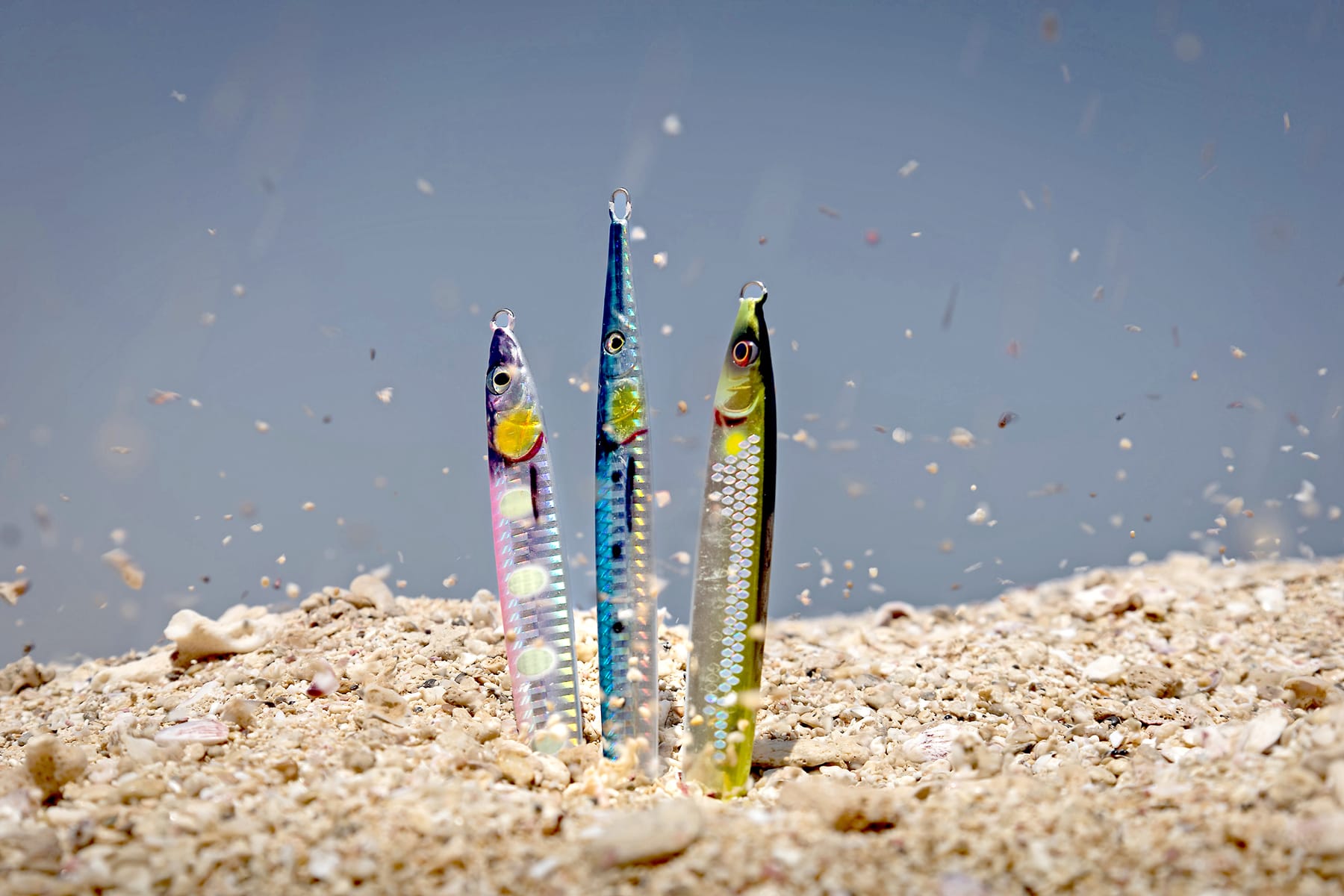
Short, long e slow - Il jig è l'esca principe di questa tecnica. Nella maggior parte dei casi sono in lega di piombo, ma ormai si usa anche il tungsteno che, a parità di peso, riduce il volume dell’esca. Esistono anche jig molto particolari in altre leghe a base di acciaio, ma sono molto più voluminosi. Si possono individuare 3 grandi famiglie: i long jig, gli short e gli slow. I long jig hanno un profilo allungato che nella maggior parte dei casi è simmetrico, con il peso distribuito più spesso al centro o in coda garantendo lanci lunghissimi anche con forte vento. Solitamente i long jig sono esche "veloci", quindi si prestano bene a recuperi frenetici, imitando un pesce in fuga. Sono la scelta migliore in caso di mareggiata, forte vento o forti correnti, appunto perché la loro forma allungata offre meno resistenza, mantenendo il loro nuoto e raggiungono in fretta il fondo. Gli short jig sono più compatti e larghi, con il peso distribuito solitamente al centro o in testa, ma ci sono jig che hanno il peso anche verso la coda. Questi jig hanno un nuoto molto vivace e irregolare con uno sfarfallio più accen- tuato anche in fase di caduta o discesa verso il fondo. Sono esche versatili e sono particolarmente consigliate quando si vuole star più vicino al fondo alla ricerca di pesci che abitano gli strati più bassi d'acqua. Gli slow jig (jig lenti) sono l'imitazione di un pesce ferito o moribondo, di solito hanno un profilo asimmetrico con il peso distribuito al centro. Scendono verso il fondo molto lentamente in assetto orizzontale e se animati con jiggate producono sfarfallii durante le sbandate. Danno il loro meglio in assenza di correnti e mare calmo in modo che il loro nuoto non venga snaturato. Sono usati in barca nello slow pitch e sono ottimi anche da terra. Per utilizzare al meglio le esche bisogna prima intuire quale pesce foraggio è presente nello spot.
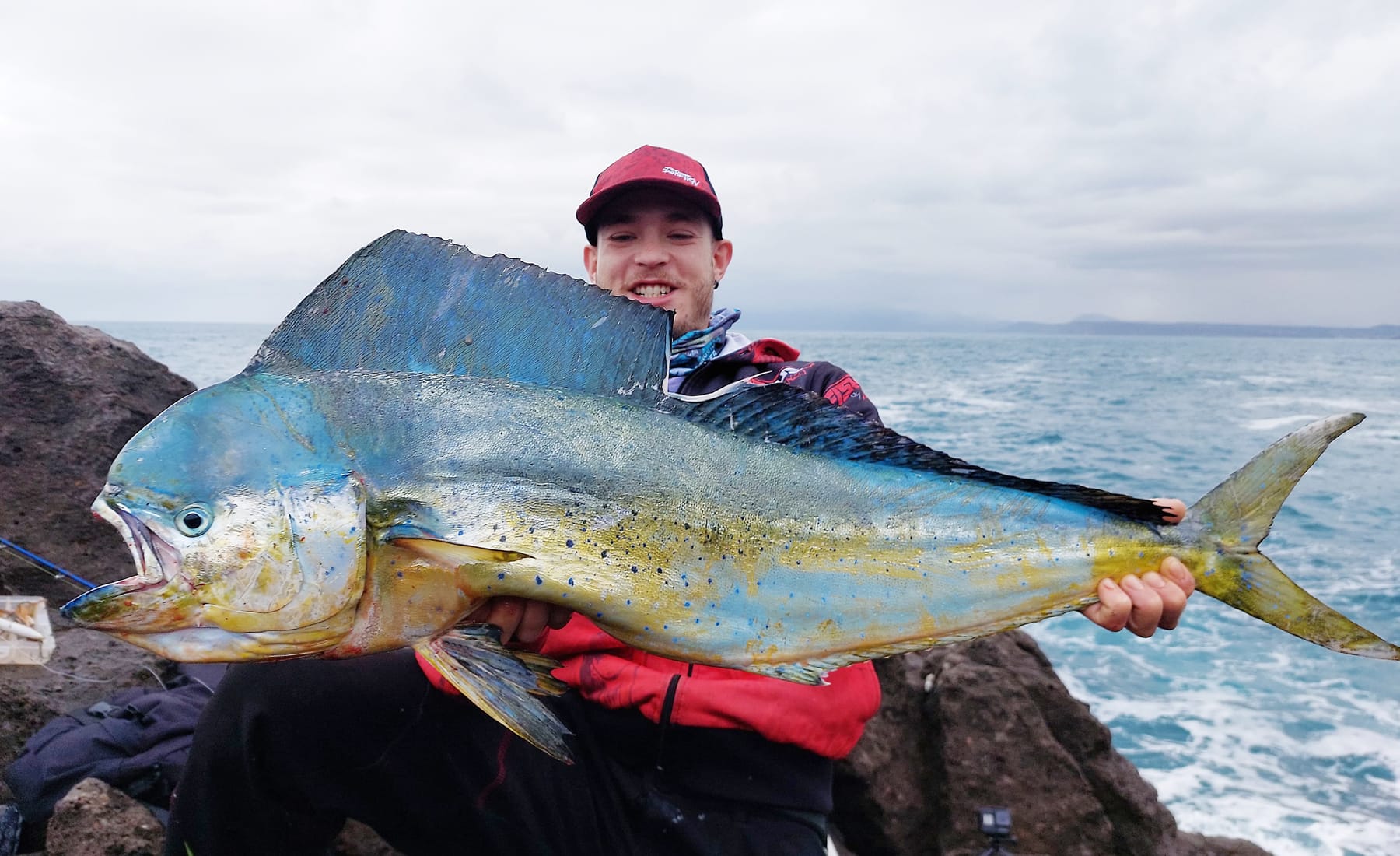
Altre esche - Nello shore jigging si possono utilizzare altre esche "pesanti" per completare l’arsenale a disposizione. Prime fra tutte, le gomme, da 50 a 120 grammi, che possono essere una buona scelta quando si ricercano pesci di fondo quali cernie o dentici. Le stickbait e più in generale le grosse esche munite di paletta, sono efficaci in caso di pelagici in caccia sui primi strati d'acqua subito sotto la superficie quali, ricciole o tonni. Ci sono anche delle stickbait molto pesanti chiamate jig minnow, molto efficaci in tutti gli strati d'acqua su qualsiasi predatore. Il grosso popper, in caso di mangianze o pesce che caccia a galla, può risultare molto produttivo sempre con tonni o ricciole.
English version
Whether from a high cliff or a dock in a harbor area, shore jigging is the most effective spinning technique for large predators. Rod, reel, and line must be of the highest quality.
Let's start with the fundamental question: what is shore jigging? It is a heavy spinning technique practiced on deep reefs or artificial piers overlooking the sea. It targets large prey, the largest predators in our seas, such as amberjack, snapper, tuna, grouper, dolphinfish, and barracuda. It is practiced using more powerful and longer rods than traditional spinning rods, larger reels, and heavier, sometimes even bulkier, lures. It involves casting a metal jig, letting it fall until it touches the bottom, and then vigorously jigging it back up almost to the surface, depending on the prey you're targeting.
Shore Rods - The rod is the heart of the rig. It must meet specific technical requirements, aimed at ensuring casting ability and proper management of larger and more combative prey, such as those already listed. The key parameter to consider is length; rods between 2.70 and 3.30 meters guarantee long and accurate casts and facilitate the management of even challenging prey from high and inaccessible locations, such as cliffs. Rods for the Mediterranean Sea can be divided into two broad categories: light and strong. The former are used with lures weighing no more than 50 grams. Strong rods are the most popular because they are better suited to fighting large prey and have a casting weight range from 60 to 150 grams, and in some cases even more.
Fishing Action - Rods with a "medium" action blank, often referred to as moderate or moderate-fast, are preferable; fast or extra-fast rods are not suitable. In fact, the latter are too stiff and don't give the bait a natural swimming action, "tearing" it with very sharp jerks that reduce its effectiveness. Furthermore, an overly stiff rod is more difficult to handle and tires much faster. Conversely, moderately stiff rods soften and accommodate jerks, ensuring optimal and natural swimming action for the metal jig. A progressive action blank distributes the load throughout the blank, which tires fish during the fight and speeds up the retrieve.
Reels - A reel for shore jigging must meet three fundamental characteristics: size, mechanics, and line capacity. The size exceeds 5000, reaching 10000 for the largest models. Personally, I recommend a middle ground, between 6000 and 8000. The mechanics must be very reliable and robust. Shore jigging is a type of fishing that puts a lot of strain on the reel, especially the drag. And then all the mechanics must withstand the stresses of continuously casting heavy lures and fighting large fish. Finally, a good line capacity, with a minimum of 250 meters, is necessary to counteract the long runs of larger fish.
Gear Ratio - The reel's gear ratio is very important. A ratio of 5.7:1 is recommended (for Shimano reels, these are HG models), while a faster gear ratio, such as 6.1:1 (XG models), is not recommended. A 4.8:1 ratio (PG models) may also work, but the HG model is best suited to the technique and proper lure retrieval. The drag and its calibration are also aspects that must be carefully considered. A very common mistake for those who practice this type of fishing is not finding the right balance in the drag adjustment. Specifically, if you tighten the drag too much and a really large fish strikes, you risk sloppy fish management and consequent line breakage. Conversely, if you leave the drag too loose, you run the risk of not hooking the fish properly and causing a disastrous unhooking, leaving you without any real control over the fish's recovery. A recommended drag for striking and good fish control during the fight, for those fishing in the Mediterranean, is between 3 and 5 kg.
Braided Lines and Leaders - The braided lines used for shore jigging range in diameter from PE 2 (0.23 mm) to PE 4 (0.33 mm); if the target is bluefin tuna, PE 3 (0.28 mm) is used. They must be supple and of high quality to withstand any friction against rocks during a fight. It's important to note that the thicker the line, the shorter the cast, and the greater the friction with the water, compromising the jig's swimming action and control in strong currents or winds. A fluorocarbon leader is added to the braided line on the reel. This varies depending on the target and the seabed being fished. It starts with 0.50 for more wary fish or very clear water, up to 0.70 for large fish and very rugged seabeds. Here too, the focus is on suppleness and abrasion resistance. Personally, I use a 0.60 gauge, which is a good compromise. The length of the leader varies from 1.5 to 3 meters, depending on the seabed you're fishing; very rugged seabeds or those with a high risk of breakage require a longer leader.
Short, long, and slow - The jig is the main lure for this technique. Mostly lead alloys, but tungsten is also used, which, for the same weight, reduces the lure's bulk. There are also very special jigs made from other steel-based alloys, but they are much bulkier. Three main families can be identified: long jigs, short jigs, and slow jigs. Long jigs have an elongated profile that is mostly symmetrical, with the weight distributed more heavily in the center or tail, ensuring very long casts even in strong winds. Long jigs are typically "fast" lures, so they lend themselves well to frenetic retrieves, imitating a fleeing fish. They're the best choice in rough seas, strong winds, or strong currents, precisely because their elongated shape offers less resistance, maintaining their swimming motion and quickly reaching the bottom. Short jigs are more compact and wider, with the weight usually distributed in the center or at the head, but some jigs also have the weight toward the tail. These jigs have a very lively and erratic swimming action, with a more pronounced flickering even when falling or descending to the bottom. They're versatile lures and are particularly recommended when you want to stay closer to the bottom in search of fish that inhabit the shallower water layers. Slow jigs imitate an injured or dying fish; they usually have an asymmetrical profile with the weight distributed in the center. They sink to the bottom very slowly in a horizontal position, and when jigged, they produce flickering sounds as they swerve. They perform best in calm seas and with no currents, so their swimming action is not distorted. They are used on boats with slow pitch techniques and are also excellent from shore. To best utilize the bait, you must first determine the type of forage fish present in the spot.
Other lures - In shore jigging, other "heavy" lures can be used to complete your arsenal. First and foremost, soft baits, weighing 50 to 120 grams, can be a good choice when targeting bottom-dwelling fish such as grouper or snapper. Stickbaits, and more generally large lip-type baits, are effective for pelagic fish hunting in the shallows just below the surface, such as amberjack or tuna. There are also very heavy stickbaits called jig minnows, which are very effective in all water layers on any predator. A large popper, when targeting feeding frenzies or surface-hunting fish, can be very productive for tuna or amberjack.


Commenti ()