
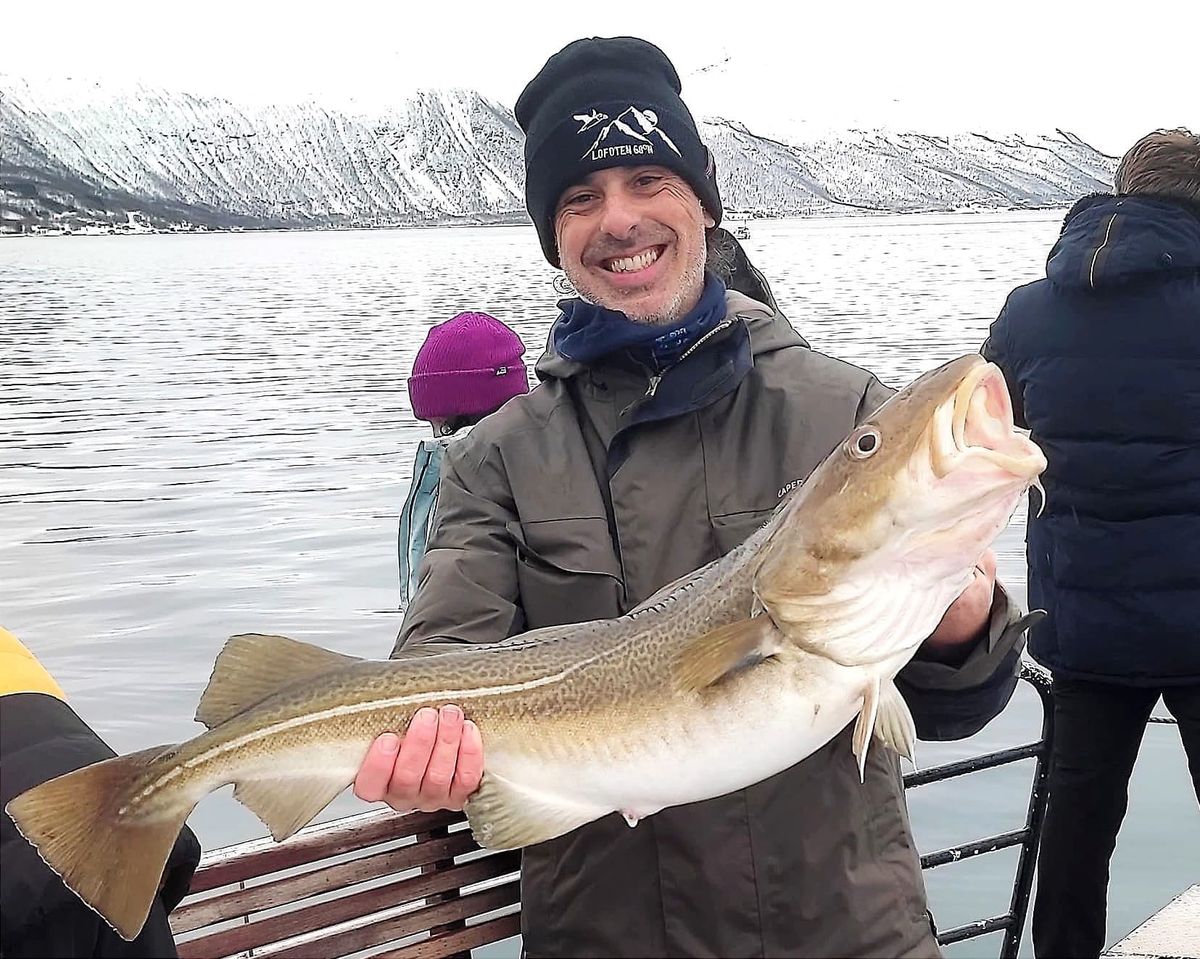
Anche se alla ricerca dell’aurora boreale di fine inverno, il nostro autore non può rinunciare a un lancio o una calata nel freddo mare norvegese, nella speranza di catturare almeno un merluzzo, quello vero!
foto sopra: l'autore mostra il merluzzo nordico, con il peculiare unico "baffo" e l'evidente linea laterale, due caratteristiche distintive di questa specie.
Viaggiare è il modo migliore per venire a contatto con nuove culture, usanze, tradizioni di popolazioni più o meno vicine alle nostre mediterranee, e nelle mie trasferte, cerco sempre di inserire nuovi tasselli di conoscenza sui luoghi che visito, soprattutto per quello che riguarda pesca, pescatori e pesci. A marzo ho avuto l’occasione di passare qualche giorno a Tromsø, Norvegia, a circa 400 chilonetri a nord del Circolo Polare Artico. L’obiettivo primario del viaggio non era la pesca, ma la caccia, quella delle fantastiche e leggendarie aurore boreali che alla fine dei mesi invernali dipingono la tela del cielo notturno scandinavo. Ma di leggendario, per quella nazione, vi è anche un pesce: il merluzzo nordico. Rappresentante dell’ordine Gadiformes, a cui appartengono anche pesci del Mediterraneo come i naselli e le mostelle, il merluzzo è una specie ampiamente pescata nell’Atlantico settentrionale e per la Norvegia rappresenta una cospicua componente del Pil, grazie alla sua esportazione in diverse aree dell’Europa, principalmente sotto forma di stoccafisso e baccalà, rispettivamente la versione essiccata e sotto sale, e in tutto il Mondo, sotto forma dei noti “bastoncini” di pesce e altri derivati. Nonostante la visita a Tromsø non fosse nata con fini alieutici riesco comunque a ricavarmi qualche ora da dedicare alla pesca da una imbarcazione, nel tentativo di avere a che fare con almeno uno di questi pesci.
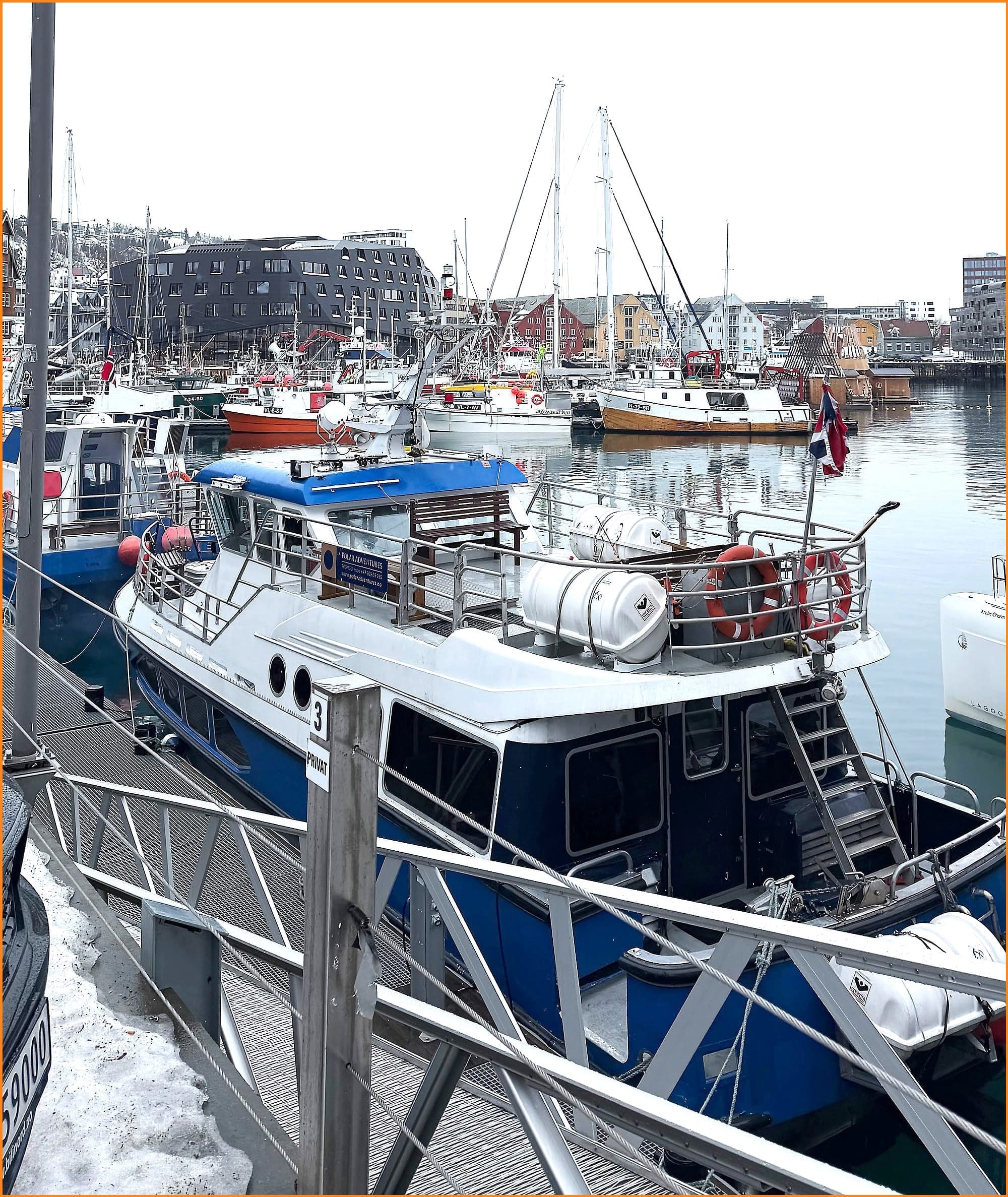
Partenza - Si parte dal suggestivo e colorato porto in una giornata nuvolosa in cui cade anche qualche fiocco di neve e la nostra imbarcazione si dirige a nord verso il fiordo di Tønsvik, dove in questo periodo dell’anno iniziano a raggrupparsi i merluzzi per la riproduzione. La temperatura esterna è poco sotto lo zero e la leggera brezza è gelata, ma non riesco a rimanere nel ventre caldo dell’imbarcazione perché il panorama è mozzafiato: siamo a cavallo tra il Mare del Nord e l’Oceano Glaciale Artico, si vedono in volo diverse specie di gabbiani e le maestose aquile di mare, che in queste acque trovano nutrimento per via della presenza di immensi banchi di aringhe. Quando lambiamo la terraferma, sulla neve vedo rincorrersi le volpi e le renne brucare le prime gemme sugli alberi.
La pesca - Mentre navighiamo parlo con la guida di pesca per capire dove si andrà a cercare il merluzzo e quale tecnica sarà utilizzata per catturarlo. La ragazza mi spiega che i punti più pescosi sono i canali di confluenza tra due fiordi, dove avviene un forte rimescolamento delle acque legato allo scontro tra la marea entrante e quella uscente che, per via della lunghezza degli stessi fiordi, è davvero notevole e crea dei gorghi immensi, qui chiamati malstrøm. Questi gorghi innescano la rete trofica caratteristica di queste acque, raggruppando il plancton che viene predato da molti animali, dalle balenottere alle aringhe, queste ultime a loro volta prede favorite dei merluzzi.
La tecnica - Una volta individuato il banco, la pesca è semplice, niente attrezzature complicate e montature raffinate: una canna da jigging di m 2 da almeno 10 once, trecciato da non meno di 30 libbre e pesanti metal jig cilindrici argentati da 150 a 300 grammi, armati con generose ancorette nastrate di rosso (inutilmente, aggiungo, perché a quelle profondità la sua lunghezza d’onda è completamente assorbita). Dopo due ore di navigazione l’eco individua un banco di pesci, probabilmente gli agognati gadidi, a circa 100 metri di profondità. Ho solo un’oretta a disposizione, quindi devo essere rapido e, possibilmente, efficace. L’obiettivo è incannare un bell’esemplare di merluzzo da poter fotografare e, in questo caso, condividere come pasto con l’equipaggio e la dozzina di partecipanti all’escursione.
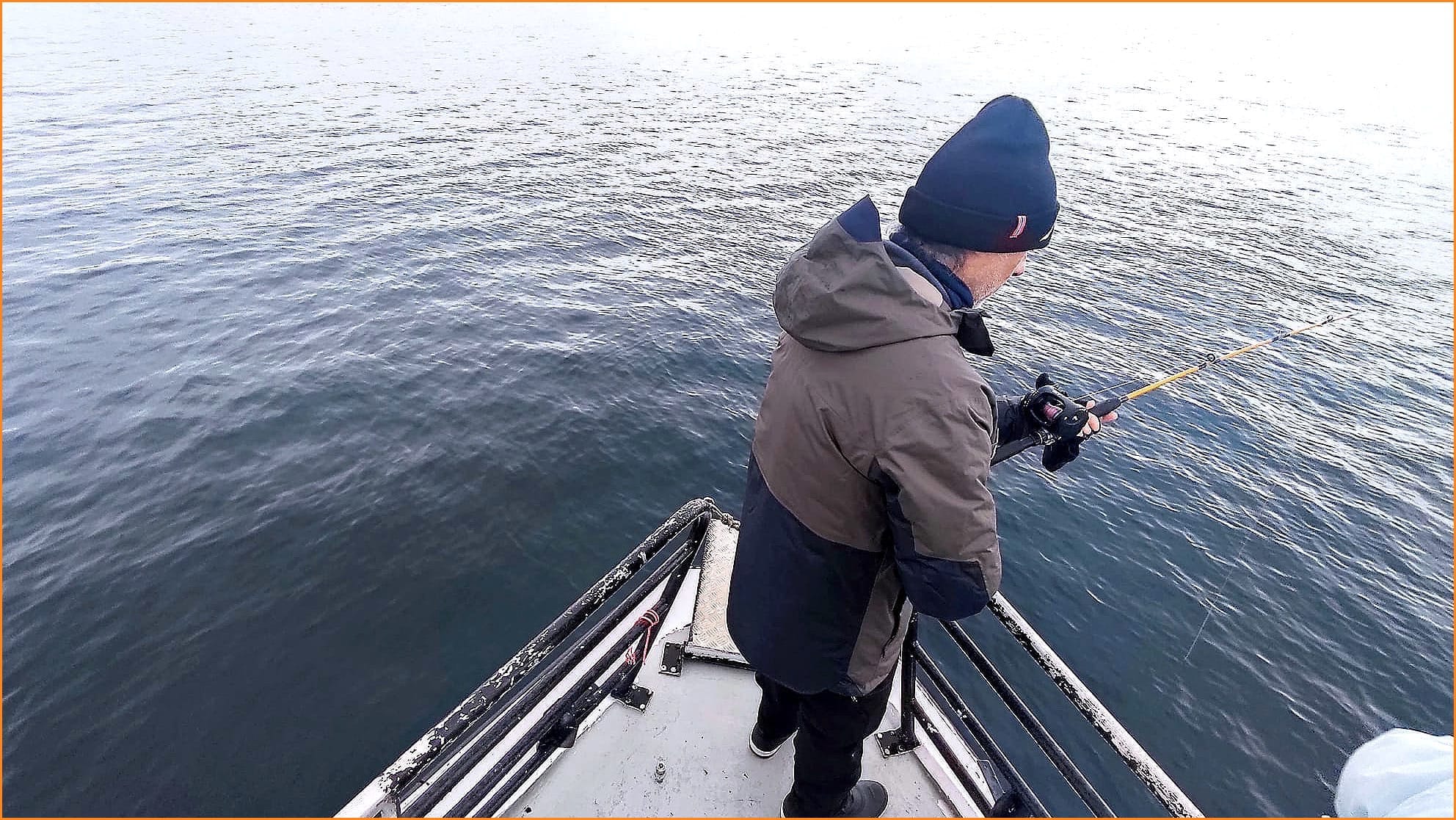
L'azione - È il momento di calare l’”heavy metal”, il trecciato si inabissa, l’obiettivo è raggiungere rapidamente il fondo. Iniziano a palesarsi alcune difficoltà: pesco quasi esclusivamente in acque dolci e non ho confidenza con questa attrezzatura sovradimensionata e nemmeno con queste profondità. Inoltre, come da manuale, il mulinello a “tamburo rotante” non ha il guidafilo e ha la manovella a destra. Nel frattempo che il trecciato scorre tenuto a bada dal mio pollice, inizio a pensare a come gestire la canna, sostenuta dal braccio sinistro, in caso di abboccata. Raggiungo il fondale e sollevo e abbasso alternativamente il jig con ampi movimenti del braccio ma dopo qualche minuto sono costretto a recuperare perché l’imbarcazione ha iniziato a roteare come una trottola, risucchiata dal malstrøm, che porta velocemente l’esca sotto lo scafo, rendendo complicata l’azione di pesca. Faccio la seconda calata, sembra che il jig impieghi un’eternità a raggiungere il fondo, e la forte corrente non agevola una discesa verticale perfetta. Sfioro nuovamente il fondale, fango e roccia, e prego le divinità norrene affinché possa tornare a casa con un nuovo ricordo di un nuovo pesce catturato in nuove acque con tecniche non consuete.
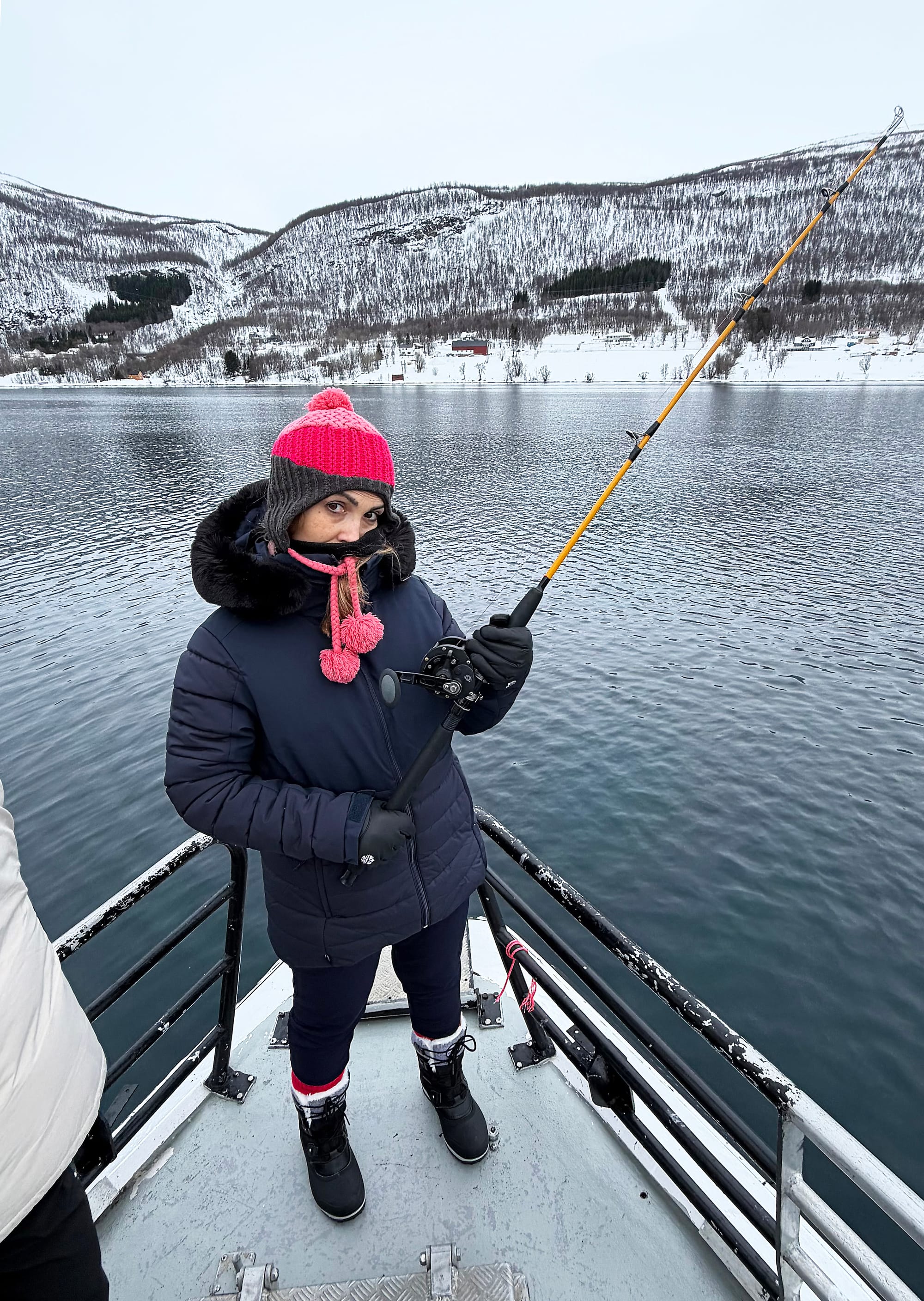
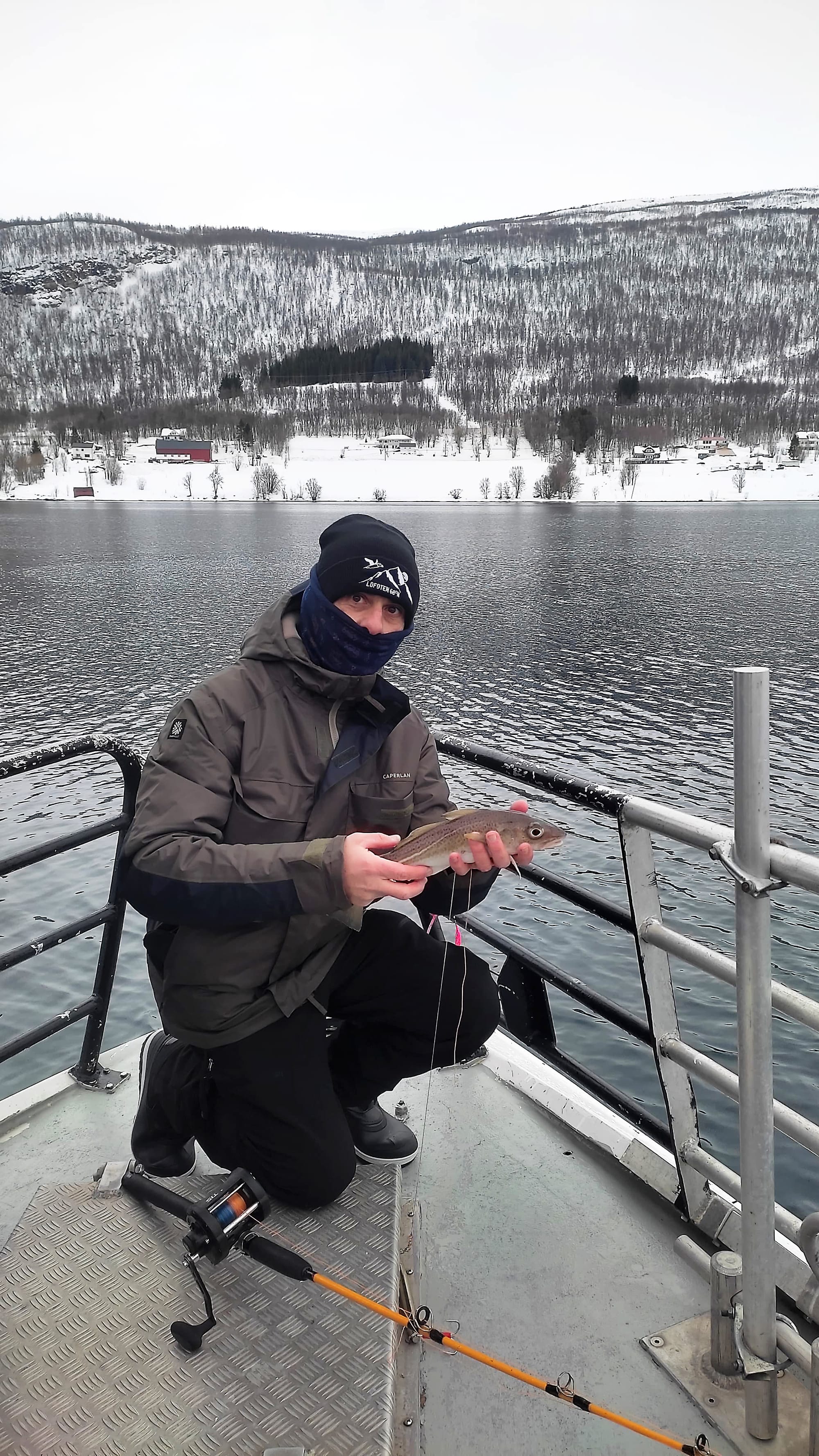
Daria, compagna e collega all'Università di Sassari dell'autore, prova l'emozione del vertical a temperature polari. Grande freddo e giovane merluzzo, a cui volentieri Marco concede la libertà, nella speranza che cresca.
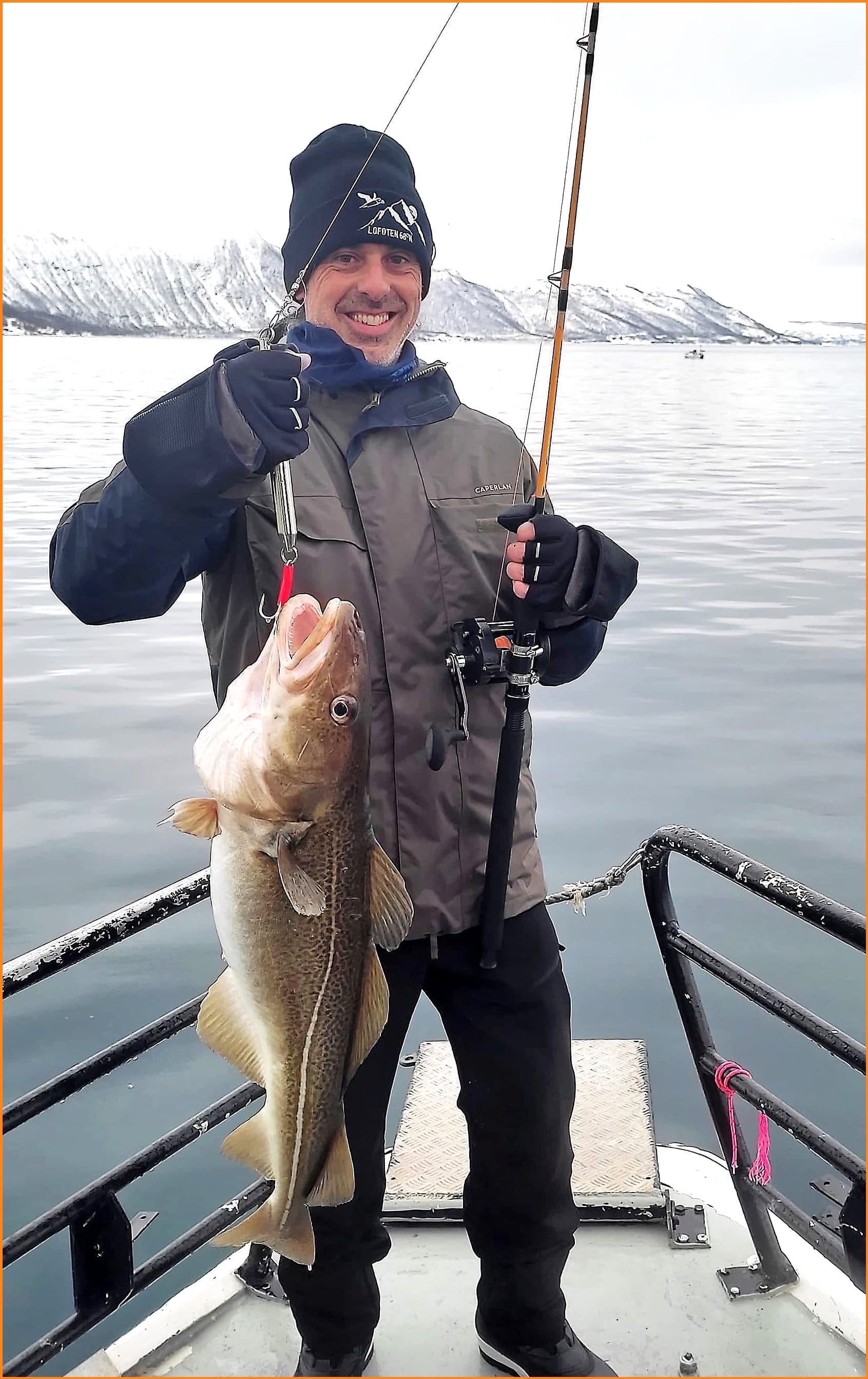
La cattura - Loki, dio del caos, per un po’ ha la meglio, allontanando fastidiosamente il mio jig dalla verticale, ma dopo meno di una decina di minuti sento, da tanto lontano, una “testata”, alla quale rispondo con una ferrata profonda: confido che la rigidità del trecciato e il peso del jig facciano penetrare l’amo nella bocca cartilaginea del pesce. Il mio antagonista (sarà un merluzzo?) lotta dall’altro capo del filo, piega la canna e mi fa letteralmente sudare, nonostante le temperature polari. Recupero la linea con costanza, facendo attenzione a distribuire uniformemente le spire del trecciato sul tamburo, mantenendo sempre la tensione corretta. In quel momento, durato nella mia mente un tempo lungo e indeterminato, ho tanta eccitazione per aver catturato “qualcosa” in acque sconosciute solo al secondo lancio, unita a altrettanta paura di perdere la preda, la legge di Murphy nella pesca è sempre dietro l’angolo. Ma alla fine, con un po’ di fatica legata anche al dover manovrare una canna con il braccio a me non uso, vedo specchiare il pesce che andavo cercando, un bel merluzzo anche lui provato dalla lotta e dal repentino cambiamento di profondità (si pescava sulla batimetrica dei m 130). Il pesce viene guadinato e pesato (oltre 5 chili), è il primo merluzzo degli unici due di misura che saranno catturati. Sono più che felice per aver pescato il primo merluzzo della mia vita e sono contento che verrà utilizzato per la zuppa calda che ci verrà servita nel primo pomeriggio, per confortare corpi e anime. Continuo a pescare per un po’, allamo un piccolo merluzzo a cui cedo con piacere la libertà. Alla fine, soddisfatto per l’obiettivo raggiunto, cedo la canna alla mia compagna di viaggio, che prova la magia della pesca nordica tra fiordi e aurore boreali. Thor, dio protettore dell’uomo, ha convinto Loki a darmi tregua e a farmi catturate il merluzzo o, più prosaicamente, Santa Claus, che bazzica nei dintorni, ha anticipato il mio regalo per Natale.
La Scienza
La vescica natatoria dei merluzzi previene il barotrauma. Il merluzzo nordico (Gadus morhua), chiamato anche merluzzo bianco o semplicemente merluzzo comune, è un pesce appartenente alla famiglia Gadidae che può raggiungere notevoli dimensioni (in media 1 metro e kg 15).
Caratteristiche principali sono le tre pinne dorsali e le due anali, e la presenza di un barbiglio sul mento. Sulla livrea marezzata spicca la linea laterale, bordata di bianco. È un pesce predatore molto prolifico, caratterizzato da una ampia tolleranza ecologica: è eurialino (sopporta anche acque dissalate), euritermo (vive tra 0° e 20° C) e euribate (lo troviamo tra i m 10 e i 600). Riguardo a quest’ultimo punto, e osservando quanto accaduto durante la sessione di pesca, è interessante notare che il merluzzo non sembra essere particolarmente colpito dal barotrauma, quella condizione patologica che si verifica quando peschiamo in acque profonde (in realtà osservabile anche a partire dai m 10-15). Il barotrauma è legato all’aumento incontrollato di volume che la vescica natatoria subisce in relazione all’espansione dei gas che contiene quando si passa da acque profonde ad acque superficiali, in relazione alla Legge di Boyle, P/V=k, per la quale al diminuire della pressione (P) aumenta il volume (V). Il barotrauma causa spesso danni irreversibili, i più evidenti dei quali sono l’estroflessione dello stomaco dalla bocca e l’esoftalmo (occhi fuori dalle orbite). Il merluzzo sembra risentire meno di altri pesci (quali il dentice, il pagro e la cernia) del barotrauma, a causa della peculiare forma della vescica natatoria. Essa possiede infatti una camera, chiamata corpo ovale, che può essere separata dalla camera principale della vescica natatoria tramite muscoli sfinterici, favorendo un passaggio “graduale” del gas che si espande e il riassorbimento del gas a livello dei capillari che lo circondano. Un’ultima notazione riguardo la confusione generata dal nome “merluzzo”. In Italia spesso ci riferiamo, erroneamente, con questo nome al nasello, un pesce sempre appartenente alla famiglia Gadidae, ma molto diverso morfologicamente dal “vero” merluzzo. La confusione è generata dal nome latino del nasello, Merluccius merluccius, evocativo della specie nordica.
English version
Traveling is the best way to come into contact with new cultures, customs and traditions of peoples more or less close to our Mediterranean ones, and on my trips I always try to add new pieces of knowledge about the places I visit, especially regarding fishing, fishermen and fish. In March I had the opportunity to spend a few days in Tromso, Norway, about 400 kilometers north of the Arctic Circle. The primary goal of the trip was not fishing, but hunting: the hunt for the fantastic and legendary northern lights that, at the end of the winter months, paint the canvas of the Scandinavian night sky. But another legend of that nation is a fish: the northern cod.
A member of the order Gadiformes, to which Mediterranean fish such as hakes and rocklings also belong, cod is widely fished in the North Atlantic and represents a substantial component of Norway's GDP, thanks to its export to various areas of Europe, mainly as stockfish and salt cod, respectively the dried and salted versions, and all over the world in the form of the well-known fish fingers and other products. Although the visit to Tromso was not planned for angling purposes, I still manage to carve out a few hours to fish from a boat, in an attempt to have at least one encounter with these fish.
Departure - We leave the charming, colorful harbor on a cloudy day, with a few snowflakes falling, and our boat heads north toward the Tonsvik fjord, where at this time of year cod begin to gather for spawning. The outside temperature is just below zero and the light breeze is icy, but I cannot stay in the warm belly of the boat because the scenery is breathtaking: we are between the North Sea and the Arctic Ocean. Several species of gulls are flying, as well as majestic sea eagles, which find food in these waters thanks to the presence of immense schools of herring. When we skirt the mainland, I see foxes chasing one another on the snow and reindeer grazing on the first buds of the trees.
The fishing - As we navigate, I speak with the fishing guide to understand where we will look for cod and what technique will be used to catch them. She explains that the most productive points are the channels where two fjords meet, where there is a strong mixing of waters caused by the clash between incoming and outgoing tides. Because of the length of the fjords, this is truly considerable and creates immense whirlpools, here called malstrom. These whirlpools trigger the food web characteristic of these waters, gathering plankton that is preyed upon by many animals, from minke whales to herring, the latter in turn the favorite prey of cod.
The technique - Once the school is located, the fishing is simple: no complicated equipment and refined rigs. A two-meter jigging rod of at least 10 ounces, braid of no less than 30 pounds, and heavy silver cylindrical metal jigs from 150 to 300 grams, armed with generous trebles wrapped in red tape, uselessly, I add, because at those depths that wavelength is completely absorbed. After two hours of navigation, the sounder locates a school of fish, probably the longed-for gadids, at about 100 meters. I have only an hour available, so I have to be quick and, if possible, effective. The goal is to hook a nice cod specimen to photograph and, in this case, share as a meal with the crew and the dozen participants on the excursion.
The action - It is time to lower the "heavy metal"; the braid sinks, the goal being to reach bottom quickly. Some difficulties begin to appear: I fish almost exclusively in freshwater and am not familiar with this oversized gear or with these depths. Moreover, as per the manual, the overhead reel has no levelwind and has the handle on the right. While the braid runs under the control of my thumb, I start thinking about how to manage the rod, held by my left arm, if a fish bites. I reach the bottom and alternately lift and lower the jig with wide arm movements, but after a few minutes I have to retrieve because the boat has started spinning like a top, sucked into the malstrom, which quickly carries the bait under the hull and complicates the fishing action.
I make the second drop. The jig seems to take an eternity to reach bottom, and the strong current does not help a perfectly vertical descent. I touch bottom again, mud and rock, and pray to the Norse gods that I may return home with a new memory of a new fish caught in new waters with unfamiliar techniques. Daria, the author's companion and colleague at the University of Sassari, experiences vertical fishing in polar temperatures. Great cold and a young cod, which Marco gladly frees in the hope that it will grow.
The catch - Loki, god of chaos, has the upper hand for a while, annoyingly moving my jig away from vertical, but after less than ten minutes I feel, from far below, a head shake, to which I respond with a deep strike. I trust that the stiffness of the braid and the weight of the jig will drive the hook into the fish's cartilaginous mouth. My opponent, will it be a cod, fights at the other end of the line, bends the rod and literally makes me sweat despite the polar temperatures. I retrieve steadily, taking care to distribute the coils of braid evenly on the spool while always maintaining correct tension.
In that moment, which in my mind lasted a long and undefined time, I feel great excitement at having caught "something" in unknown waters on only the second drop, together with an equal fear of losing the fish, because Murphy's law in fishing is always around the corner. In the end, with a little effort also due to having to handle a rod with the arm I am not used to, I see the fish I was looking for break the surface, a fine cod, itself tired by the fight and the sudden change in depth, since we were fishing on the 130-meter contour. The fish is netted and weighed, over five kilos; it is the first cod of the only two legal-sized fish that will be caught. I am more than happy to have caught the first cod of my life and glad that it will be used for the hot soup served to us in the early afternoon, to comfort bodies and souls.
I keep fishing for a while and hook a small cod, to which I gladly grant freedom. In the end, satisfied with the goal achieved, I hand the rod to my travel companion, who experiences the magic of northern fishing among fjords and northern lights. Thor, protector of humankind, convinced Loki to give me a break and let me catch the cod or, more prosaically, Santa Claus, who hangs around nearby, gave me my Christmas present early.
Science - The swim bladder of cod prevents barotrauma. The northern cod, Gadus morhua, also called Atlantic cod or simply common cod, is a fish of the Gadidae family that can reach considerable size, on average one meter and 15 kilos. Its main features are three dorsal fins and two anal fins, and the presence of a barbel on the chin. On its mottled livery the lateral line stands out, edged in white. It is a very prolific predatory fish, characterized by broad ecological tolerance: it is euryhaline, tolerating even brackish water; eurythermal, living between 0 and 20 degrees C; and eurybathic, found between 10 and 600 meters.
Regarding this last point, and observing what happened during the fishing session, it is interesting to note that cod do not seem particularly affected by barotrauma, the pathological condition that occurs when we fish in deep water, actually observable even from 10 or 15 meters. Barotrauma is linked to the uncontrolled increase in volume of the swim bladder caused by the expansion of the gases it contains when passing from deep to shallow water, according to Boyle's law, P/V = k, by which as pressure decreases, volume increases. Barotrauma often causes irreversible damage, the most evident signs being the stomach protruding from the mouth and exophthalmos, eyes bulging from their sockets.
Cod seem to suffer less than other fish, such as dentex, common seabream and grouper, from barotrauma because of the peculiar shape of the swim bladder. It has a chamber, called the oval body, that can be separated from the main chamber of the swim bladder by sphincter muscles, allowing a gradual passage of expanding gas and reabsorption of the gas by the surrounding capillaries.
One final note concerns the confusion generated by the name "merluzzo". In Italy we often refer, incorrectly, to hake by this name, a fish still belonging to the Gadidae family but morphologically very different from the "true" cod. The confusion is generated by the Latin name of hake, Merluccius merluccius, evocative of the northern species.
Commenti ()