
Siluro! Basta questo nome per evocare un sentimento, alle volte positivo, spesso negativo, tra pescatori, ricercatori, ecologisti.
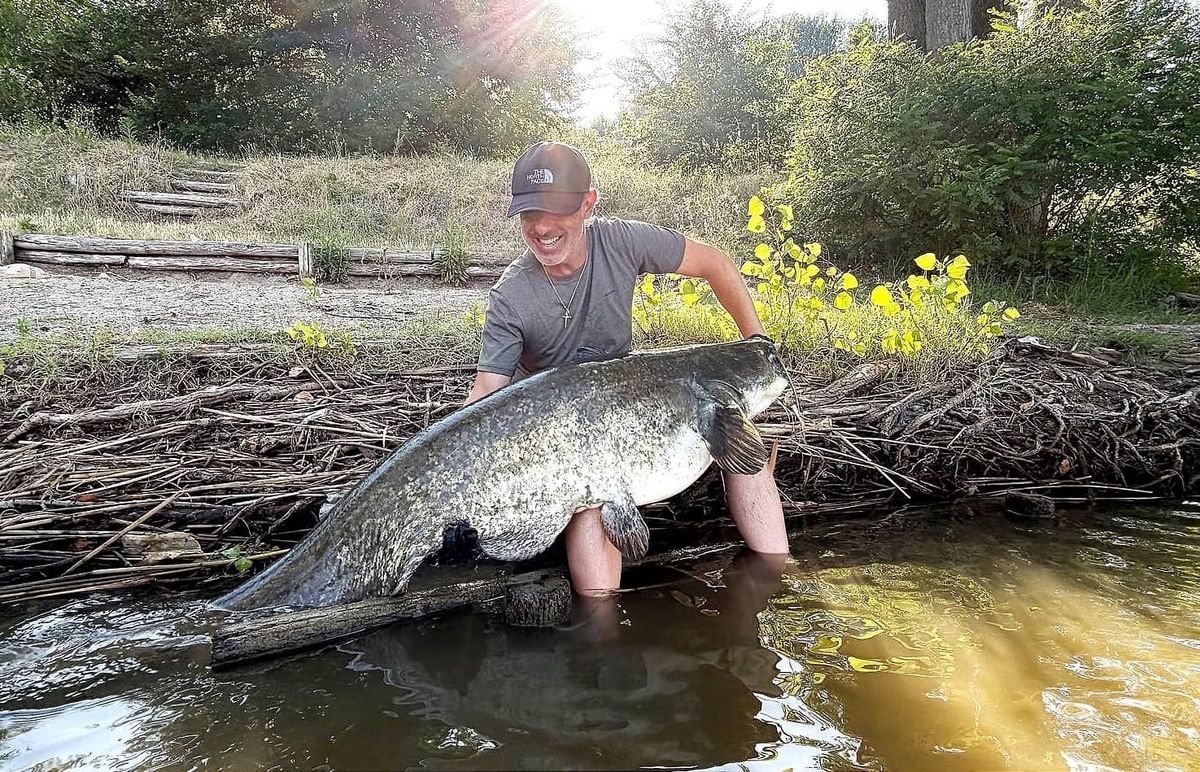
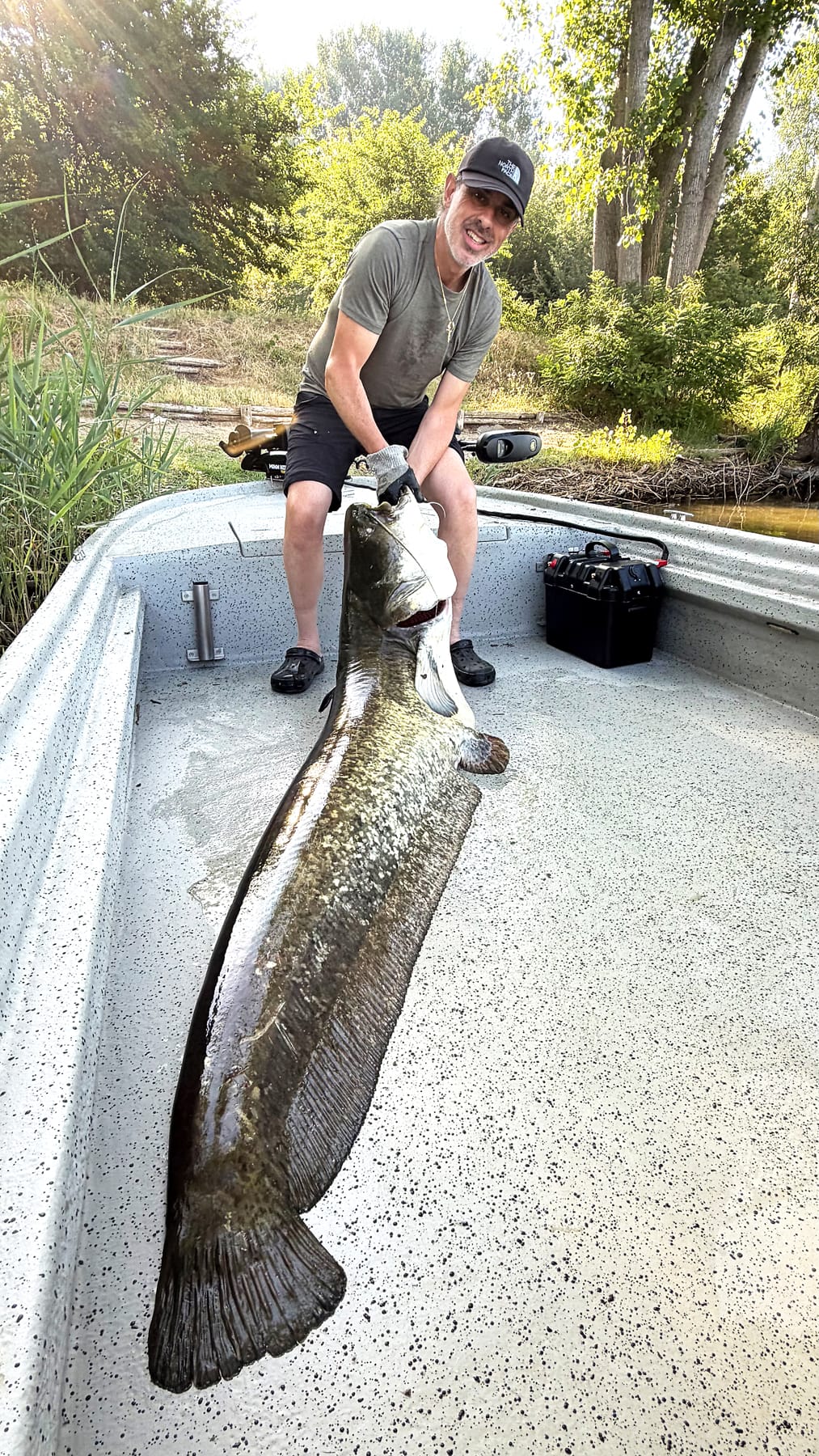
Foto in alto: l'autore osserva con soddisfazione il suo primo Magnus Silurus portato a riva per le fasi di riossigenazione.
Introdotto in Italia a partire dalla seconda metà del Novecento, questo grande teleosteo (il più grande in Europa: oltre m 2,50 e kg 130) dalla forma e livrea inconfondibili, ha sollevato interrogativi dal punto di vista ambientale, essendo spesso - e aggiungo immotivatamente - descritto come la minaccia assoluta per le specie autoctone. Tuttavia, dati scientifici e osservazioni sul campo raccontano una realtà più complessa e meno deteriore di quella narrata, spesso in maniera distorta, sui media. Prima dell’introduzione dei pesci gatto americani e africani, Silurus glanis era l’unico Siluriformes presente nei fiumi europei, originariamente nell’area centro-orientale, assieme al Silurus aristotelis, endemico del bacino del fiume Aspropotamo, in Grecia, molto più piccolo e con solo quattro barbigli invece che sei. A causa delle sue dimensioni extralarge rispetto agli altri pesci d’Europa, il siluro ha catturato l'immaginazione umana fin dai tempi remoti. Nel sec. IV il poeta Ausonio, nel poemetto “Mosella”, descriveva la placida maestosità del Magnus Silurus, chiamandolo “balena dei fiumi”, più incuriosito che intimorito da questo colosso. Sono sempre stato scientificamente attratto da questo pesce, ma la volontà di catturarlo è nata per caso lo scorso anno. Pescavo a spinning cavedani e barbi nel Tevere, finché il mio piccolo minnow non è capitato tra le larghe fauci di un siluro che, dopo una decina di minuti di combattimento decisamente impari, si è fatto beffe della mia attrezzatura sottodimensionata, mostrando solo per qualche secondo la sua grossa testa, appartenente a un pesce over cm 120. Da quel momento decisi di fare le cose per bene per combattere ad armi pari con il siluro. Contatto quindi Giovanni Montanari, una giovane ma preparatissima guida di pesca nei laghi di Mantova, gestore del pescaturismo “Le vie dell’acqua”. Ci accordiamo per una tre giorni di pesca a metà di giugno. La tecnica principale che adotterò sarà lo spinning, il mio primo amore, ma per aver maggiori possibilità di cattura userò anche il vertical con esca viva. “In questo periodo le ore migliori per avere le maggiori probabilità di cattura”, spiega Giovanni, “sono quelle del cambio luce, quando il siluro si attiva in cerca del foraggio: principalmente breme e cefali.”.
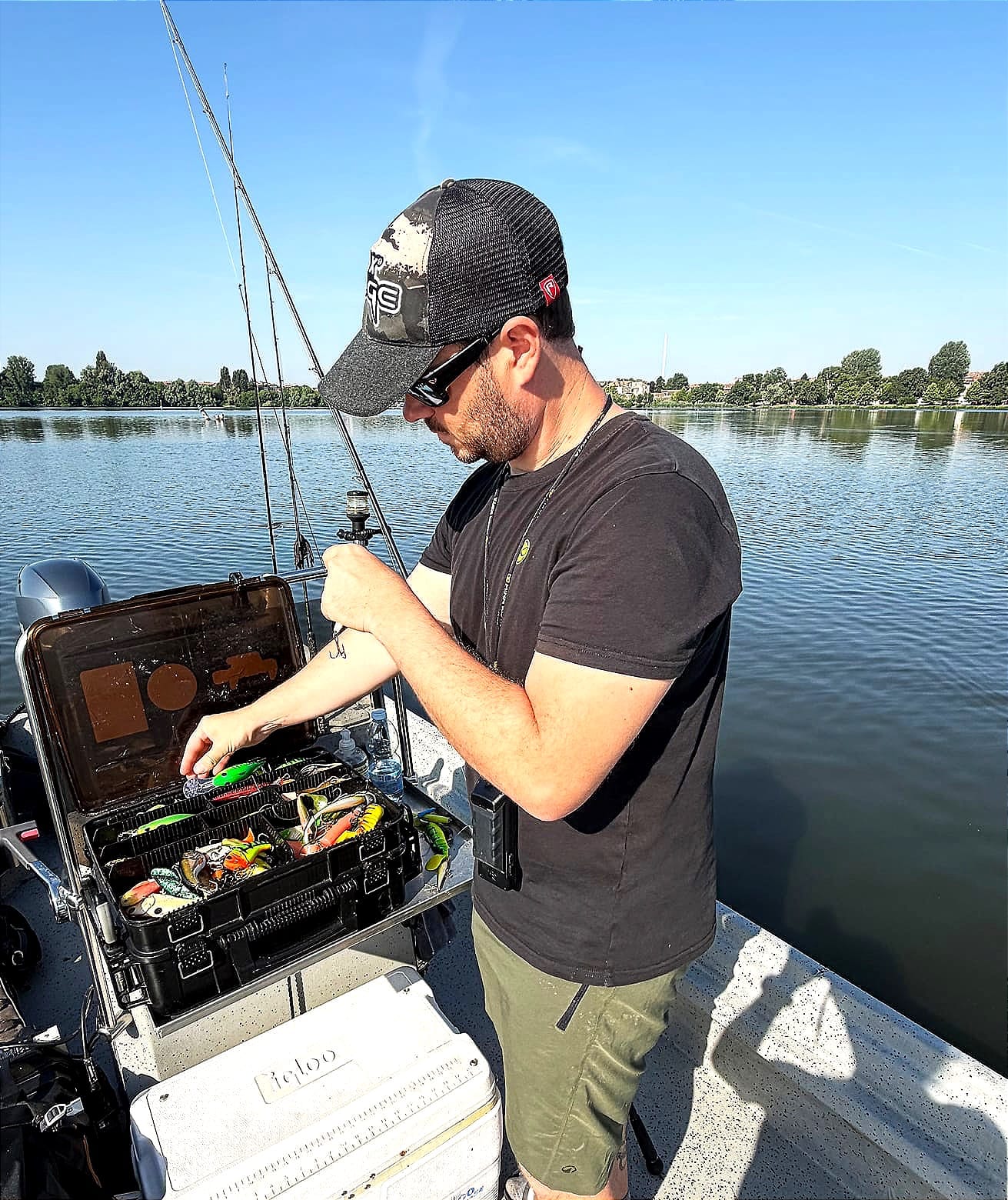
Prima uscita - Colmo di speranza, il primo giorno usciamo al tramonto e Giovanni mi porta subito con la sua barca, ordinata e super attrezzata, sugli spot più proficui. Ricerca i cefali in attività sulla superficie e, contemporaneamente, sonda con il live scope la presenza di ciprinidi sul fondo e potenziali tane dove stazionano i siluri più grandi. Inizio con lo spinning, passo più di un’ora a lanciare e rilanciare tra i cefali, ma non ho nessun attacco. Calata la notte, ci allontaniamo dalle luci della città che si riflettono sul placido lago e ci spostiamo su una legnaia dove provo con il vertical. Giovanni visualizza numerosi siluri sul live scope, che però sembrano poco o punto interessati al carassio che si muove, vitale, nonostante l’imbracatura dell’innesco. La nottata di pesca si conclude tardi, senza neanche un contatto, ma con la liberazione del carassio che, per sua fortuna, non ha avuto un “incontro ravvicinato del terzo tipo” con il siluro, famelico e dannosissimo pesce secondo alcuni, ma che si dimostra invece un predatore selettivo alla pari del luccio. I meno giovani tra noi ricorderanno quando voci false e tendenziose dei pescatori del secolo scorso dipingevano il luccio come “lo squalo delle acque dolci”. Oggi il luccio è venerato, e giustamente protetto, e il siluro lo ha sostituito con la nomea di spietato distruttore della biodiversità. O tempora, o mores…
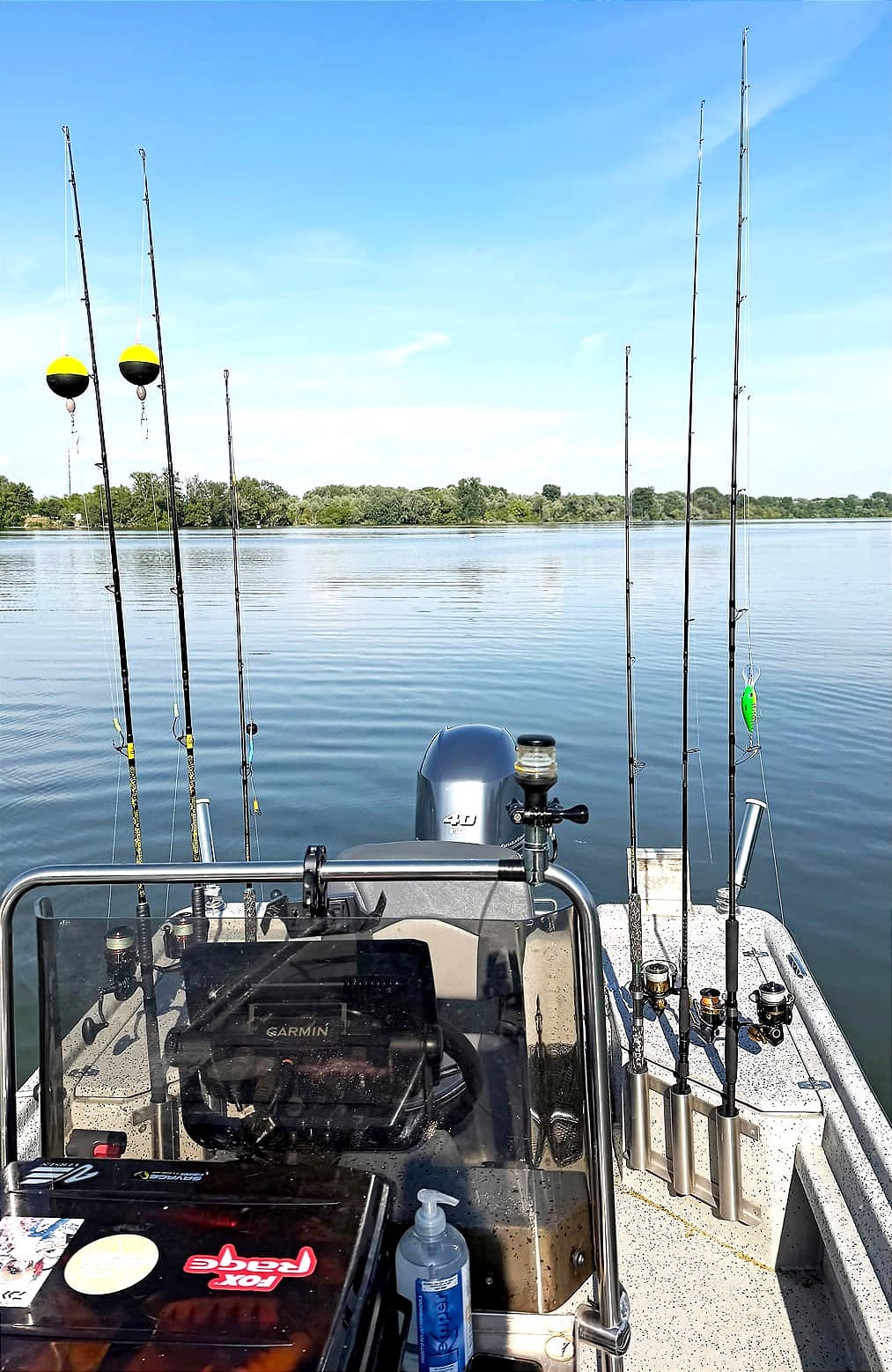
Seconda giornata - Alle sei del mattino, usciamo dal piccolo porticciolo. Sarà una giornata da tregenda. Arrivati sul primo spot, punto di raduno di cefali, inizio a lanciare il mio artificiale, un generoso deep crank “fire tiger”, in prossimità di una struttura artificiale. Pochissimi lanci e una forte botta mi dice che un siluro si è fatto irretire dal variopinto artificiale. Deve essere una “bella bestia” perché cerca disperatamente di raggiungere il fondale: faccio fatica a contenere la sua forza. Giovanni capisce che è grosso e arrabbiato e mi sprona a “pomparlo” per non farlo avvicinare agli ostacoli che lui vede sul display. Ma non riesco, non sono abituato a gestire pesci del genere. E dopo meno di dieci minuti il siluro riesce a raggiungere un ostacolo sommerso e, con un’intelligenza non prevedibile, riesce a divincolarsi dalle ancorette del crank e a lasciarmi nella disperazione totale. Razionalmente capisco: il siluro ha innata questa capacità di sfruttare ostacoli naturali e artificiali per fare leva e sfuggire a un pericolo, favorito non solo dalla forza ma anche dal profilo del corpo anguilliforme che gli consente di “annodarsi” attorno a un tronco o una tubatura sommersa. Emozionalmente però, provare nei muscoli la sensazione di impotenza quando un grosso siluro si piazza tra gli ostacoli del fondo con la certezza di perderlo ha un altro sapore... decisamente amaro. Con un senso di profonda delusione non sopito ci spostiamo verso una zona in cui un piccolo fiume s’immette nel lago, spesso punto di ritrovo di siluri in cerca d’alimento e acque più ossigenate. Giovanni individua un silurotto che nuota contro corrente. Pesco a vista e monto uno shad con amo offset nascosto nel silicone ma niente da fare, solo scodate e rifiuti. Ma non si narra che il siluro sia un animale sempre affamato che attacca qualsiasi cosa sembri vivo?
Riprovo all’inizio delle tenebre, Giovanni mi suggerisce di utilizzare la tecnica del vertical e pescare in un canale artificiale privo di ostacoli in cui i siluri tendono ad aggregarsi nottetempo. Ancora una volta la dea Fortuna non è dalla mia parte: pesco correttamente, l’esca nuota alla giusta profondità, le sagome cangianti che si materializzano sull’eco come spettri venuti dal nulla, tradiscono la presenza di siluri over cm 150 che tastano l’esca, ma poi la rifiutano con delicatezza mista a fastidio, sparendo velocemente sul monitor, così come sono apparsi. È dunque una leggenda metropolitana che il siluro si nutra senza soluzione di continuità? Questa narrazione, spesso alimentata da chi conosce poco la biologia di questo pesce, ricorda, per parafrasare Manzoni, il grido «Dagli al siluro!»: la ricerca di un unico capro espiatorio, anziché la volontà di comprendere che i problemi delle nostre acque sono ben più complessi e vanno ben oltre la presenza, per quanto ingombrante (per dimensioni, non certo per numero), di questa specie. A questa mia riflessione ne segue subito un’altra, molto meno razionale: inizio a pensare che il siluro, quello grosso, non voglia assolutamente alimentare la mia vanità. Ripenso alle parole del vecchio pescatore Santiago, immortalato da Hemingway: “L'uomo non è fatto per la sconfitta. Un uomo può essere distrutto ma non sconfitto.”. Io al momento mi sento invece sconfitto più che distrutto. Sconfitto da un pesce dipinto ingiustamente come un famelico predatore che invece non si degna di abboccare alle mie esche, artificiali o naturali che siano.
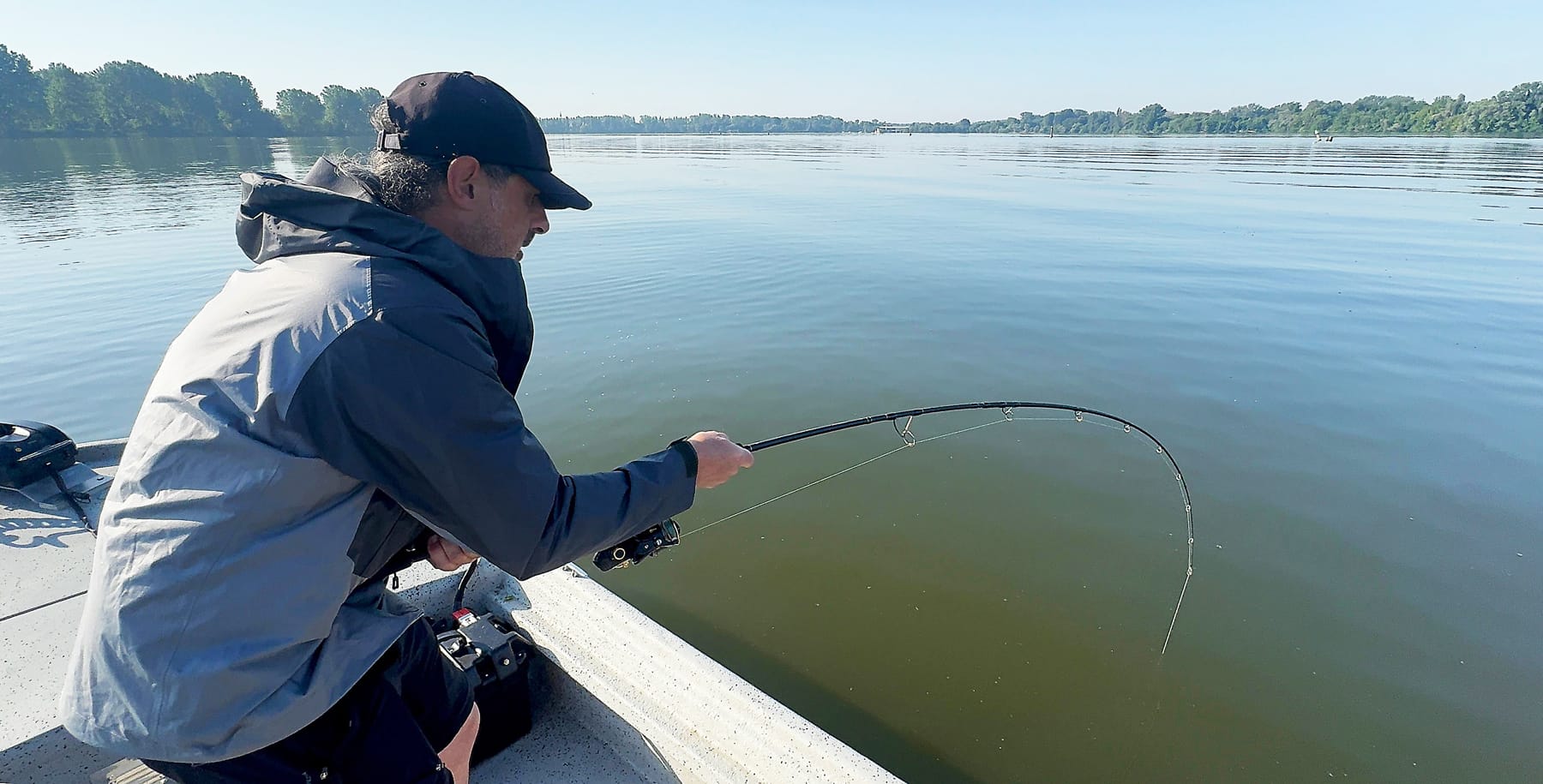
Ultima mattina di pesca - Con meno di due ore di sonno inizio con lo spinning, passo al vertical, ritorno allo spinning cambiando artificiale più volte, ma niente. Verso le nove, con il sole già alto, mi arrendo e chiedo a Giovanni di puntare verso il porticciolo per l’ultimo, malinconico, rientro. La barca solca velocemente l’acqua e passiamo in vicinanza di una mangianza, simile a quella che si vede in mare durante la caccia di un pelagico. Giovanni, che conosce acque e pesci di quella zona come le sue tasche, rallenta di colpo. Io mi approprio rapidamente della canna da spinning e lancio il crank verde e giallo in mezzo al branco impazzito di cefali. Lo rilancio una seconda volta e una mangiata repentina e pesante scuote finalmente la canna. Eccolo il siluro, uno grosso, che mi dà una seconda possibilità. Questa volta il fondo è privo di ostacoli e devo solo contrastare le sue lunghe fughe e le possenti puntate verso il profondo. Non so dirvi esattamente quanto sia durato il combattimento, realisticamente penso una mezzora, ma gli attimi si sono magnificati; lo sforzo per tirarlo verso la barca e l’ansia di perdere un bestione ancora una volta hanno fatto diventare il tempo non lineare. Alla fine, il siluro appare sotto la barca, mostrandosi in tutta la sua lunghezza, anche lui, come me, sfinito. Giovanni lo issa a bordo per slamarlo e fargli delle belle foto sulle sponde del lago, prima di donargli con piacere ed emozione la libertà. Libertà che il siluro, ne sono sicuro, utilizzerà non per distruggere le poche specie autoctone rimaste nei laghi di Mantova, ma per svolgere il suo ruolo di equilibratore biologico e sfoltire la schiera di altri alloctoni, tra cui breme e aspi, che, non per colpa loro ma per colpa di chi li ha incoscientemente immessi, impattano molto di più sulla riduzione delle specie di ciprinidi autoctone di quando faccia il baffuto venuto da Oltralpe. Il “mio” siluro non è un record, ma un bel pesce sui cm 180 e intorno a kg 50. Ora sì che sono distrutto, soprattutto lo è la schiena, come quella di Santiago, e le braccia, costrette per molte ore a lanciare pesanti artificiali, ma sono felice. Spero di incontrare nuovamente sul mio percorso di pescatore un altro Magnus Silurus, magari Maior.
English version
Introduced into Italy from the second half of the twentieth century onwards, this huge teleost—the largest freshwater fish in Europe, capable of exceeding 2.5 metres and 130 kg—is unmistakable in both shape and colouration. Its presence has raised considerable environmental concerns, as it is often—and, I would add, without sufficient justification—portrayed as the ultimate threat to native species.
Scientific data and field observations, however, paint a far more complex and much less damaging picture than the one so often presented, and frequently distorted, by the media.
Before the introduction of American and African catfish species, Silurus glanis was the only member of the order Siluriformes found in European rivers, originally occurring in central and eastern Europe, together with Silurus aristotelis. The latter is endemic to the Aspropotamos River basin in Greece, is considerably smaller and has only four barbels rather than six.
Because of its extraordinary size compared with other European freshwater fish, the wels catfish has fascinated people since ancient times. In the fourth century AD, the poet Ausonius described the serene majesty of the Magnus Silurus in his poem Mosella, calling it the “whale of the rivers”, apparently more intrigued than frightened by this freshwater giant.
I have always been fascinated by this fish from a scientific point of view, but my determination to catch one arose almost by chance last year. I was spinning for chub and barbel on the River Tiber when my small minnow suddenly disappeared into the huge mouth of a catfish. After about ten minutes of a decidedly one-sided battle, the fish made short work of my undersized tackle. It showed me its massive head for just a few seconds before disappearing—a fish clearly over 120 cm long.
From that moment on, I decided that next time I would do things properly and tackle the wels on equal terms.
I therefore contacted Giovanni Montanari, a young but extremely knowledgeable fishing guide on the Mantua lakes and manager of the fishing-tourism operation Le Vie dell’Acqua. We arranged a three-day session in mid-June.
My main approach would be spinning—my first love—but to increase my chances I would also try vertical fishing with livebait.
“At this time of year, the best periods are around dawn and dusk,” Giovanni explains. “That’s when the catfish become active and start hunting their main prey, particularly bream and mullet.”
First Session
Full of hope, we head out at sunset on the first day. Giovanni takes me straight to the most productive areas in his immaculate, superbly equipped boat. He looks for mullet activity on the surface while simultaneously using LiveScope to locate cyprinids near the bottom and identify potential holding areas where the larger catfish may be lying up.
I start by spinning. For more than an hour I cast again and again among the mullet, but nothing touches the lure.
Once darkness falls, we leave behind the city lights reflected on the calm surface of the lake and move to an area of submerged timber, where I switch to vertical fishing.
Giovanni spots numerous catfish on the LiveScope, but they seem barely interested—if at all—in the crucian carp swimming energetically despite the livebait harness.
The session ends late without so much as a touch. At least the crucian carp is released unharmed, fortunate enough not to have experienced a “close encounter of the third kind” with the wels catfish—that supposedly voracious and destructive predator which, in reality, proves to be every bit as selective as a pike.
Older anglers may remember the false and sensationalist stories told by fishermen in the last century, when the pike was portrayed as the “shark of freshwater”. Today, the pike is revered and rightly protected, while the wels catfish has inherited its reputation as the ruthless destroyer of biodiversity.
O tempora, o mores…
Day Two
At six in the morning we leave the small harbour. It is going to be a dramatic day.
At the first spot, where mullet regularly gather, I begin casting my lure—a substantial fire-tiger deep-diving crankbait—close to a man-made structure.
Only a few casts later, a savage hit tells me that a catfish has fallen for the brightly coloured lure.
It must be a serious fish because it immediately tries to power its way towards the bottom, and I struggle to contain its strength. Giovanni realises that it is both big and angry and urges me to pump it hard to prevent it from reaching the snags he can see on the display.
But I cannot manage it. I am simply not accustomed to fighting fish like this.
Less than ten minutes later, the catfish reaches a submerged obstruction and, with an intelligence I had not anticipated, manages to use it to free itself from the crankbait’s treble hooks, leaving me utterly devastated.
Rationally, I understand what has happened. Catfish have an instinctive ability to exploit natural and artificial obstacles as leverage when escaping danger. They are helped not only by their immense strength but also by their elongated, eel-like body, which allows them to twist themselves around a submerged tree trunk, pipe or other structure.
Emotionally, however, it is a very different matter. Feeling through your muscles that complete sense of helplessness when a big catfish gets among the bottom snags, knowing that you are almost certainly going to lose it, leaves a decidedly bitter taste.
Still deeply disappointed, we move to an area where a small river enters the lake, a place where catfish often gather in search of food and more highly oxygenated water.
Giovanni spots a smaller fish swimming against the current. I sight-fish for it with a shad rigged on an offset hook concealed in the soft plastic, but again nothing happens—just a few tail flicks and refusals.
But isn’t the wels supposed to be permanently hungry, attacking anything that looks remotely alive?
We try again as darkness begins to fall. Giovanni suggests switching to vertical fishing in an obstacle-free artificial channel where catfish tend to congregate at night.
Once again, Lady Luck refuses to smile on me.
I am fishing correctly, the bait is swimming at exactly the right depth, and ghostly shapes suddenly materialise on the sonar display as if appearing from nowhere. They reveal catfish of more than 150 cm approaching the bait, inspecting it and even touching it, only to reject it with an almost delicate air of irritation before vanishing from the screen as quickly as they appeared.
So is the idea that catfish feed continuously nothing more than an urban myth?
This narrative, often promoted by people with little understanding of the biology of the species, brings to mind—if I may paraphrase Manzoni—the cry: “Get the catfish!” It is the search for a single scapegoat rather than an attempt to understand that the problems affecting our freshwater ecosystems are far more complex and extend well beyond the presence—however conspicuous because of its size, certainly not its numbers—of this species.
That thought is immediately followed by another, considerably less rational one: I am beginning to suspect that the really big catfish have absolutely no intention of feeding my ego.
I think back to the words of the old fisherman Santiago, immortalised by Hemingway: “A man can be destroyed but not defeated.”
At this point, however, I feel far more defeated than destroyed.
Defeated by a fish unfairly portrayed as an insatiable predator, yet one that stubbornly refuses to take any of my baits, whether artificial or natural.
The Final Morning
With less than two hours’ sleep behind me, I begin by spinning, switch to vertical fishing, then return to spinning, changing lures several times.
Nothing.
At around nine o’clock, with the sun already high in the sky, I finally give up and ask Giovanni to head back towards the harbour for our last, rather melancholy return.
The boat speeds across the water when we pass close to a sudden burst of feeding activity, remarkably similar to the feeding frenzies created by pelagic predators at sea.
Giovanni, who knows these waters and their fish like the back of his hand, immediately throttles back.
I quickly grab the spinning rod and cast the green-and-yellow crankbait straight into the frantic shoal of mullet.
I cast again.
Then a sudden, heavy strike jolts the rod.
There it is—the catfish. A big one.
And it has given me a second chance.
This time the bottom is clear of obstacles, and all I have to do is withstand its long runs and powerful dives towards deeper water.
I cannot tell you exactly how long the fight lasted. Realistically, probably around half an hour, but every moment seemed magnified. The effort of bringing it towards the boat and the fear of losing another giant distorted my perception of time until minutes seemed to lose all meaning.
Eventually, the catfish appears beneath the boat, revealing its full length. Like me, it is completely exhausted.
Giovanni brings it aboard, removes the hooks and we take it to the lakeside for some photographs before, with genuine pleasure and emotion, giving it back its freedom.
A freedom that, I am convinced, this catfish will not use to destroy the few native species still surviving in the Mantua lakes. Instead, it will continue to play its role within the ecosystem, helping to control populations of other introduced species, including bream and asp. Through no fault of their own—but rather because of those who irresponsibly introduced them—these species may have a far greater impact on the decline of native cyprinids than the great whiskered predator that came from beyond the Alps.
“My” catfish is no record-breaker, but it is a magnificent fish of around 180 cm and approximately 50 kg.
Now I really am destroyed—especially my back, rather like Santiago’s, and my arms after so many hours spent casting heavy lures—but I am happy.
I hope that somewhere along my future journey as an angler I will encounter another Magnus Silurus.
Perhaps an even Maior one.

Commenti ()