
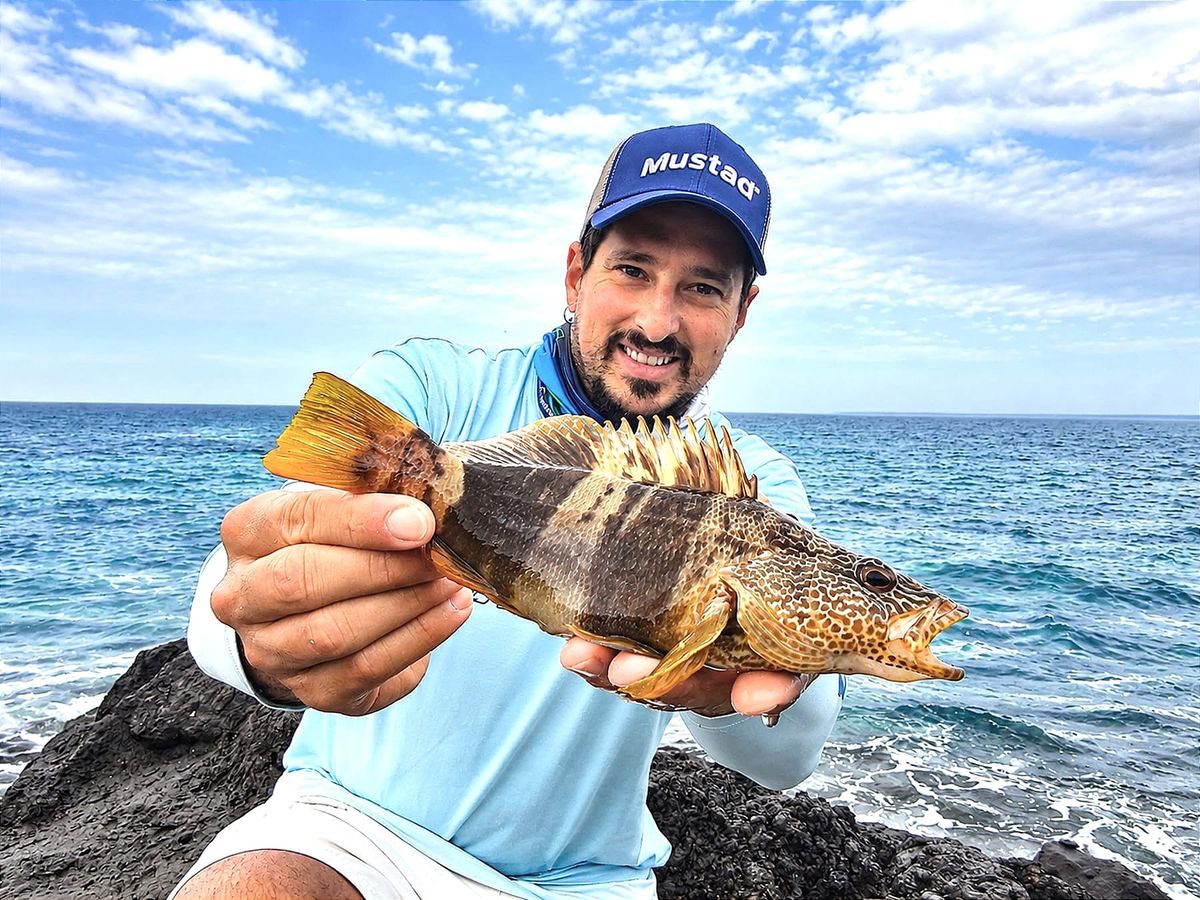
Quando la preda è difficile non contano il peso e le dimensioni della cattura, bensì la capacità del pescatore di individuare gli aspetti critici e superarli, anche se impegnativi come nella maea dell’oceano.
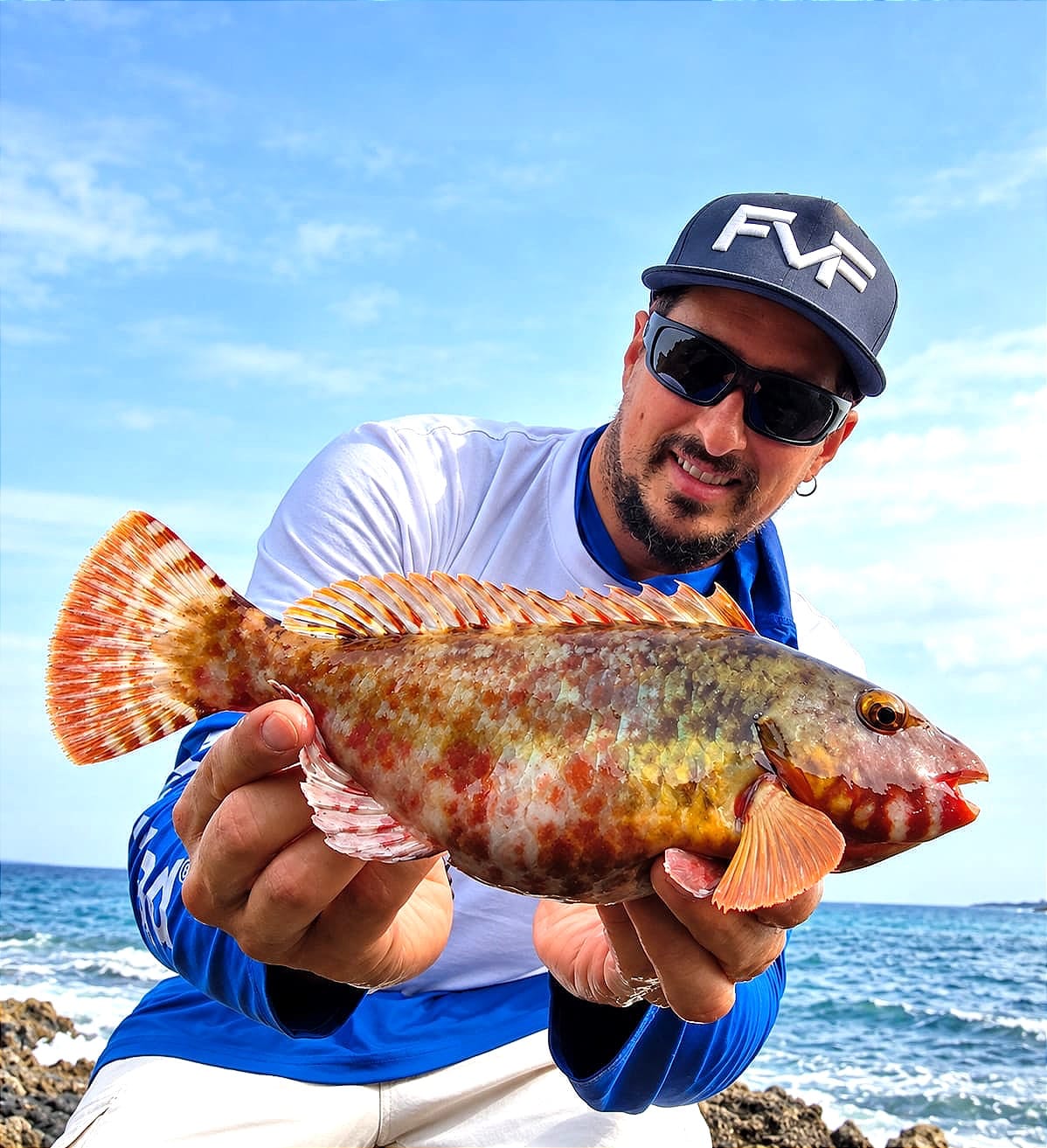
foto in alto: I riflessi dorati dello sciarrano, autentico custode del fondale, risaltano in un suggestivo contrasto con la scura roccia vulcanica. Sotto, un variopinto pesce pappagallo, localmente vieja canaria, si mostra in tutta la sua vivacità, combattivo e in splendida forma.
Un’altra avventura di pesca prende forma tra le scogliere imponenti dell’oceano, dove la roccia vulcanica va a picco e incontra la potenza maestosa dell’Atlantico. Camminare lungo questi costoni a Fuerteventura significa immergersi in una dimensione primordiale, scandita dal continuo saliscendi sulle rocce laviche e dalla consultazione costante delle tavole di marea, compagne fedeli e silenziose di ogni uscita. L’obiettivo è scovare i variopinti pesci di scoglio che popolano le acque canarie, creature affascinanti che trasformano ogni fondale in un caleidoscopio sottomarino.
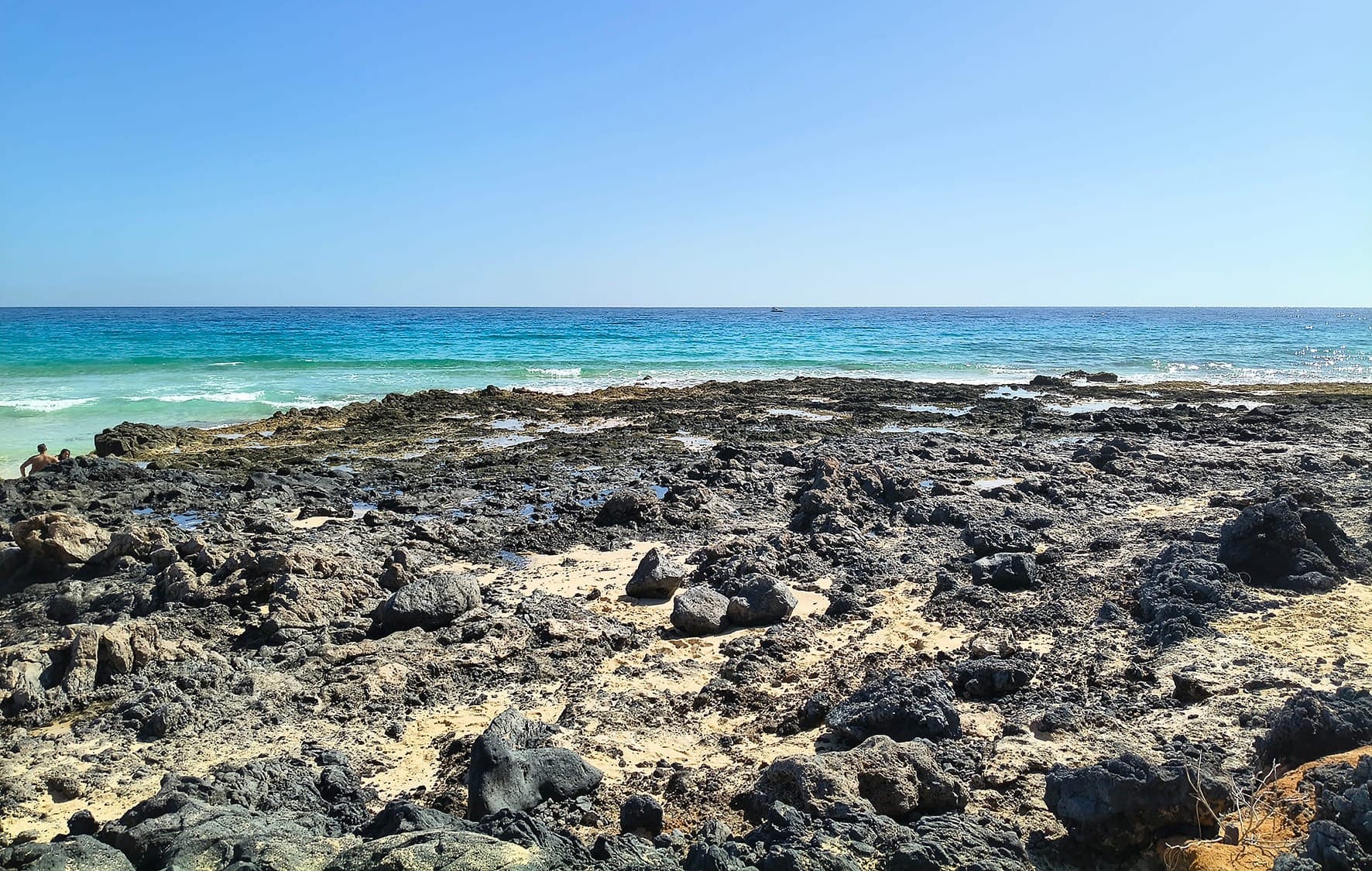
Prepararsi all’azione - Le parole d’ordine sono due ovvero misurazione e reazione. Calcolare con precisione quasi assoluta la profondità d’acqua in cui far fluttuare l’insidia, adattandosi ai continui mutamenti del livello marino e possedere il riflesso fulmineo necessario a ferrare non appena la segnalazione visiva si manifesta, rappresentano lo spartiacque netto tra una giornata vuota e un’esperienza ricca di emozioni indelebili. Questa tecnica incentrata sull'impiego del galleggiante scorrevole è un autentico ritorno alle origini più pure dell’arte alieutica. L'attrezzatura è essenziale, quasi scarna a prima vista, ma possiede la riserva di potenza e la robustezza indispensabili per contrastare le fughe rabbiose di prede che, appena punto l'amo, fuggono dirette agli anfratti più bui e taglienti della scogliera per trovare riparo e spezzare il filo. Albe e tramonti accendono l'orizzonte con contrasti cromatici mozzafiato, mentre il blu cobalto e l’azzurro cristallino lasciano intravedere gli scalini di lava pietrificata, le fenditure sommerse e le piane di sabbia chiarissima. L’oro lucente dello sciarrano, i riflessi verde smeraldo dei labridi e il mimetismo spettacolare dei pesci pappagallo, capaci di mutare livrea in sfumature calde e infuocate, regalano ricordi preziosi da custodire nei diari di pesca e nel cuore.
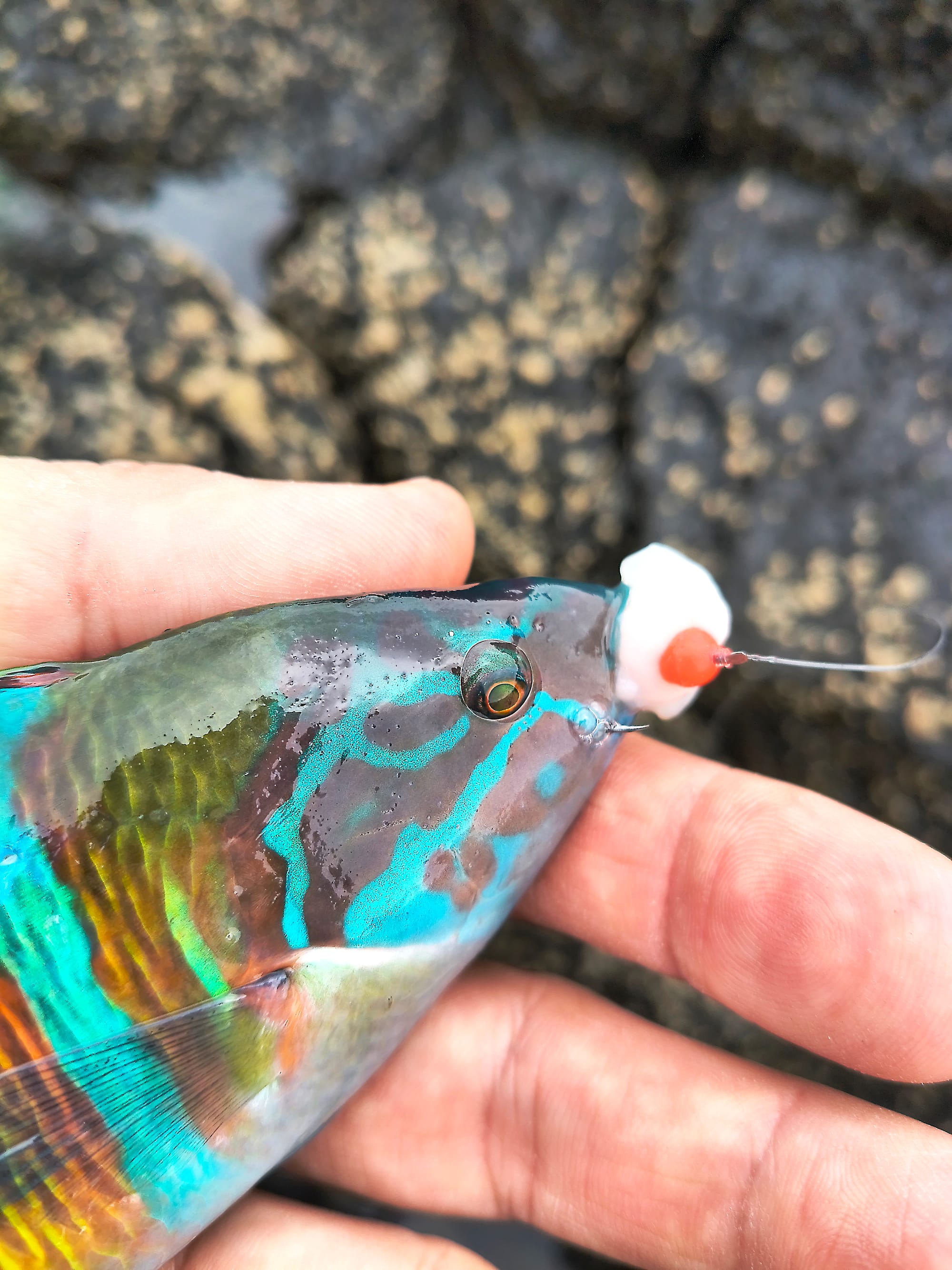
Attrezzatura - Per affrontare questa pesca itinerante mi affido a canne telescopiche da 3,70 o 3,90 metri e 80-120 grammi, un compromesso impeccabile che permette di manovrare l'inganno a debita distanza dalle asperità rocciose e di pescare a lungo senza affaticare braccia e schiena durante i continui cambi di postazione lungo la costa, garantendo potenza anche in caso di catture di mole. La lenza scorre su galleggianti da 25 o 30 grammi protetti da stopper regolabili e perline paracolpi salva nodo, abbinati a mulinelli robusti di taglia 5000 o 6000, imbobinati con trecciato ad alta visibilità. Per azzerare il rischio di rotture contro le rocce abrasive inserisco dieci metri di shock leader in fluorocarbon dello 0,40, un terminale generoso dello 0,30 e un amo forgiato come il Mustad Chinu misura 4 a punta rientrante, ideale per la sua eccezionale tenacia strutturale e per tenere ben agganciato l’innesco. Questa misura generosa è insostituibile per resistere al becco osseo della vieja canaria ed evita l'ingestione profonda, preservando l'integrità vitale del pesce in funzione di un rilascio perfetto. Tra le esche, il gamberetto sprigiona una scia odorosa irresistibile ma dura poco in balia della minutaglia, mentre il totano, più elastico e tenace, resiste bene ai primi assalti consentendo di aspettare la preda di taglia. Un piccolo trucco per incuriosire i pinnuti nella schiuma della risacca consiste nell'infilare una minuscola perla rossa o fluorescente direttamente sopra l'occhiello dell'amo.
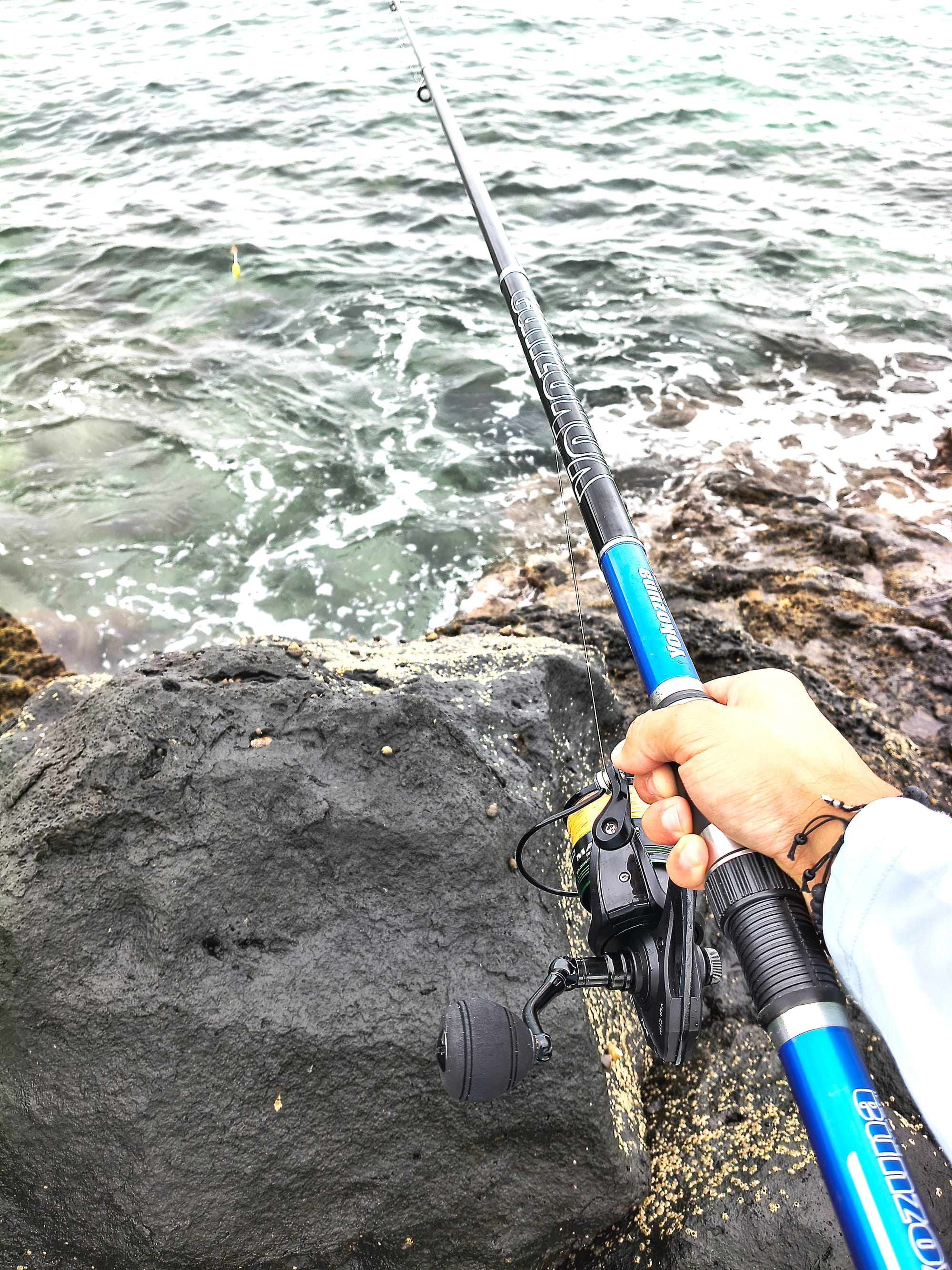
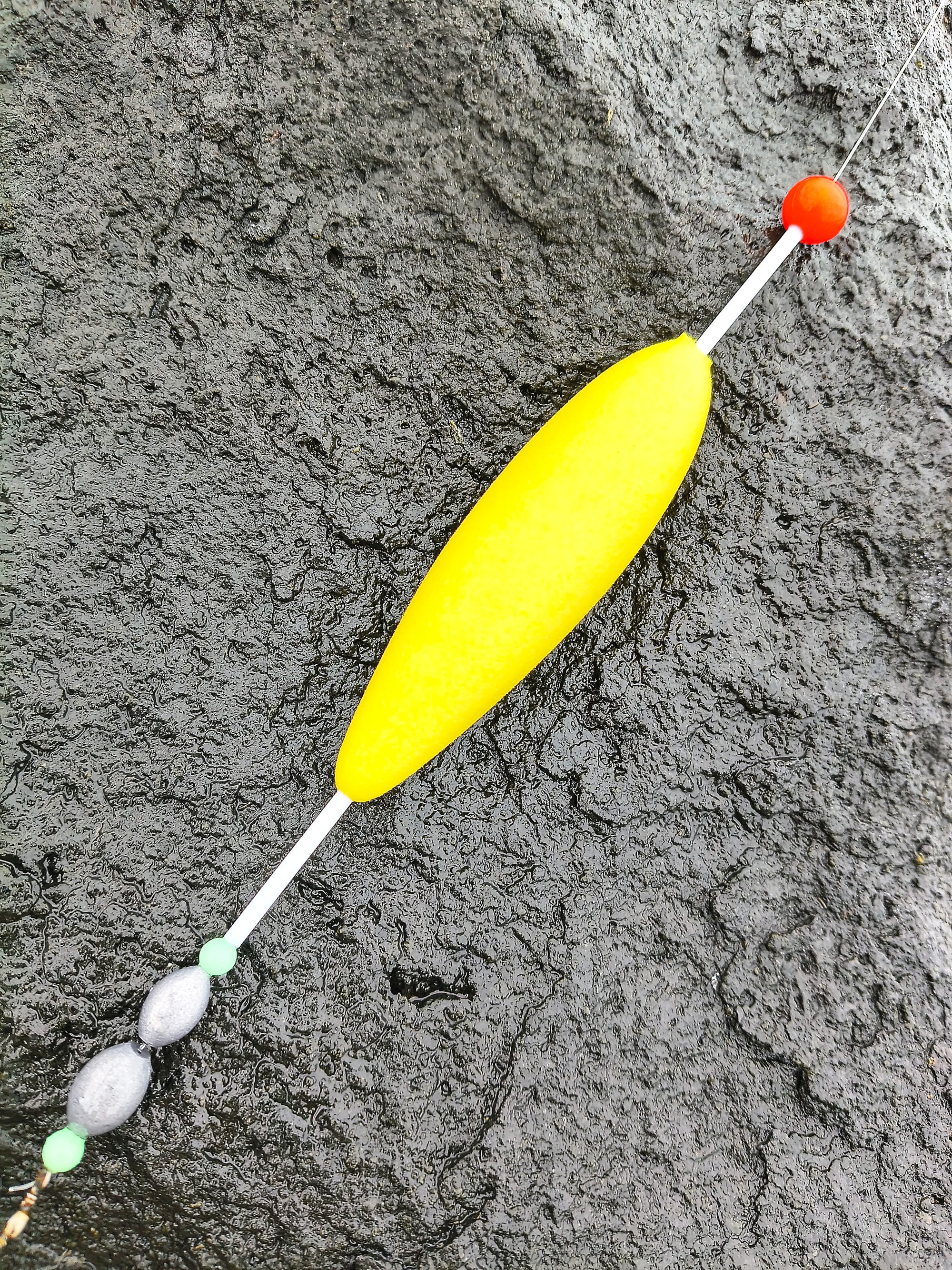
L'attrezzatura per la passata oceanica con potenti canne telescopiche e galleggianti generosi.
Strategia - La vera differenza risiede nella quota esatta a cui lavora l'esca rispetto agli anfratti sommersi e al comportamento delle singole specie. Con il pesce pappagallo l’inganno deve fluttuare a dieci o venti centimetri dalla roccia per intercettare la sua mangiata timida e cadenzata, mentre per predatori fulminei come labridi e sciarrani, rintanati negli spacchi bui, serve una passata più dinamica e l'ardiglione leggermente esposto, pronti a una discesa netta del segnalatore. Muoversi lungo le falesie oceaniche impone però una lettura attenta del moto ondoso e dei cicli lunari, con una netta preferenza per la marea montante, momento in cui il pascolo si ravviva e i pesci salgono a ridosso delle pareti. Bisogna sempre mantenere un occhio vigile sull'orizzonte, l'Atlantico non concede distrazioni e può generare all'improvviso onde anomale capaci di spazzare la postazione e bagnare tutta l'attrezzatura. Scarponcini dal grip sicuro per non scivolare e uno zaino essenziale sono fondamentali per esplorare continuamente nuovi canaloni senza fossilizzarsi per ore sullo stesso scoglio, trasformando l'uscita in una continua scoperta del territorio.
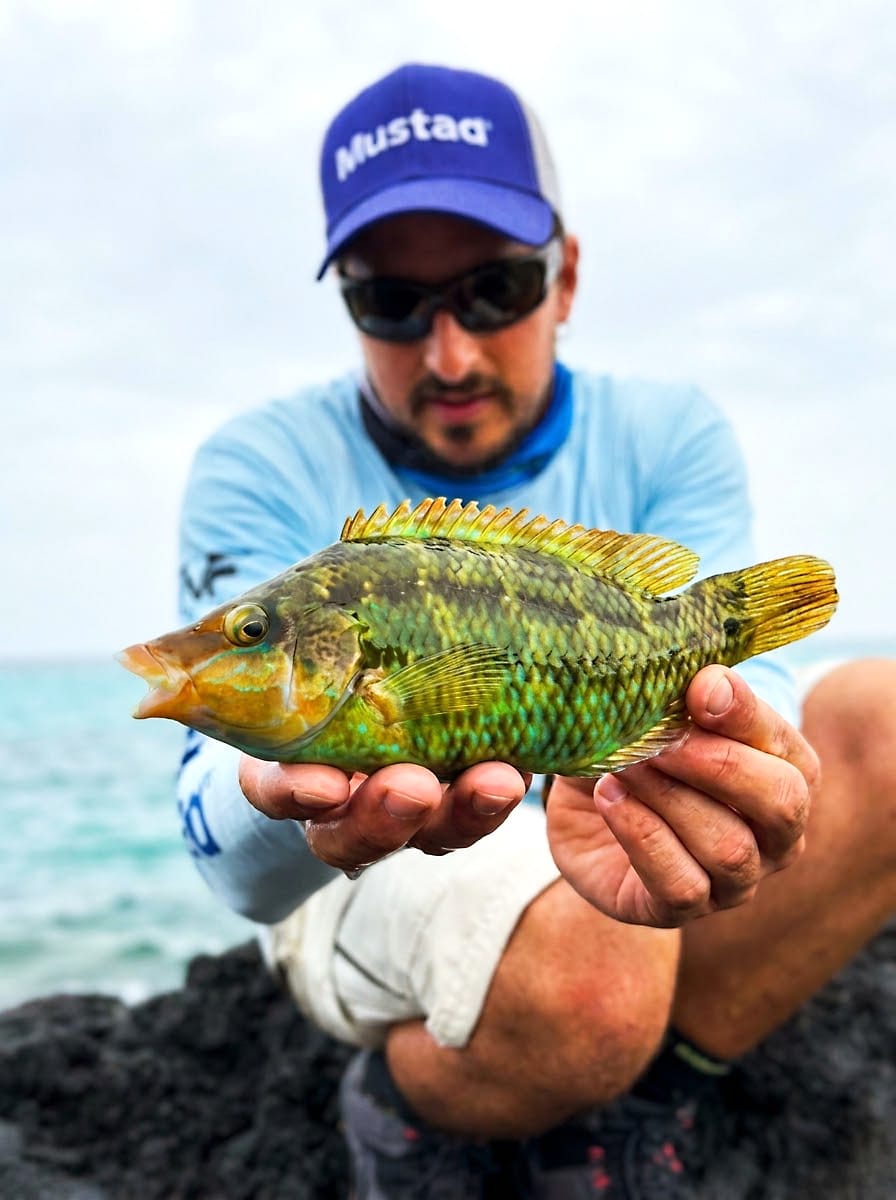
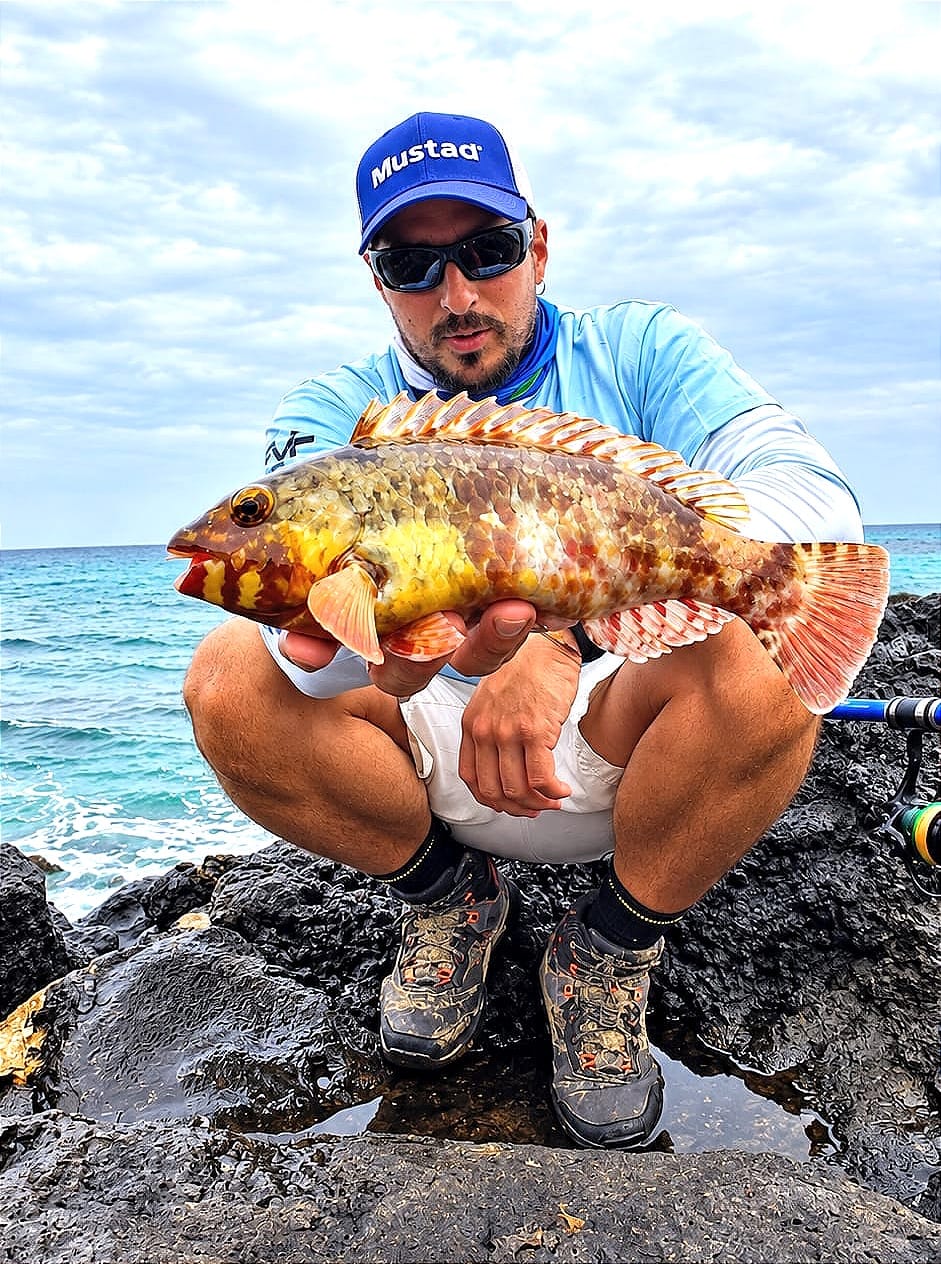
La sessione - Ricordo una sessione magica sul ciglio di una ripida parete vulcanica, affacciata su un salto di roccia e sabbia memorizzato tempo prima durante un'uscita di snorkeling. Impostata la profondità corretta e innescato un boccone combinato di totano e gambero, è bastato lanciare a ridosso della caduta per vedere il galleggiante sussultare con grazia e affondare con decisione. Alla ferrata, la canna ha subito incassato le testate vigorose di una splendida vieja canaria, dai colori fiammeggianti tra il rosso vivo e il giallo zafferano, che dopo un serrato duello a frizione chiusa si è lasciata fotografare prima di tornare nel suo regno liquido. Da quel momento ogni calata ha regalato uno spettacolo continuo di sciarrani dorati, tordi pavone, saraghi maggiori, occhiate e scorfani mimetici, trasformando la scogliera in un teatro vivo dove la meraviglia si rinnovava a ogni recupero.
Il valore di ogni cattura - Il valore autentico di una cattura non si pesa in chili o in centimetri, ma nella purezza del confronto con la natura incontaminata, ritrovando una quiete mentale che solo la solitudine della costa oceanica sa donare. La bellezza del mare risiede anche nella sua fragilità, ed è per questo che trovo privo di senso il prelievo indiscriminato. Prelevare ciò che serve è comprensibile, ma praticare un catch and release convinto è l'unico modo per chiudere questa sfida leale, rispettando la vita e portando con sé solo la magia indelebile dell'incontro. Quando il sole cala e incendia l'orizzonte, ciò che resta sulla roccia non è il peso del carniere, ma il battito accelerato di una ferrata nel blu. Guardare quella livrea multicolore svanire nell'abisso con un colpo di coda regala la vittoria più autentica, aver sfidato la forza dell'oceano a mani nude, lasciandone intatta l'anima selvaggia. Perché alla fine non si pesca per possedere il mare, ma per farsi ricordare da lui per una frazione di secondo.

When the quarry is difficult, the weight and size of the catch are not what matters. What counts is the angler’s ability to identify the challenges and overcome them, even when they are as demanding as the ocean tides.
Another fishing adventure takes shape among the ocean’s imposing cliffs, where sheer volcanic rock meets the majestic power of the Atlantic. Walking along these ledges on Fuerteventura means entering a primordial world, its rhythm set by constant climbs and descents over lava rock and frequent checks of the tide tables, the faithful, silent companions of every outing. The aim is to find the colourful reef fish that inhabit Canary Island waters, fascinating creatures that turn every stretch of seabed into an underwater kaleidoscope.
Preparing for action – Two words are key: measurement and reaction. Calculating, with near-perfect accuracy, the depth at which to suspend the bait, adjusting to the constantly changing sea level, and having the lightning-fast reflexes needed to strike as soon as the float gives a signal make all the difference between a blank day and an experience filled with unforgettable excitement. This sliding-float technique is a true return to the purest roots of angling. The tackle is basic, almost sparse at first glance, yet it has the reserve of power and the strength needed to counter the furious runs of fish that, once hooked, head straight for the darkest, sharpest crevices in the rocks to find shelter and break the line. Dawn and sunset light up the horizon with breathtaking contrasts of colour, while the cobalt blue and crystal-clear azure reveal steps of solidified lava, submerged fissures and expanses of pale sand. The gleaming gold of comber, the emerald-green reflections of wrasse and the spectacular camouflage of parrotfish, whose colours can change to warm, fiery shades, create precious memories to treasure in fishing diaries and in the heart.
Tackle – For this roving style of fishing, I rely on 3.70 or 3.90-metre telescopic rods rated at 80–120 grams. They offer an excellent compromise, allowing me to work the bait well clear of the jagged rocks and fish for long periods without tiring my arms and back as I move continually between marks along the coast, while still providing enough power for larger fish. The line runs through 25 or 30-gram sliding floats, protected by adjustable stops and knot-protecting buffer beads, paired with sturdy 5000 or 6000-size reels loaded with high-visibility braid. To eliminate the risk of break-offs against abrasive rock, I add ten metres of 0.40 mm fluorocarbon shock leader, a substantial 0.30 mm hooklength and a forged hook such as a size 4 Mustad Chinu with an inward-pointing tip, ideal for its exceptional strength and ability to hold the bait securely. This generous hook size is indispensable for withstanding the bony beak of the vieja canaria and prevents deep hooking, keeping the fish in good condition for a successful release. Among the baits, prawn releases an irresistible scent trail but does not last long under attack from small fish, whereas squid is more elastic and tougher, standing up well to the first assaults while you wait for a larger fish. One small trick for arousing the fish’s curiosity in the foaming backwash is to thread a tiny red or fluorescent bead directly above the hook eye.
Strategy – The real difference lies in the precise depth at which the bait works in relation to the submerged crevices and the behaviour of each species. For parrotfish, it must hover ten or twenty centimetres above the rock to intercept their tentative, measured bites. Lightning-fast predators such as wrasse and comber, concealed in dark cracks, require a more dynamic drift and a slightly exposed barb, with the angler ready for the float to plunge decisively. Moving along ocean cliffs also calls for careful reading of the swell and lunar cycles, with a clear preference for the flooding tide, when feeding activity increases and fish move up close to the rock faces. Always keep a watchful eye on the horizon: the Atlantic allows no lapses in attention and can suddenly produce rogue waves capable of sweeping the fishing position and soaking all the tackle. Boots with reliable grip and a lightly packed rucksack are essential for continually exploring new gullies rather than remaining on the same rock for hours, turning the outing into an ongoing discovery of the coastline.
The session – I remember a magical session on the edge of a steep volcanic cliff, overlooking a drop-off of rock and sand that I had noted some time earlier while snorkelling. Having set the correct depth and baited up with a combination of squid and prawn, all it took was a cast beside the drop-off to see the float tremble delicately before sinking decisively. As I struck, the rod immediately absorbed the powerful head shakes of a magnificent vieja canaria, blazing in bright red and saffron yellow. After a hard-fought battle with the drag locked down, it posed for a photograph before returning to its watery kingdom. From that moment, every drop produced a continuous spectacle of golden comber, peacock wrasse, white seabream, saddled seabream and camouflaged scorpionfish, turning the rocks into a living theatre where every retrieve renewed the sense of wonder.
The value of every catch – The true value of a catch is not measured in kilos or centimetres, but in the purity of an encounter with unspoilt nature, rediscovering a peace of mind that only the solitude of an ocean coastline can offer. The sea’s beauty also lies in its fragility, which is why I find indiscriminate harvesting senseless. Keeping what you need is understandable, but committed catch and release is the only way to bring this fair contest to a close, respecting life and taking away only the encounter’s unforgettable magic. When the sun sets and sets the horizon ablaze, what remains on the rock is not the weight of the catch, but the racing heartbeat of a strike in the blue. Watching that multicoloured fish disappear into the depths with a flick of its tail brings the truest victory: having challenged the ocean’s strength with your bare hands while leaving its wild spirit intact. Because, in the end, we do not fish to possess the sea, but to be remembered by it for a fraction of a second.
Commenti ()