
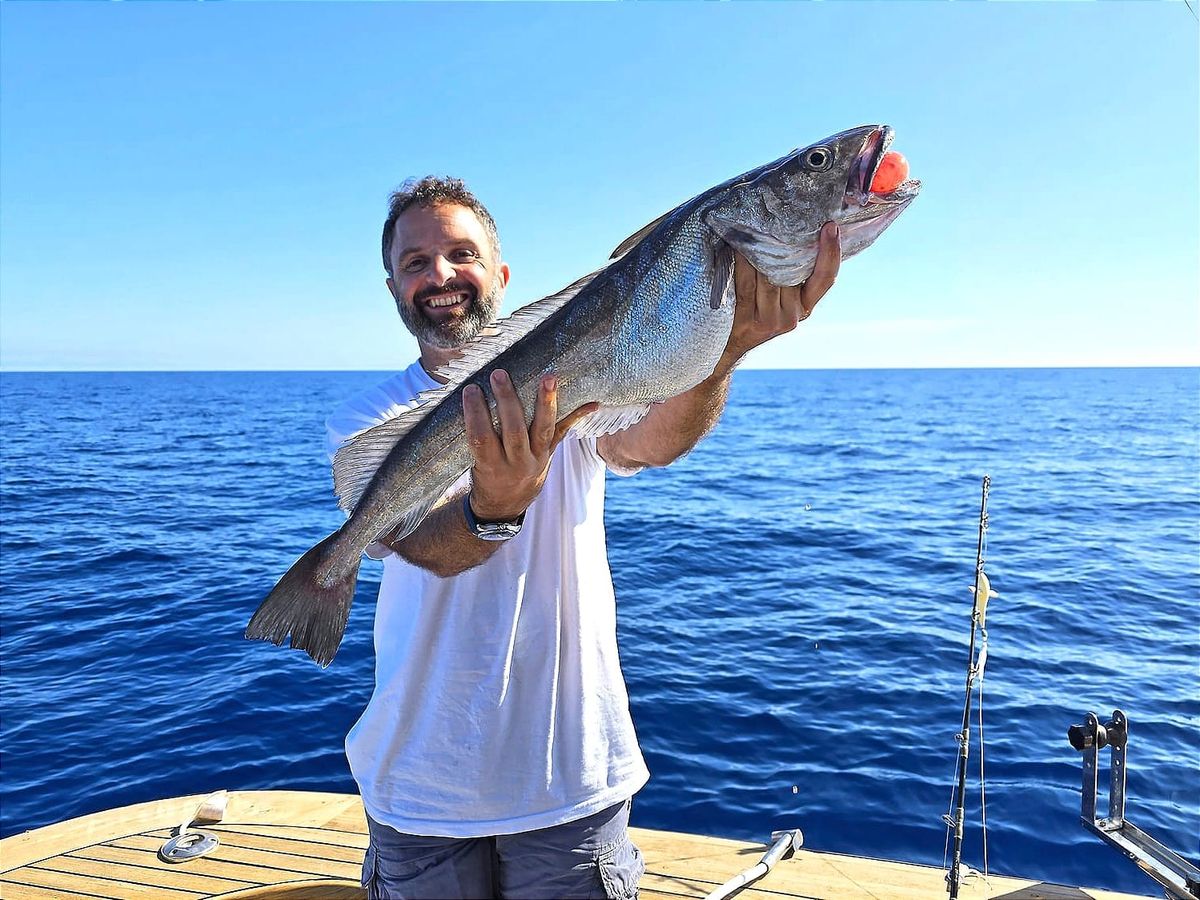
Il bolentino di profondità riserva sempre qualche sorpresa e il nasello è una di queste. Non è una preda molto divertente, ma una volta a bordo è sempre festa, preludio di un ottimo pasto per le sue inconfondibili delicate, gustose e bianche carni.
foto in alto: Maksimilian con un maxi nasello che supera i 6 chili.
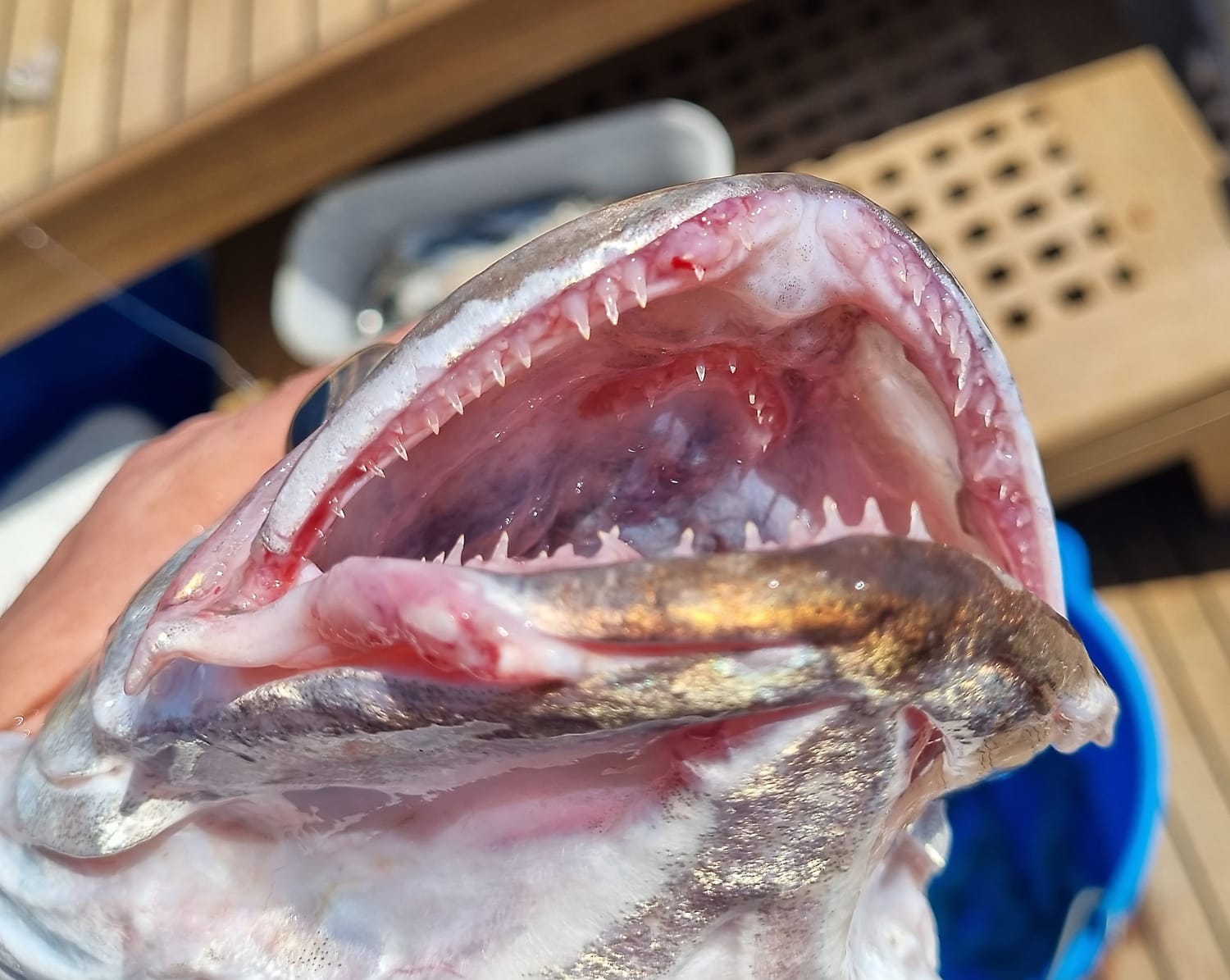
Nella pesca in mare, ogni specie ha il suo prestigio, il suo appeal, ed è innegabile che ci siano specie minori, poco ricercate e altre specie cosiddette “regine” che invece sono presenti nei sogni e a volte anche negli incubi dei pescatori. Nel bolentino di profondità la specie regina è l’occhione, ma il sogno proibito forse è la cernia “americana” forse a causa della mole e della rarità, ma c’è un’altra specie che non ha niente da invidiare in termini di dimensioni (arriva a 15 chili) e anche appetibilità culinaria: il merluzzo, ma dovremmo più correttamente chiamarlo nasello. Si tratta di un famelico predatore che troviamo dai 100 ai 700 metri di profondità su una moltitudine di substrati. Ha una vistosissima dentatura da predatore degli abissi con denti prominenti distribuiti su entrambe le mascelle e destinati più ad afferrare la preda che a masticarla, infatti si nutre di altri pesci e cefalopodi ed è solito predare anche individui della sua stessa specie, come spesso accade ad alta profondità. Un po’ come la cernia di fondale, è presente anche su terreni fangosi, ancora meglio se in presenza di rocce nelle vicinanze. In questi habitat misti è molto facile trovare tutte le principali specie del bolentino ultra profondo (oltre i m 300), altrettanto facile è riuscire a catturare diversi esemplari nello stesso luogo. Infatti, a differenza degli occhioni che abitualmente formano banchi di decine di esemplari, i naselli sono di abitudini meno gregarie, ma non è impossibile in determinati spot catturarne diversi e spesso di taglie molto diverse. Quest’ultimo aspetto ci porta a due metodi principali per insediare questa specie: in scarroccio e all’ancora.
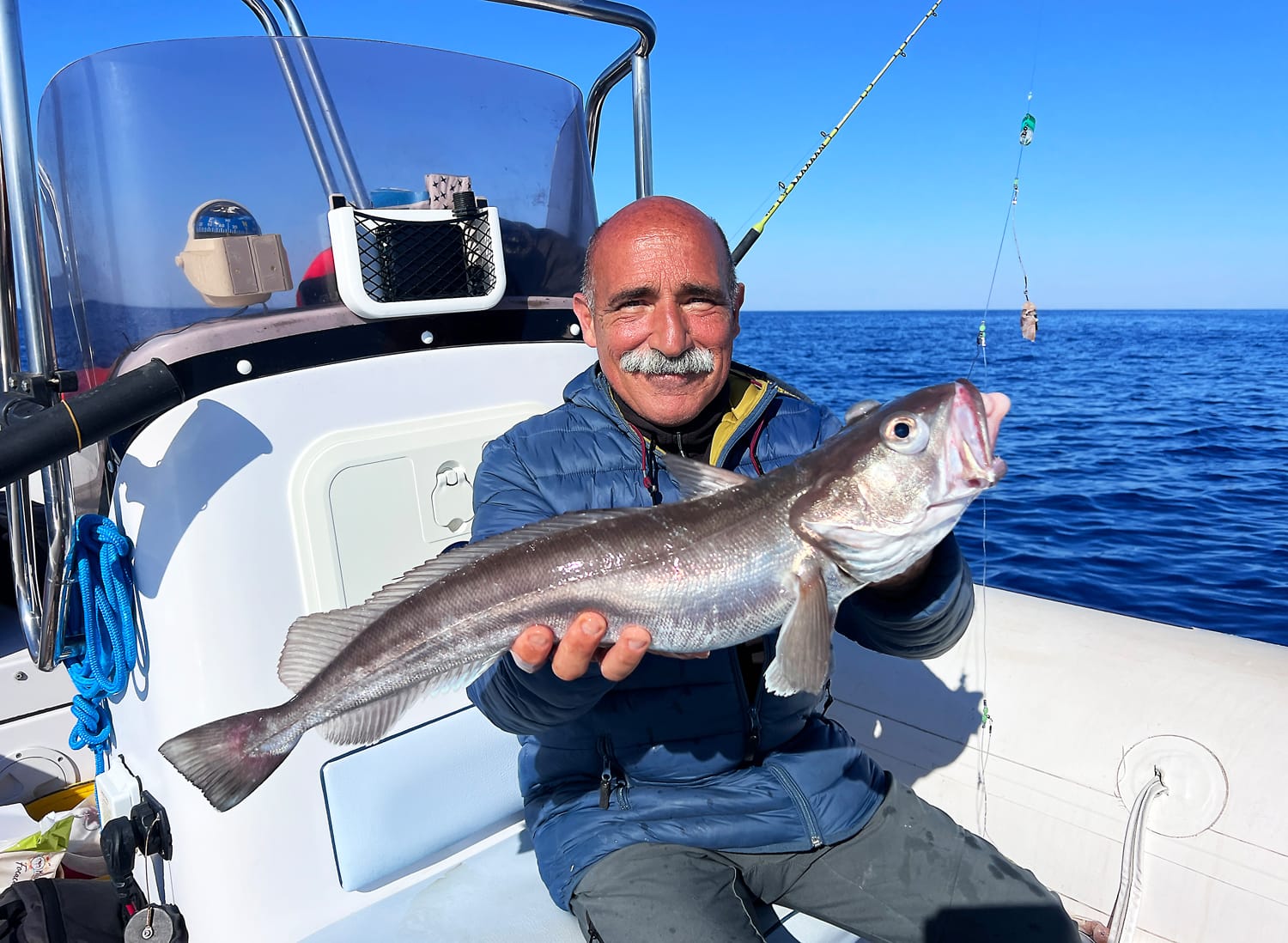
Scarroccio - Se le condizioni di vento e corrente lo consentono, lo scarroccio in zone sconosciute, ma che riteniamo promettenti, alzando a intervalli il piombo dal fondo in modo che il terminale segua lo spostamento della nostra imbarcazione. Questo metodo, richiede sicuramente tempo e molta pazienza, ma è forse la migliore soluzione quando non conosciamo uno spot e non troviamo marcature sull’ecoscandaglio che ci convincono. È un’esplorazione fatta con le lenze sul fondo, e può portare a bellissime sorprese.
Ancorati - Il secondo metodo prevede di fermarsi in un punto che riteniamo propizio e attendere… per poi eventualmente spostarsi se dopo un tempo ragionevole non accade ciò che desideriamo. Per il terminale invece, va bene quello classico per il bolentino ultra profondo: 4 o 5 ami circle 4/0 e 1 o 2 ami in alto 7/0 magari vicino a una fonte luminosa, ed è probabile che gli esemplari più grossi li prenderemo in genere su questi primi due ami. Come esche consiglierei sarde sugli ami più piccoli e calamari interi su quelli grandi. Il comportamento in canna di un grosso nasello è simile a quello di una cernia, qualche eventuale tocca decisa e poi una sensazione di resistenza passiva, una sorta di “partenza” e poi un combattimento che dura finché l’embolia non contribuisce a far aggallare la nostra preda.
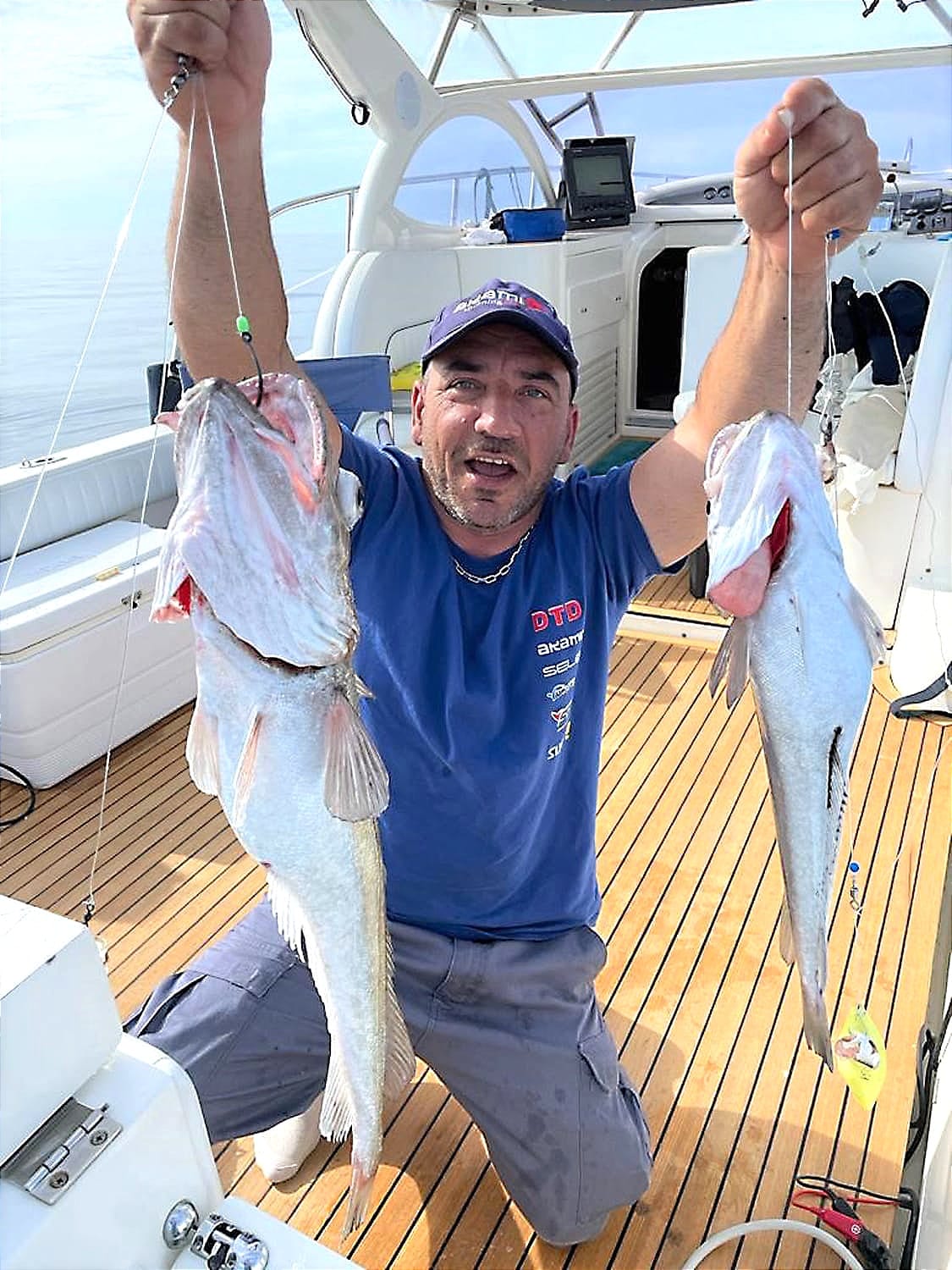
Una curiosità - Il nasello è una specie che soffre molto lo sbalzo di pressione e per questo siamo abituati a vederlo deformato e goffo a causa dell’estroflessione della vescica natatoria. Ma se vi dovesse capitare di vederlo in superficie di notte attirato da qualche fonte luminosa, notereste il suo aspetto sinuoso ed elegante ma anche da predatore. Come altri pesci di habitat profondi infatti è solito stazionare sul fondo durante il giorno e risalire verso la superficie nelle ore notturne per predare.
Scheda tassonomica
Il nasello, Merluccius merluccius, definito impropriamente, anche dallo scrivente, semplicemente merluzzo, appartiene al vastissimo ordine dei gadiformi che comprende le famiglie Merlucciidae, Gadidae e Phycdae che comprendono sia la musdea, sia il merluzzo (in genere di provenienza atlantica) propriamente detto, dal quale, a seconda della specie e della lavorazione si ricava quello che commercialmente viene definito baccalà o stoccafisso (salato il primo, affumicato il secondo).
È diffuso in tutto il Mediterraneo e in Atlantico, dalle coste del Marocco al Mar Baltico. Predilige i fondali fangosi a partire dai 100 metri e fino ai 1000. Può raggiungere il considerevole peso di 15 chili per cm 140 e il record Igfa All-tackle è stato realizzato in Norvegia nel 2019 con un esemplare di 14,8 chili, mentre l’età massima rilevata è di ben 20 anni. Si differenzia dalla famiglia dei Gadidi per l’aspetto più slanciato, la seconda pinna dorsale e quella anale di altezza pressoché uniforme, la colorazione argentea e l’assenza di barbigli e appendici inferiori. La forma della sua bocca ricorda quella del luccio e da questo trae origine il nome latino: maris lucius ossia luccio di mare. La maturazione sessuale avviene a circa 30 centimetri mentre la riproduzione, nelle nostre acque, avviene praticamente tutto l’anno con un picco invernale. È una specie a sessi separati ma le femmine crescono più dei maschi.
Il nasello riveste una notevole importanza nella pesca commerciale per le sue carni delicate e viene pescato dai professionisti con palamiti e con le reti a strascico. Queste ultime sono molto distruttive per il nasello andando a catturare gli stadi giovanili, la cui pesca, pur essendo vietata dalla normativa che prevede una misura minima di cm 20, viene ancora praticata e costituisce l’ingrediente principale di ciò che in pescheria o al ristorante viene proposto come frittura di paranza. Quello che sarebbe opportuno è limitare la strage degli stadi giovanili perpetuata dalla pesca a strascico, anche perché pur essendone vietata la commercializzazione non si evita che gli esemplari sottomisura vengano gettati a mare privi di vita.
English version
In sea fishing, each species has its own prestige, its own appeal, and it's undeniable that there are minor, less sought-after species and other so-called "queen" species that instead appear in the dreams and sometimes even nightmares of fishermen.
In deep-sea bottom fishing, the queen species is the stone seabream, but the forbidden dream is perhaps the "American" grouper. Perhaps because of its size and rarity, there's another species that is just as impressive in terms of size (it can weigh up to 15 kilos) and culinary appeal...
Cod, but we should more correctly call it hake (see the taxonomic profile), is a sinuous and ravenous predator found from 100 to 700 meters deep on a multitude of substrates. It has a striking set of teeth, typical of a deep-sea predator, with prominent teeth distributed across both jaws and designed more for grasping than chewing prey. It feeds on other fish and cephalopods and often preys on its own species, as often happens at great depths.
Much like the bottom-dwelling grouper, it is also present on muddy bottoms, even better if there are rocks nearby. In these mixed habitats, it is very easy to find all the main species of ultra-deep bottom fishing (over 300 meters), and it is equally easy to catch several specimens in the same place.
In fact, unlike the seabream, which usually forms schools of dozens of specimens, the hake is less gregarious, but it is not impossible to catch several specimens (and often of very different sizes) in certain spots.
This last aspect leads us to two main methods for establishing this species:
The first involves, if wind and current conditions allow, drifting in unfamiliar areas that we believe are promising, periodically lifting the lead from the bottom so that the leader follows the movement of our boat. This method certainly requires time and a lot of patience, but it is perhaps the best solution when we don't know a spot and don't find convincing markings on the depth sounder. It's an exploration done with the lines on the bottom, and can lead to wonderful surprises.
The second involves stopping in a spot we believe is favorable and waiting... then possibly moving if after a reasonable amount of time, what we want doesn't happen. For the leader, the classic one for ultra-deep sea bottom fishing is fine:
4 or 5 4/0 circle hooks and 1 or 2 7/0 top hooks, perhaps near a light source, and it's likely that we'll generally catch the largest specimens on these first two hooks. As bait, I would recommend sardines on smaller hooks and whole squid on larger ones. A large hake's behavior on the rod is similar to that of a grouper: a few firm bites, then a feeling of pulling, a sort of "start," and then a fight that lasts until the embolism helps bring our prey to the surface.
An interesting fact - It's a species that suffers greatly from pressure changes, and for this reason we're accustomed to seeing it deformed and clumsy due to the protruding swim bladder. But if you happen to spot it on the surface at night, attracted by some light source, you'll notice its sinuous and elegant appearance and its predatory look. Like other deep-sea fish, it typically stays on the bottom during the day and rises to the surface at night to prey.
Taxonomic profile - The hake, Merluccius merluccius, improperly referred to, even by this author, simply as cod, belongs to the vast order Gadiformes, which includes the Merlucciidae, Gadidae, and Phycdae families. These include both the forkbeard and the cod (generally of Atlantic origin), which, depending on the species and processing, is used to produce what is commercially known as cod or stockfish. It is widespread throughout the Mediterranean and the Atlantic, from the coasts of Morocco to the Baltic Sea. It prefers muddy bottoms from 100 meters to 1,000 meters. It can reach the considerable weight of 15 kg per 140 cm, and the IGFA All-tackle record was set in Norway in 2019 with a 14.8 kg specimen, while the maximum recorded age is 20 years.
It differs from the Gadidae family in its more slender appearance, its second dorsal and anal fins of almost uniform height, its silvery color, and the absence of barbels and lower appendages.
The shape of its mouth resembles that of the pike, hence its Latin name: maris lucius, meaning sea pike.
Hake is of considerable importance in commercial fishing due to its delicate flesh and is caught by professionals with longlines and trawl nets. The latter are very destructive to hake, capturing juveniles.

Commenti ()