
“Che caldo che fa!”. Possiamo continuare a ripeterlo all’infinito, senza però migliorare la situazione, o, da bravi pescatori, adattarci per quanto possibile. I pesci nuotano lontano o in fasce d’acqua più profonde? Lanciare lì è la nostra unica possibilità.
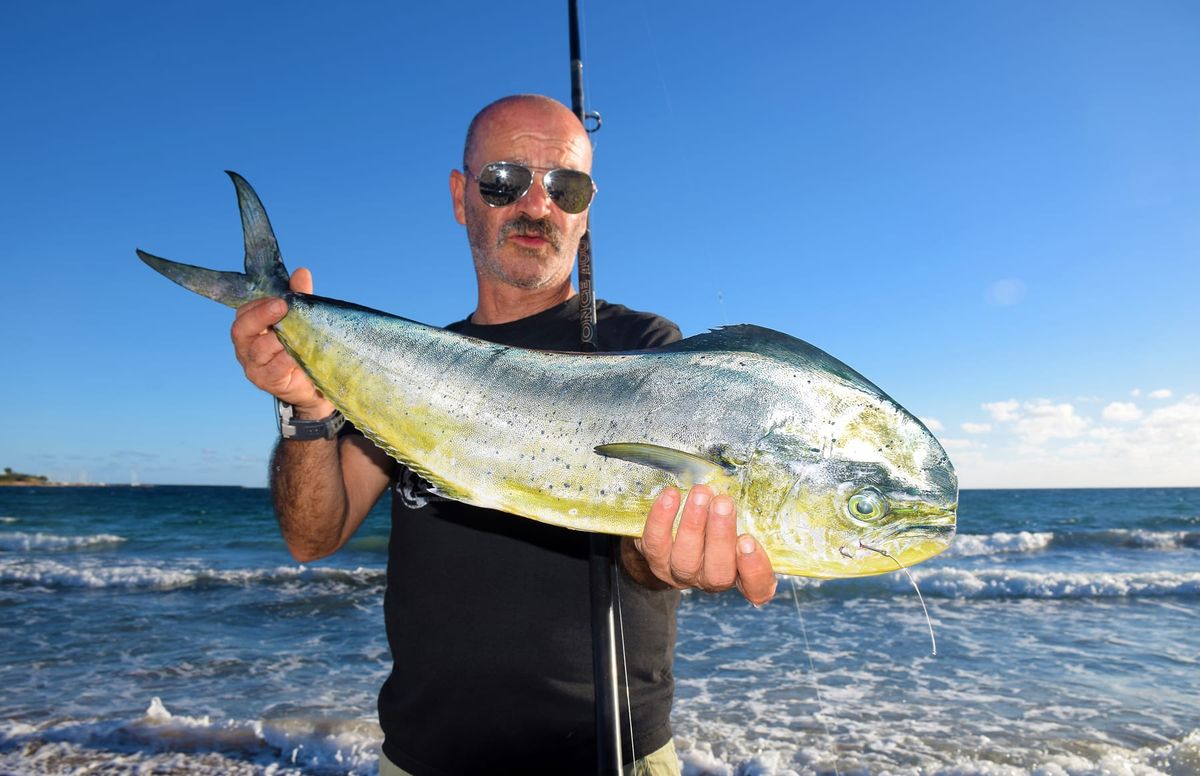
Foto in alto: i colori vivaci di una splendida lampuga brillano tra le braccia di Andrea Galiani entusiasta del mare di Flumini di Quartu.
L’’estate è da sempre la stagione calda, quest’anno diciamo che ha voluto esagerare. I dati forniti dall’Ispra (Istituto superiore per la protezione e ricerca ambientale) mostrano anomalie termiche su tutto il bacino e in particolare sull’Adriatico settentrionale e sul mar Ligure. Queste anomalie, con un aumento medio della temperatura di circa 1,5 gradi, sempre secondo Ispra, influenzano gli ecosistemi marini costieri e di profondità. Noi pescatori non possiamo che prendere atto della situazione e adattarci. Siamo sempre stati abituati a considerare i mesi di luglio, agosto e settembre, i migliori per la pesca alle grosse orate (nelle ore diurne e soprattutto all’alba e al tramonto), ai banchi di grufolatori e su tutti le mormore e, a notte fonda, ai serra. L’esperienza di tantissimi pescatori mostra però che i risultati sul campo sono stati modesti. In particolare, in Sardegna è mancato il compagno fedele di ogni surfcaster, il vento; da due mesi e più, Maestrale, Grecale e Libeccio sono assenti e gli unici refoli di vento in grado di muovere il mare sono stati provocati dalla termica che, nelle ore centrali del giorno, soffia verso la costa. Acqua caldissima, mare piatto, vento assente… ma allora è inutile andare a pesca! No, sempre Radio pesca informa che c’è ancora speranza e questa volta le parole magiche sono “distanza” e “profondità”.
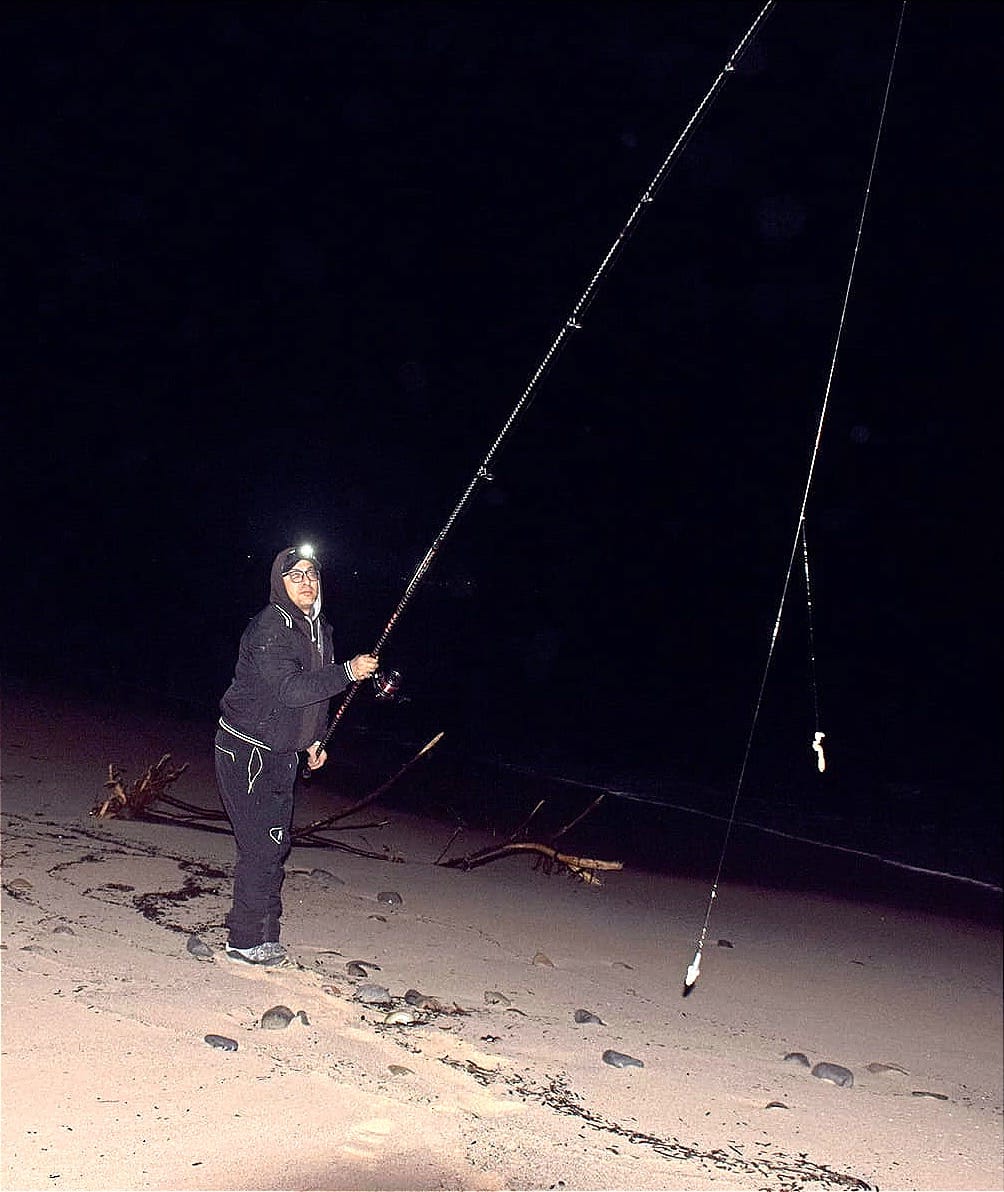
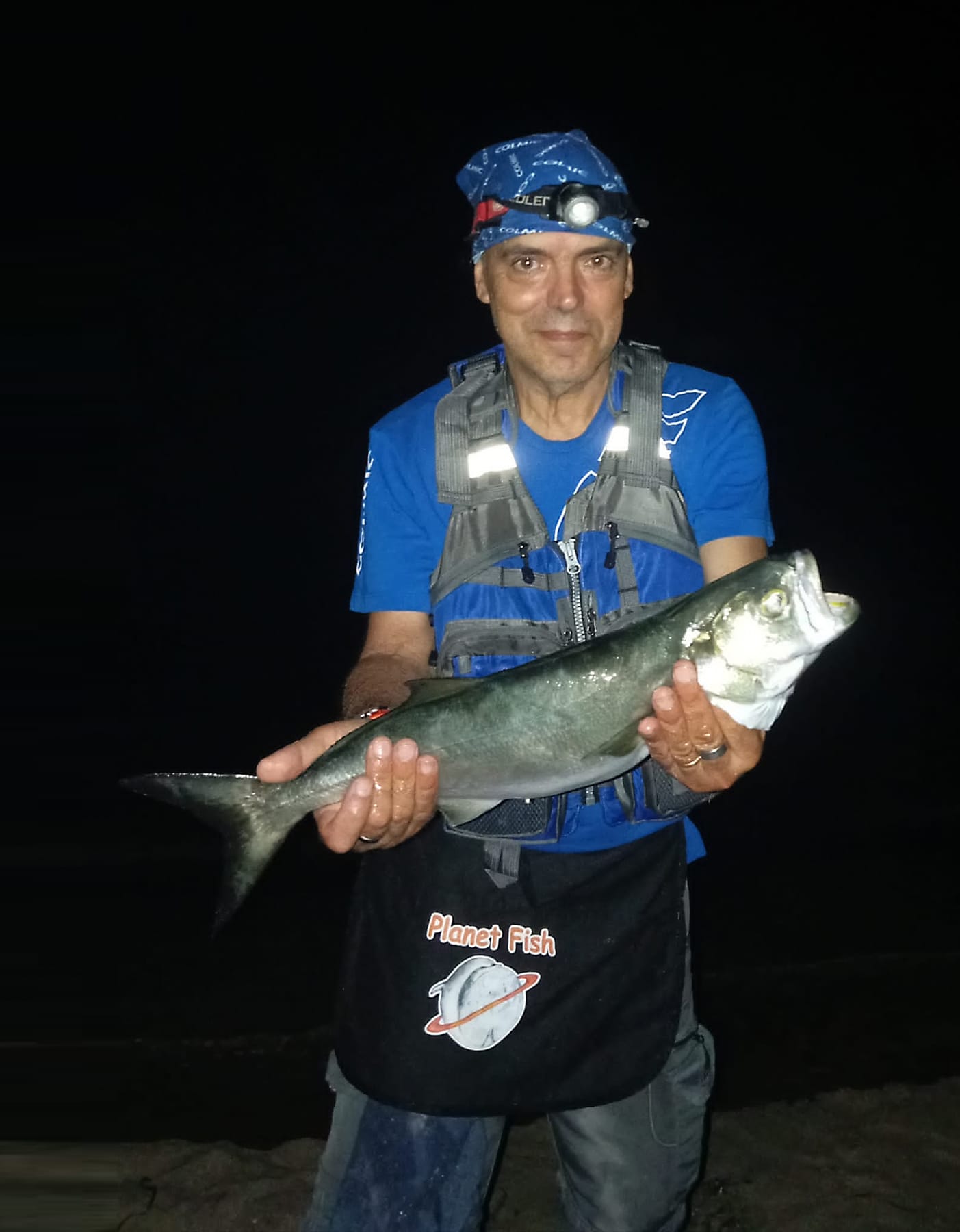
Assetto di stagione per Marco Anedda, con una paratura monoamo e bracciolo non troppo lungo. Francesco Gavino Fois con un serra pescato alle 4 del mattino dopo una notte di attacchi a vuoto; la pesca estiva è anche questo.
Lontano e profondo - A riva la temperatura del mare è esageratamente alta, troppo, anche per i pesci i quali migrano più a largo, cercando fasce d’acqua più fredde dove cibarsi. Abbiamo due alternative plausibili: lanciare lontano o pescare in spiagge che da subito mostrano fondali maggiori. Nel primo caso, è necessario ottimizzare lancio e assetto di pesca. Qualunque sia il nostro livello da longcaster, solo l’esercizio migliora la gittata. Ma dove non arriva la nostra tecnica di lancio, molto può fare minimizzare l’attrito. Quindi ampio uso di fili sottili in bobina, cercando il limite con misure da mm 0,16 e anche meno; travi con massimo due finali e braccioli il più possibile corti e sottili. Il più possibile, certo, perché in alcuni casi la lunghezza del bracciolo non può scendere sotto il metro (ricerca delle grosse orate ad esempio). Se invece decidiamo di mantenere lo stesso assetto di pesca che quindi non permette di lanciare al massimo delle nostre capacità, possiamo optare su una scelta più radicale: cambiare spiaggia. Sono ottimi gli spot che presentano un digrado evidente sin dalla battigia. Generalmente queste spiagge sono caratterizzate da una presenza maggiore di corrente e temperature del mare più basse. In questo caso l’assetto è più heavy, con 0,40 diretto e piombi che garantiscano un’ottima tenuta. Quale che sia la nostra scelta, distanza o profondità, non aspettiamoci però miracoli. Stiamo semplicemente applicando il vecchio adagio: “A mali estremi, estremi rimedi.”.
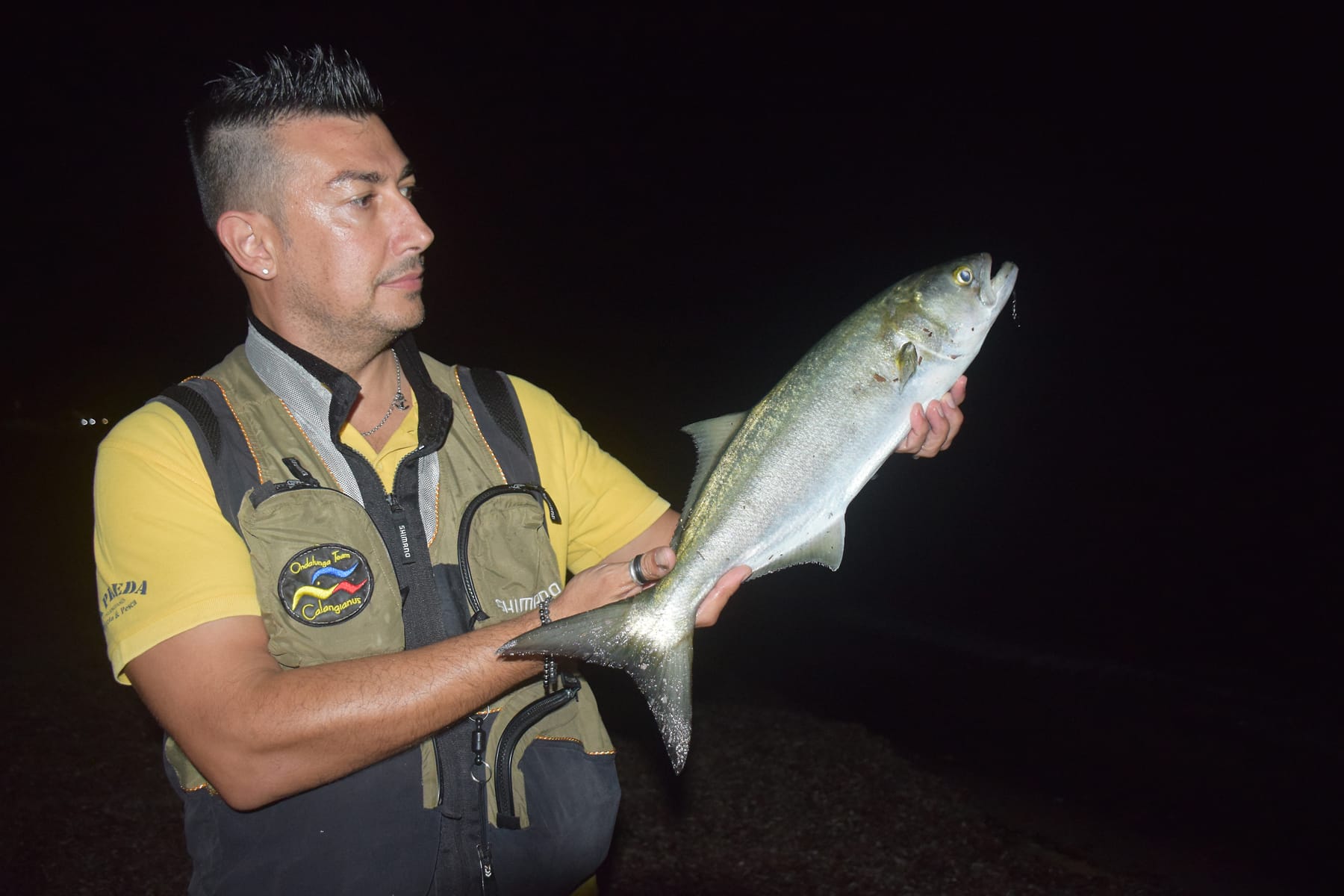
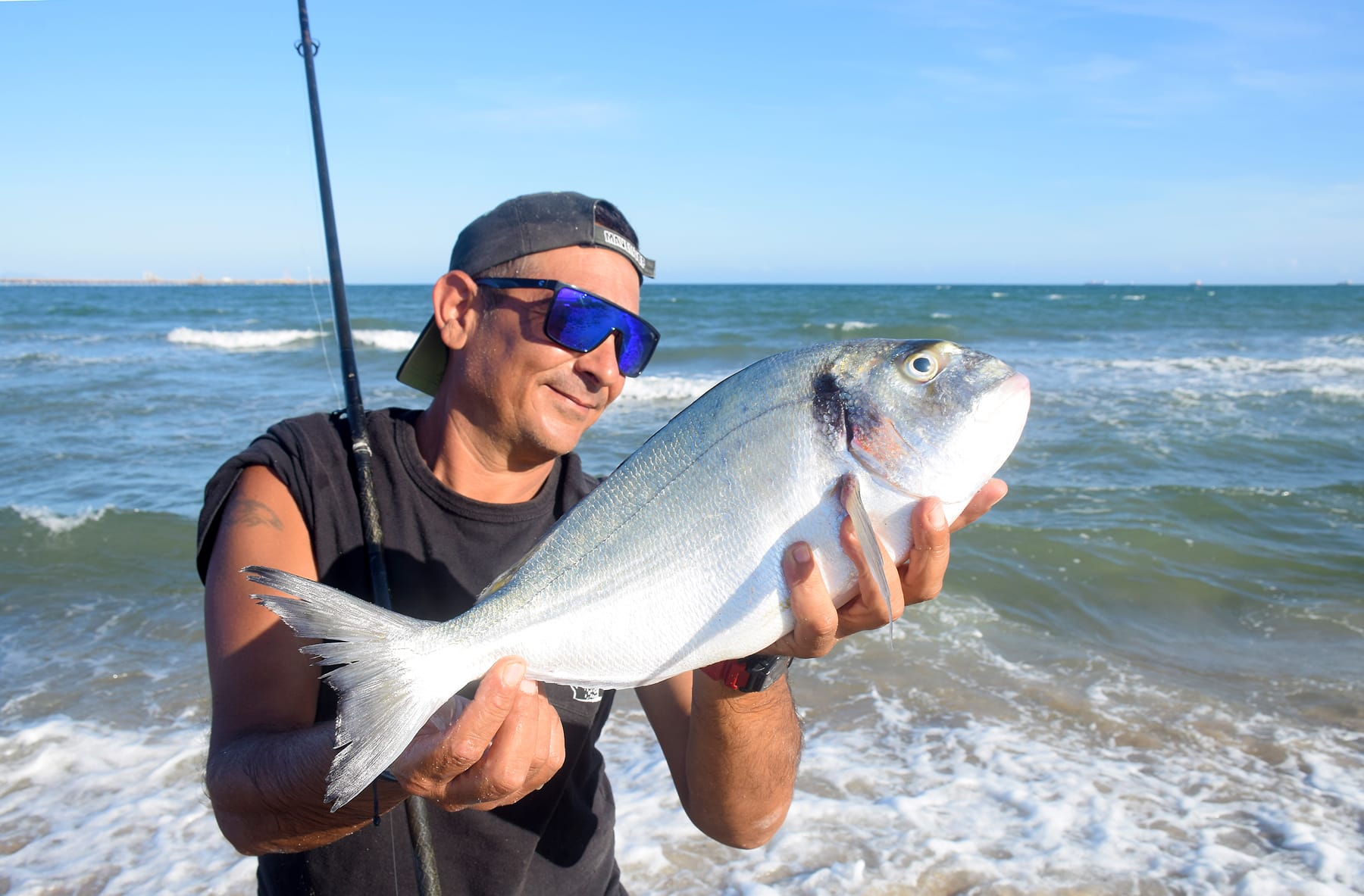
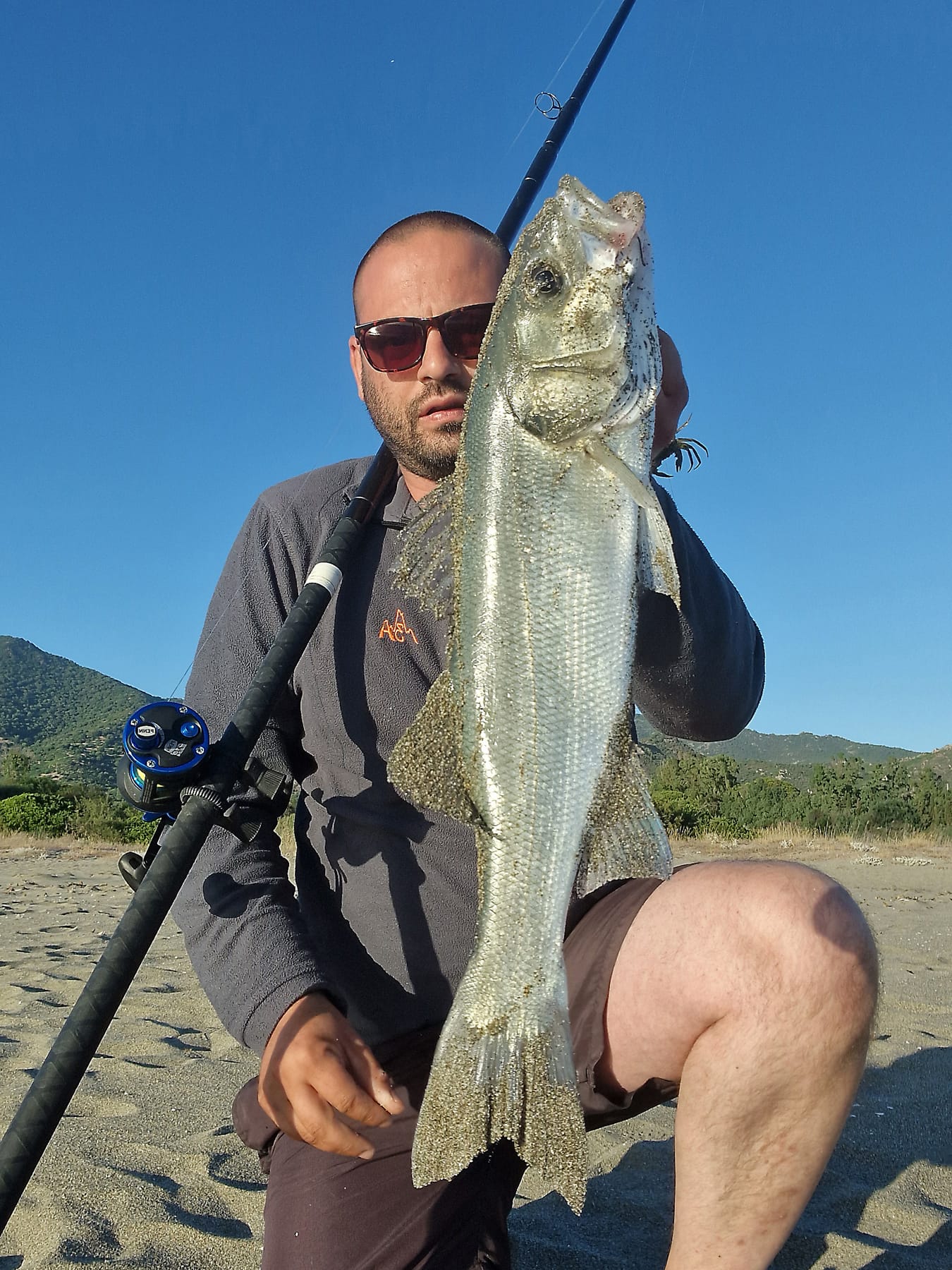
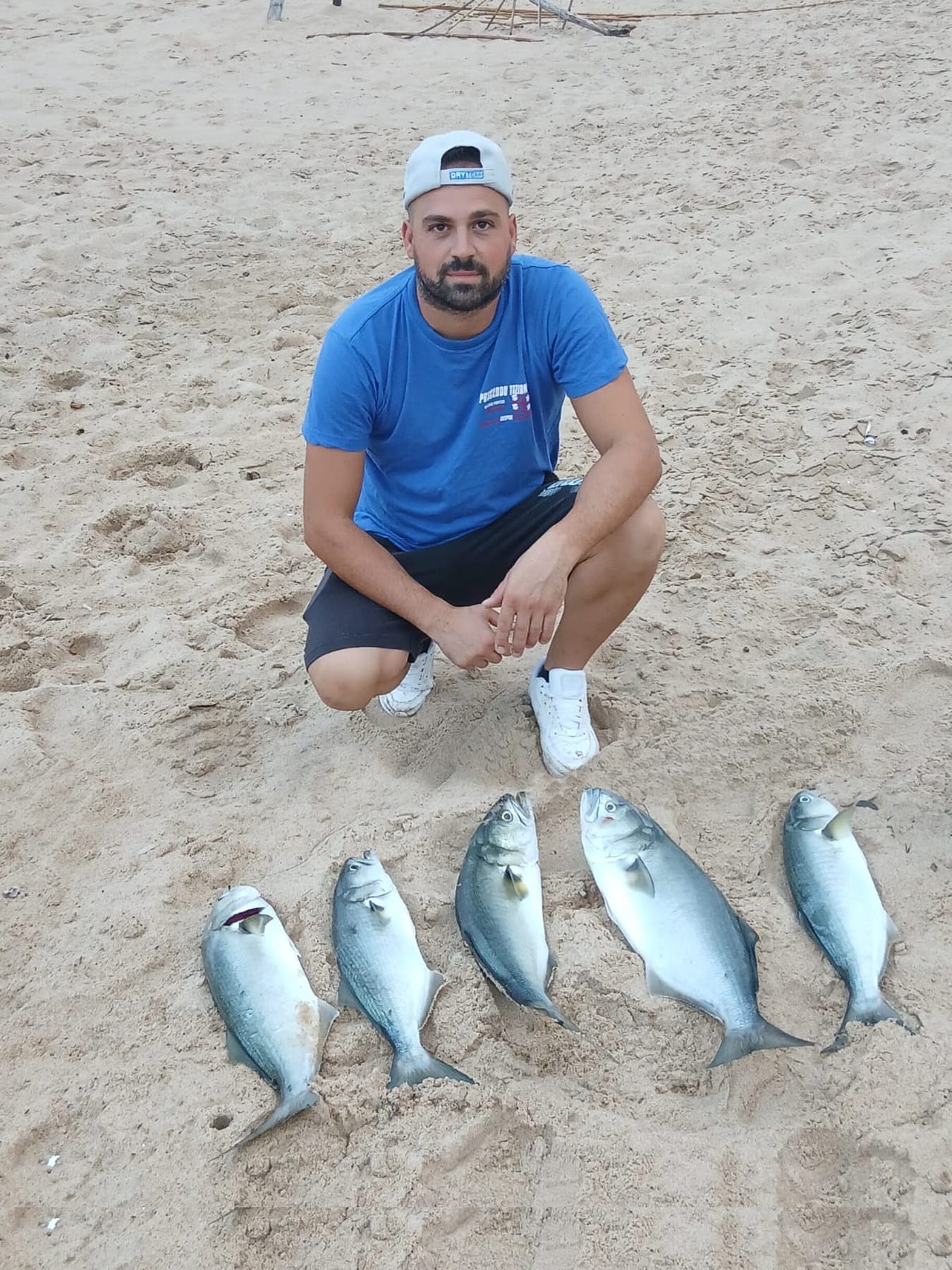
Il nostro Fabrizio Frongia, con un serra pescato in una spiaggia profonda del comprensorio di Pula. Stefano Spiga con una grossa orata, pescata lanciando lontanissimo. Alberto Cossu e, udite udite, una spigola estiva, perché se le condizioni del mare sono anomale, allora tutto è possibile. Super pescata di serra di
English version
“It’s so hot!” We can keep repeating this endlessly, without actually improving the situation, or – like good anglers – adapt as best we can. Are the fish swimming further out or into deeper waters? Casting there is our only option.
Summer has always been the hot season; this year, let’s just say it’s gone a bit over the top. Data provided by ISPRA (the Higher Institute for Environmental Protection and Research) show temperature anomalies across the entire basin, particularly in the northern Adriatic and the Ligurian Sea. These anomalies, with an average temperature rise of around 1.5 degrees – again according to ISPRA – are affecting both coastal and deep-sea marine ecosystems. We anglers have no choice but to take note of the situation and adapt. We have always regarded July, August and September as the best months for fishing for large sea bream (during the day and especially at dawn and dusk), for schools of gurnard and, above all, for striped sea bream, and, late at night, for bluefish. However, the experience of countless anglers shows that results on the water have been modest. In particular, Sardinia has been lacking the faithful companion of every surfcaster: the wind. For over two months now, the Mistral (NW wind), Grecale (NE) and Libeccio (SW) have been absent, and the only gusts of wind capable of stirring the sea have been caused by the thermal wind which, in the middle of the day, blows towards the coast.
Scorching water, a glassy sea, no wind… so there’s no point in going fishing! No, “Radio Pesca” is here to tell us that there’s still hope, and this time the magic words are ‘distance’ and ‘depth’.
Far out and deep – Near the shore, the sea temperature is far too high, even for the fish, which are migrating further out to sea in search of cooler waters where they can feed. We have two plausible alternatives: casting far out or fishing from beaches where the seabed drops off sharply. In the first case, it’s essential to optimise your cast and fishing set-up. Whatever our level as a long-distance caster, only practice improves casting distance. But where our casting technique falls short, minimising drag can make a big difference. So make extensive use of fine lines on the reel, pushing the limits with lines as thin as 0.16 mm or even finer; leaders with a maximum of two ends, and rigs that are as short and thin as possible. As short as possible, of course, because in some cases the length of the leader cannot be less than one metre (when targeting large sea bream, for example). If, on the other hand, we decide to stick with the same fishing rig – which therefore does not allow us to cast to the full of our capabilities – we can opt for a more radical solution: changing beaches.
The best spots are those with a clearly sloping seabed right from the shoreline. Generally, these beaches are characterised by stronger currents and lower sea temperatures. In this case, the rig is heavier, with a 0.40 main line and sinkers that ensure excellent stability. Whatever our choice – distance or depth – let’s not expect miracles, though. We’re simply applying the old adage: ‘Desperate times call for desperate measures.’
Commenti ()