
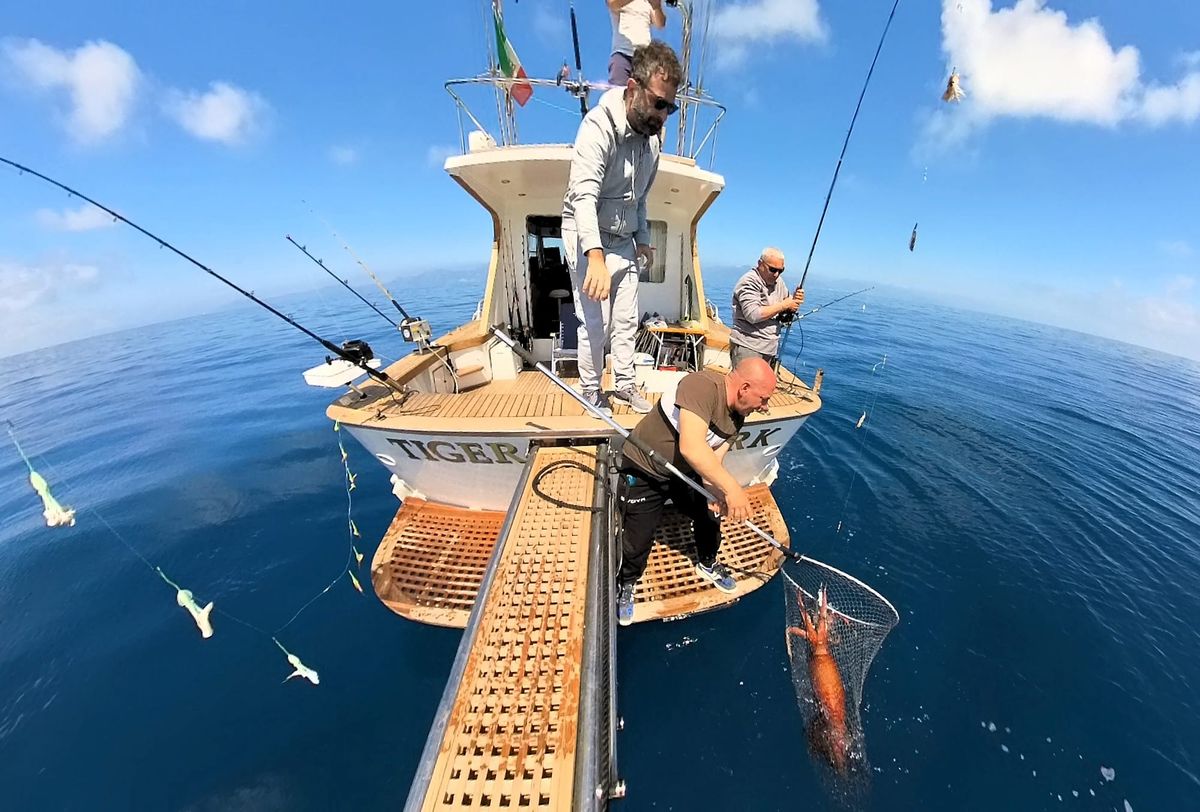
I grossi totani della Costiera Amalfitana da sempre pescati di notte, vicino alla costa, anche con piccoli barchini, adesso sono ricercati a tutte le ore e con grande successo.
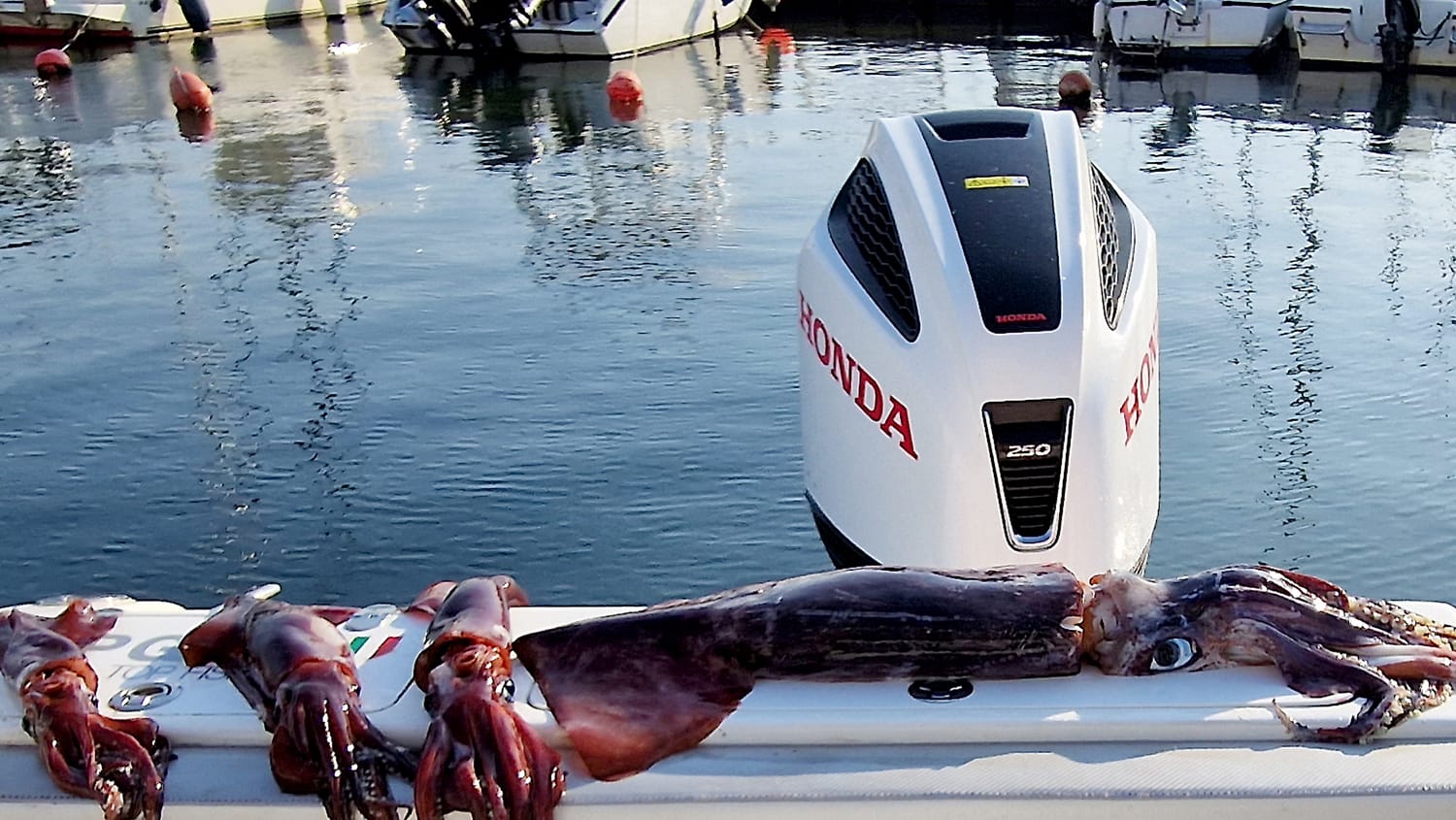
foto sopra: l'imbarco del totano è una fase cruciale, se di grandi dimensioni portarlo a bordo senza l'uso di un guadino o del raffio, potrebbe causare la rottura di un braccio e un altro tipo di rottura per noi.
La pesca al totano notturna con la classsica lenza a mano è una delle tecniche più praticate da sempre in Costiera Amalfitana a causa della particolare batimetria, tipica delle coste a picco con profondità fino a m 700 a meno di un miglio dalla costa. E ancora oggi, come nel dopoguerra, si possono trovare molti barchini a remi, con o senza richiami luminosi, che dopo il tramonto si cimentano in questa pesca, con una semplice totanara d’acciaio ricoperta di alici salate legate o di lardo di maiale.
Di notte - È un tipo pesca che nello scenario incantevole e irripetibile della Costiera illuminata, ho praticato saltuariamente in qualche notte d’estate, su un fondale di m 300-400, ma a una quota massima di 100 metri dalla superficie, con la speranza di pescare totani che però non superavano mai il chilo, e a dire il vero, nonostante le difficoltà di gestire in notturna una scivolosa lenza a mano di nylon, con l’ansia di perdere sempre “una bracciata” (e molto spesso il totano) e l’enigmatica inquietudine del mare di notte, ha sempre avuto il suo fascino.
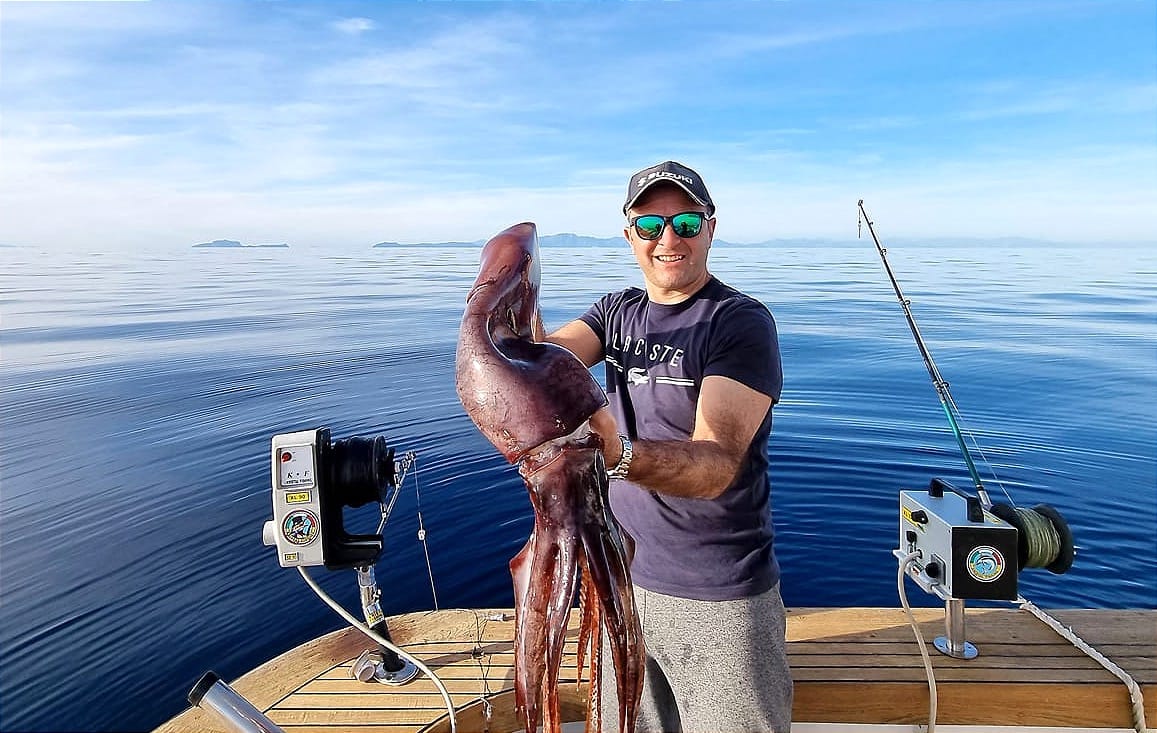
Di giorno - Poi un giorno, circa vent’anni fa, tramite passaparola, scoprii che si poteva provare di giorno su un fondale di 700 metri… E così, senza tanta convinzione, utilizzando i mulinelli elettrici che da tanti anni usavamo per il bolentino di profondità, provammo a calare un paio di totanare di quelle che si usavano nella pesca notturna tradizionale a mano, aggiungendo peso alla zavorra in modo da arrivare a un chilogrammo. Nonostante l’artigianalità del terminale pescante, le catture si susseguirono anche a coppie, anzi più volte ci capitò di subire dei grossi attacchi e non potemmo fare altro che recuperare qualche braccio di totano o la sua testa. La taglia media era 3-4 chili, praticamente un altro tipo di pesca!
La tecnica - Poi con il tempo abbiamo affinato la tecnica, utilizzando enormi totanare a 2-3 corone fino a cm 10 di diametro e fino a 1,5 chili, montante su un trave con un altro paio di totanare classiche non piombate, riuscendo così a catturare anche i mostri che prima si limitavano a strappare i loro consanguinei (eh sì, sono cannibali) dalla totanara. Abbiamo imparato a recuperare a 60-70 metri al minuto prima di constatare l’attacco e accelerare dopo in modo da ridurre tempi e rischi di slamata. Non è sicuramente una pesca molto tecnica, e manca un po’ il fattore sorpresa, anche se, a parte il gigantesco calamaro diamante (Thysanoteuthis rhombus) che raggiunge i 15 chili, può capitare anche di intercettare altre specie. A me è capitato di prendere un pesce sciabola che ha letteralmente ingoiato la totanara, e di aver avuto un attacco da uno spada che ha causato un taglio di netto del terminale. Alla luce di ciò per aumentare la probabilità, la possibilità, anzi… la speranza, consiglio sempre di aggiungere al terminale pescante un paio di generosi ami innescati, non dimenticando che ci sono altre specie batipelagiche apprezzate come i pesci castagna per esempio, che potremo insediare in questo modo.
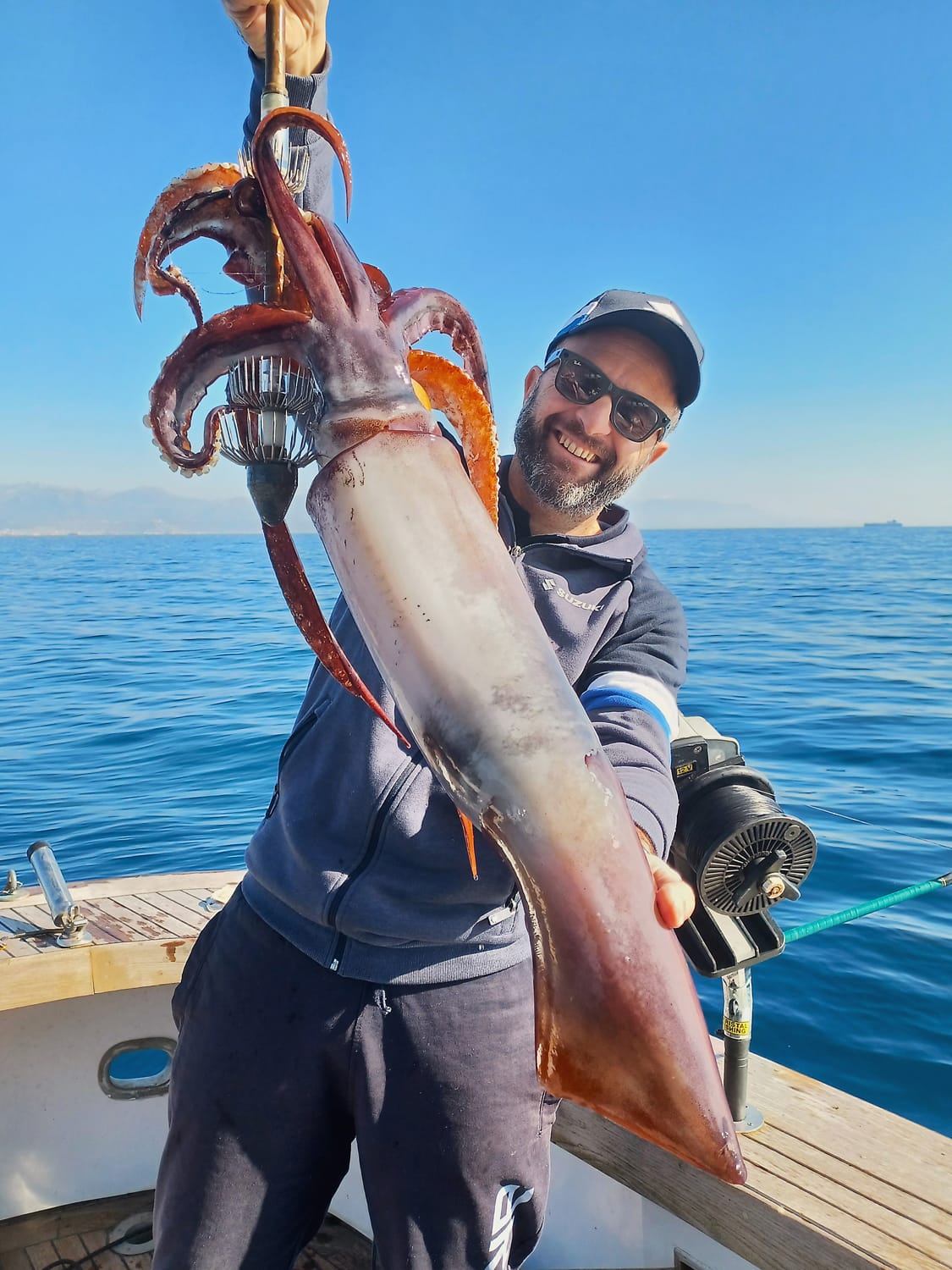
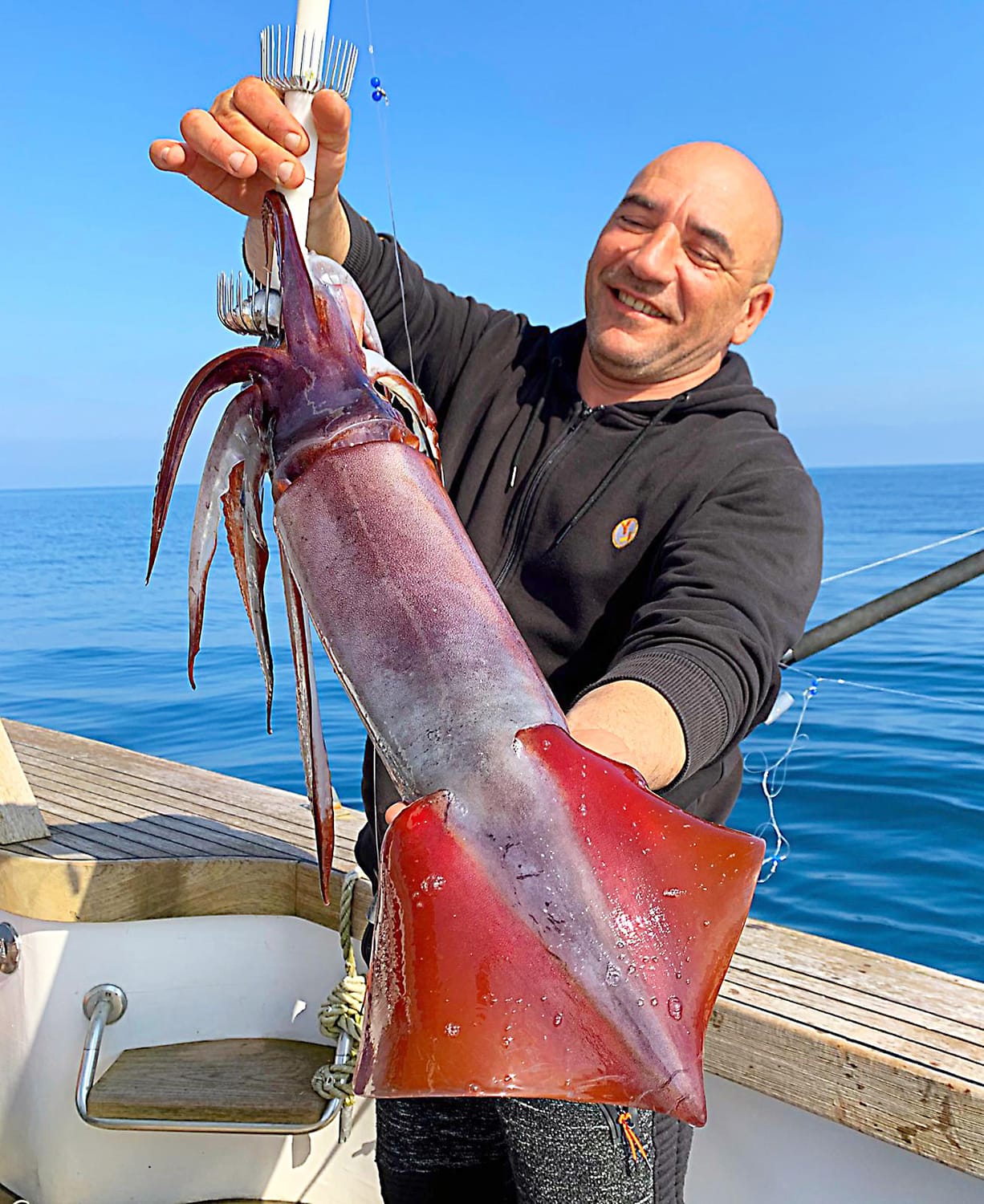
Per gli esemplari di grossa taglia sono fondamentali le doppie o triple corone sulla totanara. L'epidermide del totano è formata da migliaia di cromatofori che ne modificano in tempo reale la colorazione, dal bianco al marrone scuro.
Bolentino - Viceversa, se stiamo pescando a bolentino di profondità su fondali poco accidentati e oltre i 400 metri possiamo fare l’opposto, cioè sostituire il nostro classico piombo con una totanara. È un opzione che consiglio quando provia-mo a calare in zone poco conosciute, quando siamo alla ricerca di nuovi spot. In questo modo potremo in caso di tentativo a vuoto, rendere meno noiosa la lunga risalita. Mi è capitato in questo modo di sentire l’attacco con la totanara poggiata sul fondo e con il totano che “pompava” in una direzione come se fosse un pesce di fondo. Infine un ultimo consiglio: attenti alla discesa! Infatti, il totano, specialmente se di grosse dimensioni, è in grado di fermare la totanara all’improvviso nella sua corsa verso il fondo; questo è il momento di ferrare e iniziare il recupero con regolarità e una certa dose di rapidità.
Qualche informazione in più…
Negli oceani ci sono numerosissime specie di totano, tra le quali segnaliamo il (Dosidicus gigas) che raggiunge i 50 chili, ma nel Mediterraneo la nicchia ecologica è occupata dal Todarodes sagittatus, detto anche totano rosso o totano viola, specie che in particolar modo nel Tirreno centrale e meridionale può arrivare ai massimi assoluti, ossia cm 75 del mantello (braccia e testa escluse) e fino a kg 10. È un famelico predatore con tassi di accrescimento rapidissimi, infatti non vive più di 2-3 anni. Nella maggior parte dei casi gli esemplari extra large vengono pescati a profondità superiori ai 600 metri o anche su rilievi sommersi che si elevano da profondità abissali. È una specie a sessi separati e le femmine possiedono braccia proporzionalmente più lunghe dei maschi e sono in media più grandi. La riproduzione da noi avviene in autunno; inoltre, al pari di altre specie pelagiche, il totano ha l’abitudine di muoversi lungo la colonna d’acqua tra il giorno e la notte sia per predare che per difendersi. Si differenzia con facilità dal calamaro (Loligo vulgaris) per forma e dimensione delle pinne che, nel caso di quest’ultimo occupano buona parte del corpo, mentre nel caso del totano solo la parte apicale del mantello a formare una sorta di freccia (sagitta). Inoltre, la colorazione del calamaro va dal trasparente al rossiccio, mentre quella del totano dal rosso ruggine al viola scuro.
Fresco è buono, congelato è meglio!
Leggo spesso sui social che i totani di grosse dimensioni siano immangiabili, che sappiano di urina, e che siano durissimi e che sia un grosso danno ecologico la loro uccisione. Pur avendo notato negli anni nella mia zona abituale di pesca un certo calo di catture, devo sfatare alcuni luoghi comuni: un esemplare di 10 chili è alla fine del suo ciclo di vita, non c’è alcuna differenza di odore in base alle dimensioni, e anche gli esemplari più grandi, se frollati un paio di settimane nel congelatore domestico e trattati a dovere, sono assolutamente buoni.
English version
Devils on the Coast
Night fishing for flying squid with the classic handline has always been one of the most practiced techniques on the Amalfi Coast, because of the particular bathymetry typical of sheer coastal cliffs, with depths down to 700 meters less than a mile from shore. Even today, as in the postwar years, one can find many small rowing boats, with or without light attractors, that after sunset try this fishing with a simple steel squid jig covered with tied salted anchovies or pork lard.
At night - This is a type of fishing that, in the unique and enchanting setting of the illuminated Coast, I have practiced occasionally on summer nights, over 300 to 400 meters of water but fishing no more than 100 meters below the surface, hoping to catch flying squid that, however, never exceeded a kilo. To tell the truth, despite the difficulty of handling a slippery nylon handline at night, with the anxiety of always losing "an armful" of line, and very often the squid, and despite the enigmatic unease of the sea at night, it has always had its charm.
By day - Then one day, about twenty years ago, by word of mouth, I discovered that one could try during the day over 700 meters of water. So, without much conviction, using the electric reels we had long used for deep bottom fishing, we lowered a couple of the squid jigs used in traditional night handline fishing, adding weight until the sinker reached one kilogram. Despite the rough, handmade nature of the terminal rig, the catches came one after another, sometimes even in pairs. In fact, more than once we suffered heavy attacks and could do nothing but retrieve a few squid arms or its head. The average size was three to four kilos: practically a different kind of fishing.
The technique - Over time we refined the technique, using huge squid jigs with two or three crowns up to 10 centimeters in diameter and up to 1.5 kilos, mounted on a mainline with a couple of classic unweighted squid jigs. This allowed us to catch the monsters that before had merely torn their own kind, yes, they are cannibals, from the jig. We learned to retrieve at 60 to 70 meters per minute before detecting the strike and then accelerate, reducing both time and the risk of losing the fish. It is certainly not a very technical kind of fishing, and it lacks some of the surprise factor, although, apart from the giant diamond squid, Thysanoteuthis rhombus, which reaches 15 kilos, other species may also be intercepted. I once caught a scabbardfish that literally swallowed the squid jig, and I have also had an attack from a swordfish that cut the terminal cleanly. In light of this, to increase the probability, the possibility, or rather the hope, I always recommend adding a couple of generous baited hooks to the fishing terminal, remembering that there are other appreciated bathypelagic species, such as silver scabbardfish or other deep-water fish, that we may target this way.
Deep bottom fishing - Conversely, if we are deep bottom fishing over relatively clean ground and beyond 400 meters, we can do the opposite: replace our classic sinker with a squid jig. This is an option I recommend when trying unfamiliar areas and searching for new spots. In this way, if the attempt is unsuccessful, the long rise back to the surface is less boring. I have felt the strike this way with the squid jig resting on the bottom and the squid "pumping" in one direction as if it were a bottom fish. One final piece of advice: watch the descent. A flying squid, especially a large one, can stop the jig suddenly as it races toward the bottom; that is the moment to strike and begin retrieving steadily and with a certain speed.
Some additional information - In the oceans there are numerous species of flying squid, including Dosidicus gigas, which reaches 50 kilos, but in the Mediterranean the ecological niche is occupied by Todarodes sagittatus, also called red or purple flying squid. Especially in the central and southern Tyrrhenian, it can reach absolute maximum sizes of 75 centimeters of mantle, excluding arms and head, and up to 10 kilos. It is a voracious predator with a very rapid growth rate; in fact it lives no more than two or three years. In most cases, extra-large specimens are caught at depths greater than 600 meters or on underwater rises emerging from abyssal depths. It is a species with separate sexes; females have proportionally longer arms than males and are larger on average. In our waters reproduction occurs in autumn. Like other pelagic species, the flying squid moves along the water column between day and night both to hunt and to defend itself. It is easily distinguished from the common squid, Loligo vulgaris, by the shape and size of its fins: in the common squid they occupy much of the body, while in the flying squid they are only on the end of the mantle, forming a sort of arrow, or sagitta. The common squid's coloration ranges from transparent to reddish, whereas the flying squid ranges from rusty red to dark purple.
Fresh is good; frozen is better - I often read on social media that large flying squid are inedible, that they smell of urine, that they are very tough, and that killing them is a major ecological harm. Although over the years I have noticed a certain decline in catches in my usual fishing area, I must dispel a few myths: a ten-kilo specimen is at the end of its life cycle; there is no difference in smell according to size; and even the largest specimens, if aged for a couple of weeks in a home freezer and treated properly, are absolutely good to eat.
Commenti ()