
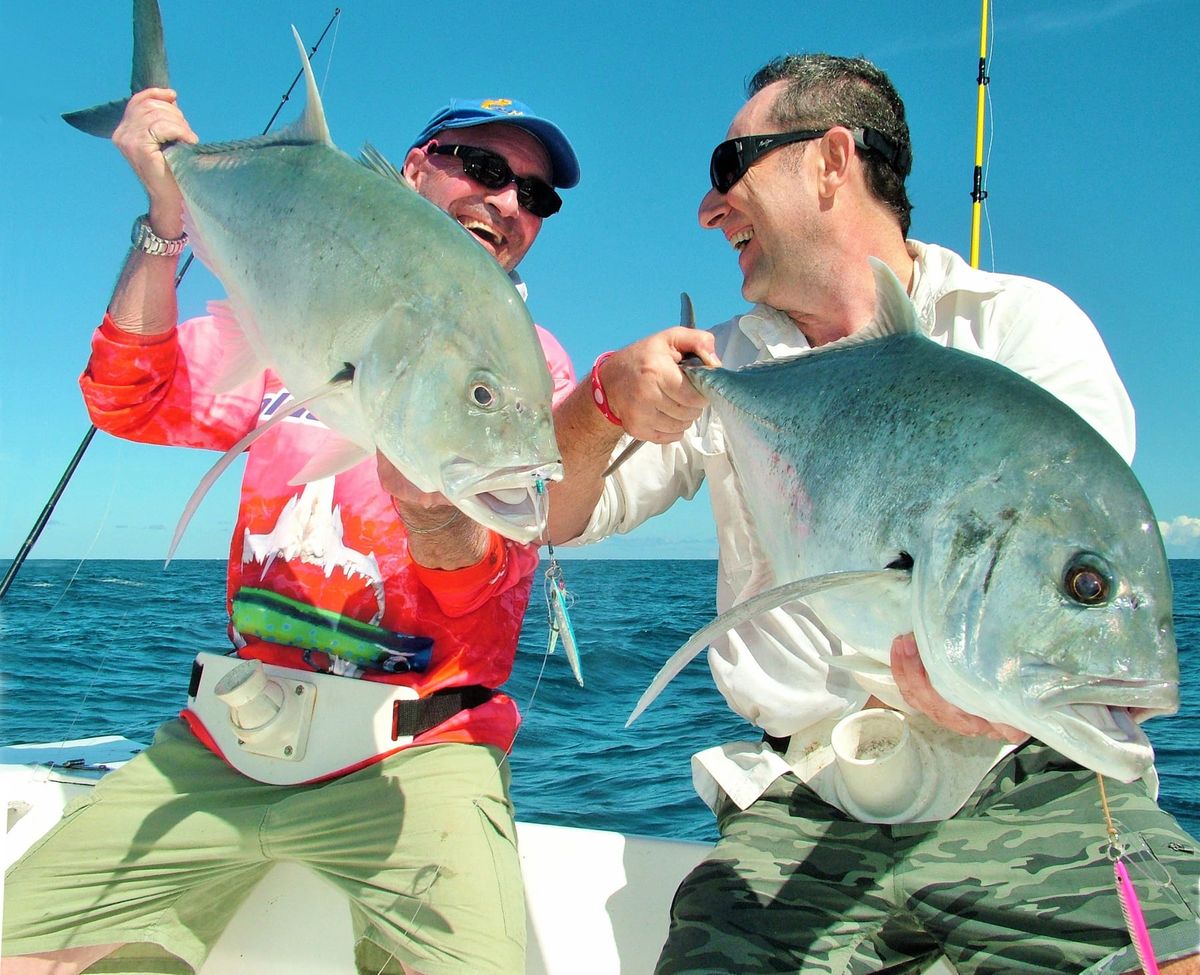
I mari tropicali ospitano moltissime specie ittiche, alcune di esse rappresentano l’obiettivo delle nostre battute di pesca all'estero. L’autore ce ne propone diverse, le più classiche.
Foto in alto: l'autore e l'amico Luca con una doppietta di carangidi pescati a jigging: un blu finn trevally e un GT (giant trevally).
Tra i tanti bersagli mirati che la pesca tropicale propone, abbiamo pensato di trattare alcune specie che riteniamo piuttosto interessanti per un viaggio di pesca.
Marlin - I marlin sono tra i pesci più grandi di tutti gli oceani e sono un vero e proprio sogno per tanti pescatori. Esistono diverse specie di marlin: il Blu (Makaira nigricans), il Black (Istiompax indaca), il White (Kajikia albida), lo Striped (Tetrapturus audax) e pur appartenendo tutti alla famiglia Istioforidae, si dividono nei generi Istiophorus, Makaira, Kajikia e Tetrapturus. Sono pelagici, vivono su fondali profondi, e solo alcune specie si avvicinano alla costa in fondali più bassi, come ad esempio il bianco o il nero. A conferma di ciò (esperienza personale), potremmo far notare la cattura di un nero di circa 400 libbre catturato su un fondale di soli 40 metri. La primaria caratteristica di questi pesci è la presenza di un rostro col quale colpiscono, stordiscono o mutilano le prede prima di ingoiarle. Le varie specie di marlin si differenziano per livrea, altezza, lunghezza, mobilità e forma delle pinne. Basti pensare alle pinne pettorali mobili del blu mentre sono fisse e aperte nel black. La pesca sportiva dei marlin è una buona risorsa per molti charter in molte località sparse per il mondo. Il marlin è un pesce fantastico. L’attacco all’esca, se cercato a traina e in superficie, sia con esche artificiali come naturali, produce un’emozionante esplosione d’acqua che si fissa a lungo nella memoria.
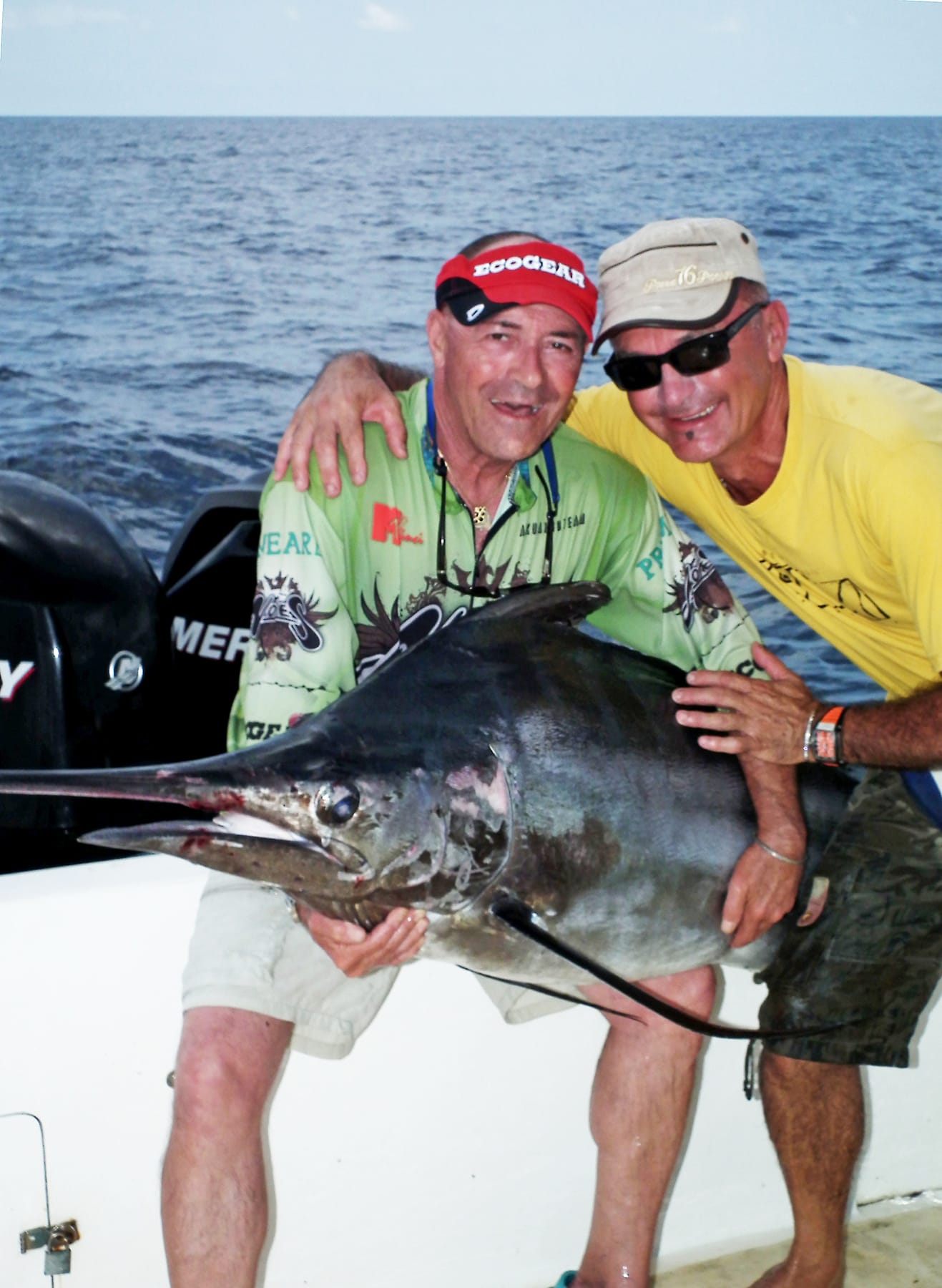
Negli anni poi la tecnica si è diversificata e alla semplice traina si è affiancata una tecnica divertente dove il pesce viene attirato in scia dai vari teaser per poi filare in acqua la vera e propria esca, montata su una canna ad hoc. In alcune zone si pratica anche il drifting o la traina lenta, innescando pesci vivi o morti. Tale tecnica, se pur a volte redditizia, è meno spettacolare poiché si perde il gusto e la spettacolarità degli attacchi in superficie. Sono molti gli hot spot mondiali per la pesca dei marlin. Sono sparsi un po’ in tutti gli oceani, spesso in località esotiche, lontane, ma anche a poche ore dalla nostra Italia vi sono ottime possibilità di pesca. Prendiamo per esempio Capo Verde. Nei periodi giusti dei rostrati, ottimi skipper, tra i quali diversi italiani, ci permettono di concretizzare i nostri sogni da principianti o affinare la tecnica se già abbiamo il… marlin nel sangue. Anche le Azzorre e le Canarie sono ottimi spot e non sono lontani. Per concludere, da settembre a novembre, la costa atlantica del Marocco si presta alla cattura del marlin bianco con la possibilità di pescarlo anche a mosca.
Giant trevally - Uno dei pesci più combattivi che possiamo incontrare nei nostri viaggi di pesca nelle acque tropicali e sub tropicali è il Gt ovvero il Giant trevally (Caranx ignobilis), che condivide con la ricciola (Seriola dumerili), il titolo di carangide più grosso. Il Gt è un pesce molto diffuso lungo le coste africane dell’Oceano Indiano, delle Maldive, del centro Pacifico, dell’Australia, della Nuova Caledonia, della Nuova Zelanda, delle Filippine, della Malesia e delle Haway. Molti viaggi di pesca sono improntati alla ricerca dei grandi trevally e alcuni spot sono veramente unici al mondo, luoghi dove non è facile pescare, ma che a ogni lancio possono riservare la sorpresa del “mostro” in canna.
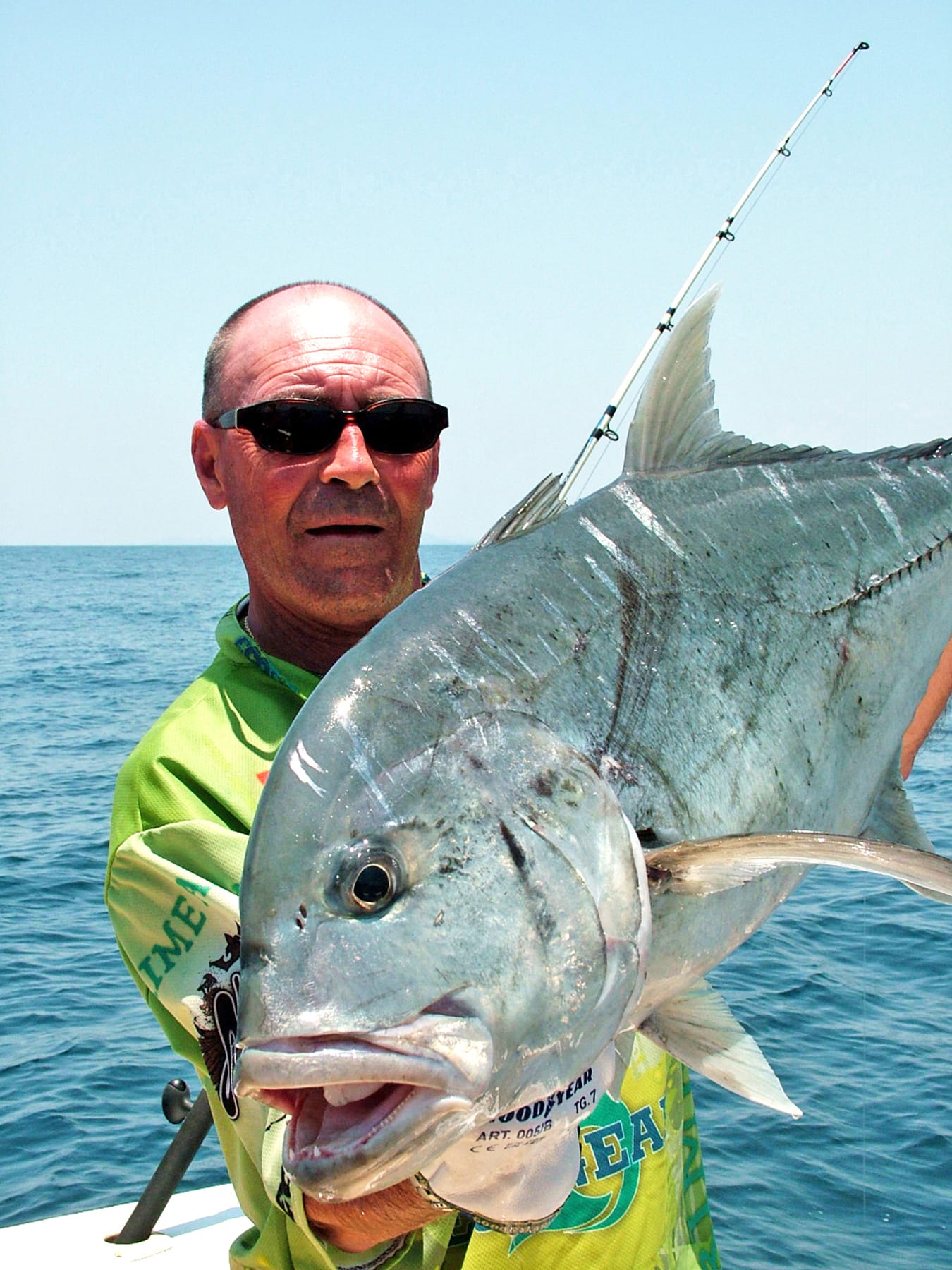
Il Gt può raggiungere e superare i 60 chilogrammi di peso, ma è più facile incontrare esemplari intorno ai venti-trenta chili, i quali, a nostro parere sono già bei pesci, combattivi all’inverosimile e “cattivi” nell’aggressione dell’esca: il Gt non assaggia l’esca, artificiale o naturale che sia, ma l’attacca con decisione e furia. Il giant trevally può essere pescato con tecniche diverse ma la più spettacolare e impegnativa è lo spinning. A seconda delle zone di pesca e conoscendo la taglia media dei pesci presenti, è bene scegliere l’attrezzatura adeguata: inutile l’impiego di una canna da PE 8-10 quando la taglia media si aggira sui 20 chilogrammi. Sarà assolutamente indispensabile invece, nelle acque della Nuova Caledonia o posti simili, dove il Gt da record può attaccare l’esca da un momento all’altro. La canna da spinning al trevally deve avere un fusto abbastanza rigido in modo da consentirci di far lavorare l’esca. Nel caso s’impiegasse invece uno stick bait, la punta potrà essere leggermente più morbida, ma in entrambi i casi la canna dovrà reggere il freno (drag) del mulinello tarato oltre 10-12 chili, così da impedire al pesce di guadagnare le rocce del fondo e lì rompere la treccia per lo sfregamento su rocce o coralli. Zona ideale per il popping è il bordo del reef o i fondali piatti con presenza di grandi rocce isolate o formazioni coralline, come le cosiddette patate. La forza mandibolare del trevally è devastante e si impongono esche montate con ancorette o ami decisamente robusti, anzi super robusti. Stesso discorso vale per il jigging, tecnica con cui si possono ugualmente effettuare catture di notevole interesse. Vale la pena considerare bene la taglia dei pesci e adeguare di conseguenza le attrezzature: ci si diverte di più con pesci di media taglia e attrezzature medio-leggere, mentre si hanno maggiori chance sui grossi pesci se l’attrezzatura è più pesante. Tanto non è scontato e non sempre viene recepito da chi affronta un viaggio di pesca tropicale: fondamentale conoscere le potenzialità del posto onde evitare di portarsi dietro attrezzature troppo leggere o troppo pesanti, ne va della qualità del divertimento. Alternativa al popping e al jigging e relativamente più semplice e decisamente meno faticosa, è la pesca a traina o drifting con le esche naturali, grossi pesci vivi o morti. In queste due tecniche si possono impiegare sia le classiche canne da traina come quelle da spinning. Le esche più idonee sono i bonito, montati su terminali in fluorocarbon da 100-200 libbre alla cui estremità penzolerà un bell’amo, generosissimo, sea mate o circle, secondo le preferenze. In alcuni casi il terminale vincente è quello a due ami, di cui il trainante scorrevole, come quelli adottati nel Mare Nostrum per la pesca a traina con il vivo. Nella pesca di questo pesce è buona regola, praticare il catch and release, senza rinunciare a una foto ricordo e una successiva ossigenazione.
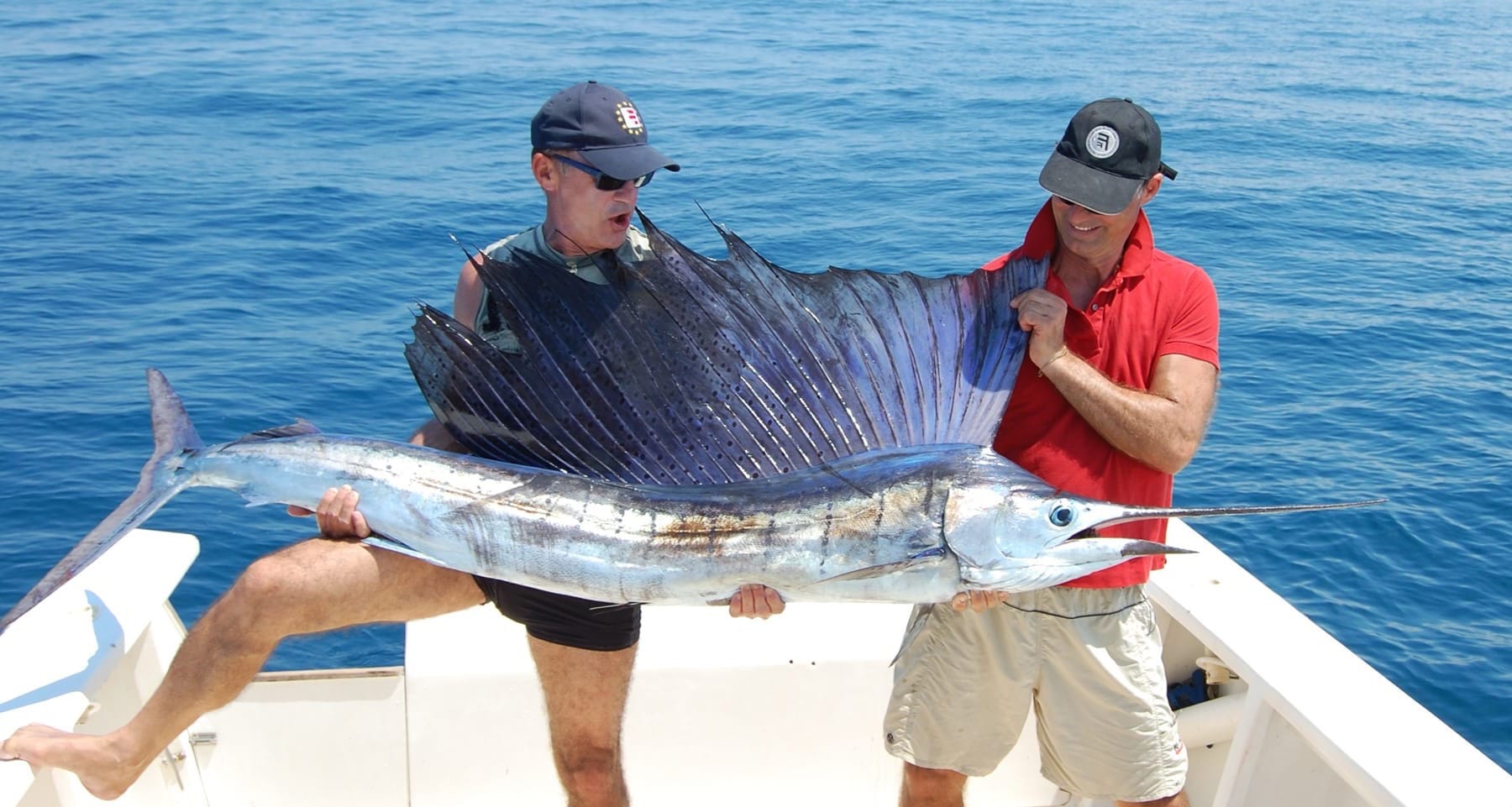
Il vela - Trai pesci più belli delle acque tropicali possiamo sicuramente annoverare il pesce vela (Istiophorus platypterus), senza dubbio uno dei pesci più belli da combattere, non tanto per la sua potenza, quanto per la spettacolare difesa, con salti e acrobazie incredibili e fughe che fanno… fumare i mulinelli. In tutte le acque del Globo esiste una regola non scritta che accomuna tutti gli angler e gli skipper più seri: il vela (sailfish) si combatte, si cattura, ma dopo le foto rito si rilascia. Lo possiamo incontrare nella fascia tropicale e sub tropicale di tutti gli oceani, è un pelagico che ama avvicinarsi alla terra a caccia di cibo, tanto che è possibile incontrarlo anche in poche decine di metri d’acqua come su fondali decisamente profondi. La sua ampia pinna dorsale lo caratterizza e gli dà il nome, è un pesce inconfondibile. Le fregate, grandi uccelli molto simili ai gabbiani, ma di maggiori dimensioni e dal piumaggio nero, sono, in alcune acque o in particolari giornate, le nostre migliori alleate, se la nostra giornata di pesca è dedicata al vela, al marlin o alla grandi lampughe. Se notiamo una o più fregate che sorvolano circolarmente una porzione d’acqua o sembrano rimanere sospese in aria quasi immobili sullo stesso punto, possiamo avere la quasi matematica certezza che stiano aspettano che il pelagico faccia alzare il banco di pesce che sta cacciando. Se poi si tuffano, potremmo addirittura avvistare il predatore a fior d’acqua. Quindi, il primo consiglio è quello di cercare sempre con lo sguardo la presenza di qualche fregata che svolazza tranquilla a venti, trenta, cinquanta metri dalla superficie: più volerà in alto più il pesce sarà in profondità. In tal caso non dobbiamo aver fretta e sperare che il pesce salga in superficie e si faccia vedere. Il modo di comportarsi della fregata non ha niente a che vedere con la forsennata sarabanda dei gabbiani sulle mangianze dei bonito, degli skip jack (tonnetto striato) o dei tonni yellowfin (pinna gialla). In alcuni casi abbiamo notato la presenza dei vela, come è logico che sia, anche vicino a tali mangianze, ma sinceramente è decisamente la fregata la nostra migliore “spia” nella pesca del rostrato.
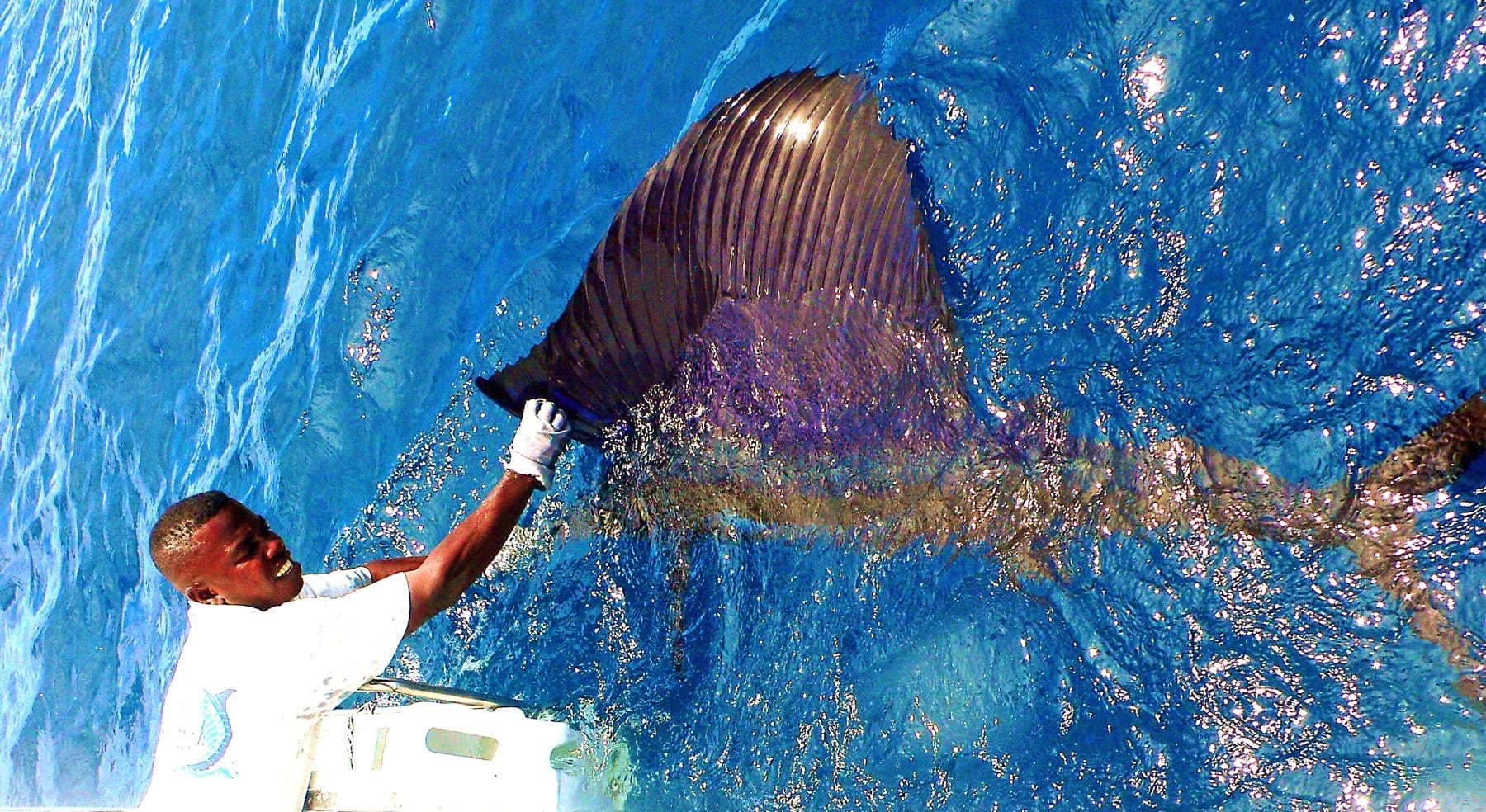
Quando i pesci sono particolarmente tranquilli, in superficie e in specchi d’acqua con mare piatto, si possono notare (raramente) uno o più “stecchini” che spuntano dall’acqua: non si tratta, di rametti in balia della corrente, bensì dell’estremità della coda (o delle code) del vela che spuntano dall’acqua. Naturalmente, il nostro articolo è rivolto a tutti e non soltanto agli angler affermati, quindi teniamo per buono l’impiego di attrezzature sulle 30 lbs di potenza, sono queste infatti che permettono anche a un principiante di affrontare il suo primo combattimento con un vela e di portarlo a termine con successo. Poi, dopo i primi pesci, si potrà alleggerire l’attrezzatura e orientarsi sulla venti libbre, lasciando poi ai più esperti i libbraggi inferiori. Le esche più idonee per la traina di superficie al vela sono i kona, nelle misure comprese tra 8” e 12” (cm 20-30 circa). A seconda delle dimensioni della barca si fileranno in acqua da quattro a sei lenze, con le esche esterne più lontane e quelle interne. Per aumentare il potere adescante delle esche, vengono montate delle strisce di pesce sotto al gonnellino vinilico del kona. Normalmente le strisce sono realizzate con la pancia dei bonito, ma in mancanza vanno bene anche “strips” di altri pesci. Alcune volte e in assenza di pesci abbastanza grandi da poterne ricavare delle strisce, si possono impiegare dei pesciotti interi come sugarelli, sgombri o ballyhoo (molto simili alle nostre costardelle). Ci siamo accorti, negli anni, che alcune volte il rostrato, prima attacca il minnow e successivamente i kona. Vale quindi la pena filarne in acqua uno. Si traina con i kona a velocità di 7-10 nodi. Individuato il vela, tradito dalle fregate o dai suoi salti, ci si avvicina quanto più possibile, si ferma la barca e si spengono i motori. Se disponiamo dei pesci esca come sugarelli, sgombri, sardine o quant’altro, ne inneschiamo uno su un amo non troppo grosso di tipo “live bait” o “circle”, col terminale in nylon o fluorocarbon da 100-150 libbre. Si fila la lenza in acqua e ci si lascia trasportare dalla corrente con l’esca che si allontana. Se il vela è in caccia, non tarderà a farsi vivo assaggiando prima il pesciotto con il rostro, ingoiandolo subito dopo. Le esche sono sempre sugarelli, sgombri o quanto altro. Una volta raggiunta la zona buona per la pesca dei vela o una volta individuati i vela stessi, non resta altro che filare in acqua un paio di lenze innescate con il vivo.
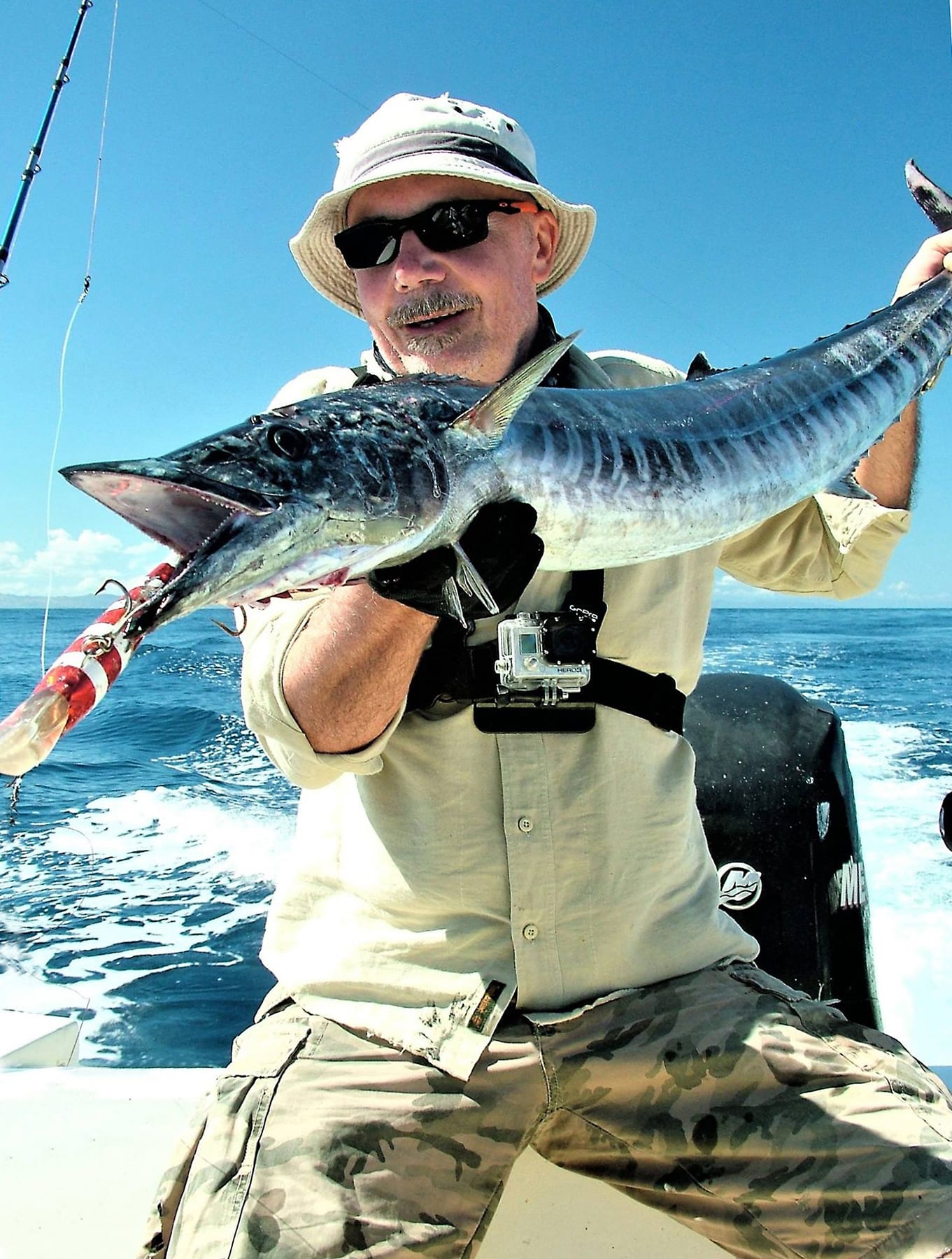
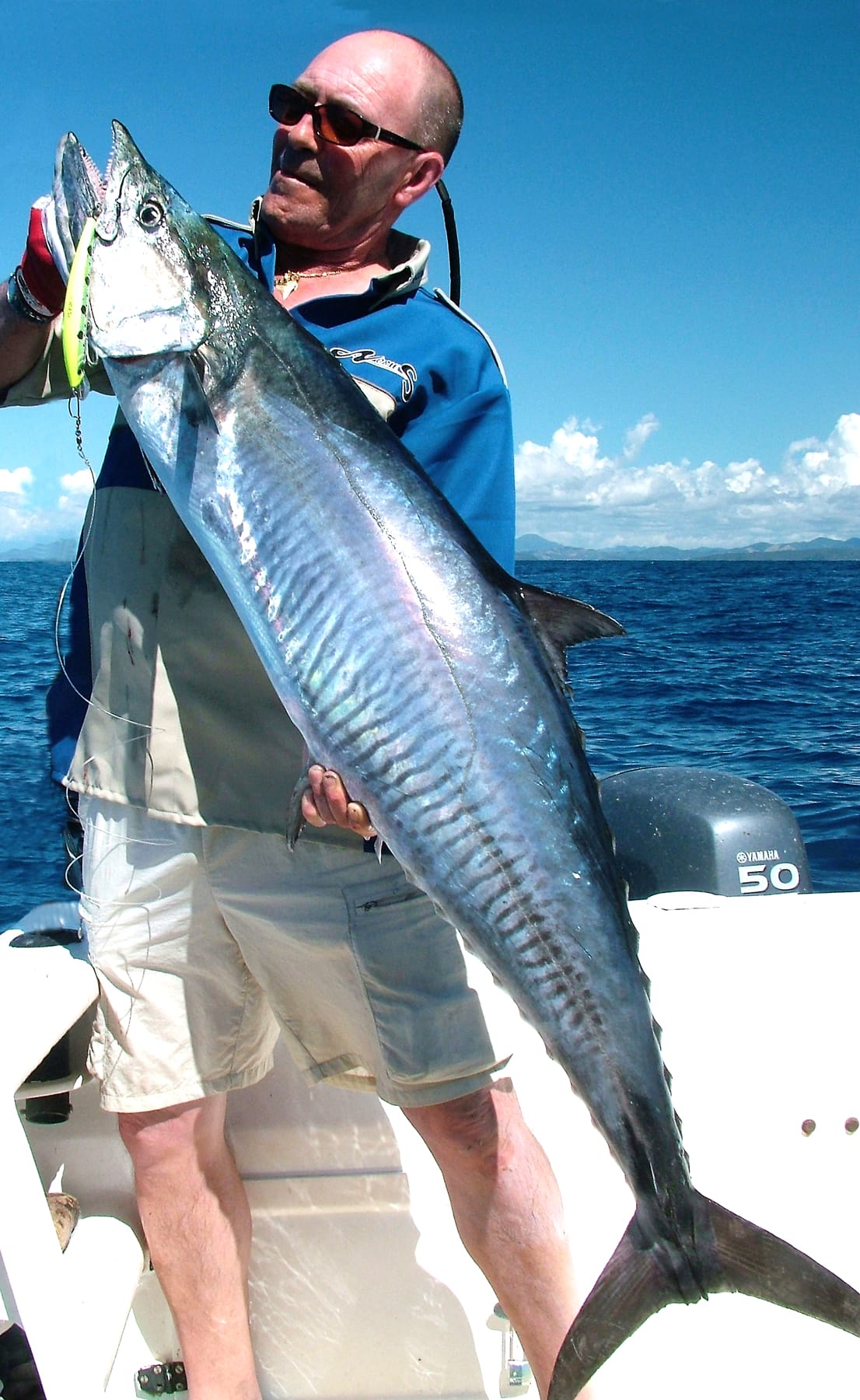
Wahoo e king mackerel - Nei nostri viaggi tropicali incontriamo poi, con una discreta frequenza, due diverse specie di pesci, abbastanza simili sia nell’aspetto come nella pesca: si tratta del wahoo (Acanthocybium solandri) e del king mackerel (Scomberomorus cavalla). Hanno entrambi il corpo affusolato, quello del king è leggermente più appiattito nella parte ventrale; la colorazione è affine, con fascia dorsale scura e ventre bianco argenteo. Nel wahoo, la fascia dorsale è più plumbea e a bande larghe mentre nel king si osservano una varietà notevole di livree, con pesci che presentano una sorta di tigratura grigio scuro diffusa su tutto il corpo, altri con livree più uniformi tendenti all’azzurro e in altri ancora una sorta di punteggiatura che li fa assomigliare ad altre specie simili. Entrambi i pesci hanno una bocca che si rastrema verso la punta; nel king è leggermente più tozza mentre nel wahoo si allunga a formare quasi una sorta di becco. In comune hanno la dentatura: di forma triangolare, affilata sui bordi: sono micidiali. Nel wahoo li troviamo più piccoli e regolari mentre quelli del king mackerel sono più grandi, più lunghi e meno regolari. Il morso di questi pesci è inconfondibile poiché tranciano le loro prede con un taglio netto, quasi chirurgico. L’area di diffusione di questi due pesci è vastissima. Abbiamo fatto bellissime pescate a Capo Verde e nel versante atlantico di Cuba. Mentre, per quanto riguarda i king mackerel, possiamo dire che il Madagascar ci ha regalato delle gran belle sorprese, soprattutto con pesci di taglia generosa. Nelle aree frequentate da wahoo e king mackerel, la traina veloce a sette-dieci nodi sembra essere la tecnica più catturante poiché permette di percorrere grandi porzioni di mare. Entrambi i pesci sembrano gradire le colorazioni sul viola, sul rosso ma attaccano volentieri anche su esche dai colori molto sgargianti. Si può pescare alla cieca, battendo la zona a zig zag, ma occorre stare sempre attenti a cogliere i segnali del mare: i voli degli uccelli, le increspature sulla superficie, le strisce di corrente e, se abbiamo la fortuna di incontrare delle mangianze di tonnetti o altri pesci foraggio, non perdiamo l’occasione di girargli intorno.
Tante volte, infatti, i predatori si trovano proprio nelle vicinanze dei banchi in mangianza, aumentando così le possibilità di vedere un attacco. Sia i wahoo come i king mackerel at-taccano esche artificiali come minnow e kona, ma i minnow sono forse da preferire, non tanto per l’elevata potenzialità di cattura, ma perché resistono meglio ai morsi dei pesci: un minnow continua a funzionare anche dopo aver ricevuto decine di attacchi e anche quando il corpo porta i segni di evidenti morsi. Un kona, pur risultando altrettanto catturante, ha il grande difetto di avere il corpo in vinile, morbido e quindi scarsamente resistente ai morsi. Comunque, se si decide di impiegare i kona, dovremo munirci di una buona scorta di octopus di ricambio e, alla fine delle sessioni di pesca, ricorrere al ripristino delle esche mozzate. Non è raro l’incontro di questi pesci, soprattutto dei king mackerel, anche pescando a spinning, soprattutto impiegando gli stick bait, ma non sono da escludere anche attacchi sui popper. Per salvarsi da queste due affilate dentature, eventualmente anche da quelle degli squali e dei barracuda, dobbiamo ricorrere all’acciaio. A seconda dei casi, e del tipo di tecnica che si impiega, potremo adottare soluzioni diverse e diversi materiali: cavetto di acciaio plastificato; treccia di acciaio 49 strand non plastificata; monocavo di acciaio (piano wire); monocavo di titanio. Va da sé che anche la pesca con esche naturali, pesci vivi o morti, dà sicuramente ottimi risultati.
English version
Tropical seas are home to a vast array of fish species, some of which are the targets of our overseas fishing trips. Here, the author introduces us to several of the most classic examples.
Among the many targets offered by tropical fishing, we have chosen to discuss a few species that we consider particularly appealing for a fishing trip.
Marlin – Marlins are among the largest fish in the oceans and represent a true dream catch for many anglers. There are several species of marlin—Blue (Makaira nigricans), Black (Istiompax indica), White (Kajikia albida), and Striped (Tetrapturus audax)—and while they all belong to the Istiophoridae family, they are divided into the genera *Istiophorus*, *Makaira*, *Kajikia*, and *Tetrapturus*. They are pelagic fish that inhabit deep waters, though some species—such as the White or Black marlin—do venture closer to the coast in shallower waters. As a case in point (based on personal experience), I once caught a Black marlin weighing approximately 400 pounds in waters only 40 meters deep. The defining characteristic of these fish is their bill (rostrum), which they use to strike, stun, or maim their prey before swallowing it. The various marlin species differ in terms of coloration, height, length, and the mobility and shape of their fins; for instance, the Blue marlin has movable pectoral fins, whereas those of the Black marlin are fixed and permanently extended. Sport fishing for marlin is a major draw for charter operations in locations across the globe. The marlin is a magnificent fish. When targeted by surface trolling—using either artificial lures or natural bait—the strike creates an explosive splash that remains etched in an angler's memory for a long time. Over the years, techniques have diversified; alongside simple trolling, an entertaining method has emerged in which fish are lured into the wake by various teasers before the actual bait—rigged on a specialized rod—is deployed into the water. In some areas, anglers also practice drifting or slow trolling using live or dead bait. While sometimes productive, this technique is less spectacular, as it lacks the thrill and visual drama of surface strikes. There are many world-class hotspots for marlin fishing scattered across the oceans, often in exotic, remote locations; however, excellent fishing opportunities can also be found just a few hours away from Italy.
Take Cape Verde, for example. During the peak seasons for billfish, excellent skippers—including several Italians—enable us to turn our dreams into reality as beginners or to hone our techniques if we already have marlin fishing in our blood. The Azores and the Canaries are also excellent, nearby locations. Finally, from September to November, Morocco’s Atlantic coast offers great opportunities for catching white marlin, including the chance to target them with a fly rod.
Giant Trevally - One of the most tenacious fighters encountered during fishing trips in tropical and subtropical waters is the Giant Trevally (GT)—or *Caranx ignobilis*—which shares the title of largest jack species with the greater amberjack (*Seriola dumerili*). The GT is widely distributed along the African coast of the Indian Ocean, as well as in the Maldives, the central Pacific, Australia, New Caledonia, New Zealand, the Philippines, Malaysia, and Hawaii. Many fishing expeditions focus on targeting these massive trevally; some locations are truly unique—challenging places to fish, yet spots where any given cast might hook a "monster." While the GT can reach and exceed 60 kilograms, it is more common to encounter specimens weighing between twenty and thirty kilograms. In our view, these are already impressive fish—incredibly spirited fighters that attack the bait with aggression. A GT doesn't merely sample the lure or bait; it strikes with decisiveness and fury. Giant Trevally can be caught using various techniques, but spinning is the most spectacular and challenging. It is important to select the right gear based on the fishing location and the average size of the fish present; using a PE 8–10 rod is pointless when the average size is around 20 kilograms. However, such heavy gear becomes absolutely essential in waters like those of New Caledonia, where a record-sized GT could strike at any moment. A Trevally spinning rod needs a fairly stiff blank to allow for proper lure manipulation. If using a stickbait, the tip can be slightly softer, but in either case, the rod must withstand a reel drag setting of over 10–12 kg to prevent the fish from reaching the rocky bottom and snapping the braided line against rocks or coral. Ideal areas for popping include reef edges or flat bottoms featuring large, isolated rocks or coral formations—often referred to as "coral heads" or "bommies." The Trevally’s jaw strength is devastating, so lures must be rigged with exceptionally strong—indeed, ultra-strong—treble or single hooks. The same applies to jigging, a technique that can also yield impressive catches. It is worth carefully considering the size of the fish and adjusting your gear accordingly: you will have more fun with medium-sized fish and medium-light tackle, whereas heavier gear offers a better chance of landing the truly large ones. It is not always a given—nor is it always understood by those embarking on a tropical fishing trip—that knowing the location's potential is crucial to avoid bringing gear that is either too light or too heavy; the quality of the experience depends on it. Alternatives to popping and jigging—which are relatively simpler and far less physically demanding—include trolling or drifting with natural baits, such as large live or dead fish. Both classic trolling rods and spinning rods can be used for these techniques. The most suitable baits are bonito, rigged with 100–200 lb fluorocarbon leaders ending in a substantial hook—either a Sea Mate or a circle hook, depending on preference. In some cases, a two-hook rig works best—featuring a sliding lead hook—similar to the setups used in the Mediterranean for live-bait trolling. When fishing for this species, it is good practice to employ catch-and-release, while still taking a souvenir photo and ensuring the fish is properly oxygenated before release.
Sailfish - (Istiophorus platypterus) certainly ranks among the most beautiful fish in tropical waters; it is undoubtedly one of the most thrilling to fight—not so much for its raw power, but for its spectacular defensive maneuvers, featuring incredible leaps, acrobatics, and runs that make fishing reels smoke. Across the globe, there is an unwritten rule shared by serious anglers and skippers alike: the sailfish is fought and caught, but—after the customary photos—it is released. Found in the tropical and subtropical zones of all oceans, this pelagic species often ventures close to shore in search of food, meaning it can be encountered in waters just a few dozen meters deep or over much deeper seabeds. It is an unmistakable fish, characterized and named for its large dorsal fin. Frigatebirds—large, black-plumaged birds resembling gulls but much bigger—can be our best allies in certain waters or on specific days when we are targeting sailfish, marlin, or large mahi-mahi. If we spot one or more frigatebirds circling over a patch of water, or hovering almost motionless in one spot, we can be virtually certain they are waiting for the pelagic predator to drive the school of baitfish it is hunting up toward the surface. If they then dive, we might even catch a glimpse of the predator right at the water's surface. So, the first piece of advice is to always scan the area for a frigatebird gliding calmly twenty, thirty, or fifty meters above the surface; the higher it flies, the deeper the fish will be. In this scenario, we must not rush; instead, we should wait and hope the fish rises to the surface and reveals itself. The frigatebird’s behavior is nothing like the frenzied commotion of seagulls over a feeding frenzy of bonito, skipjack, or yellowfin tuna. While we have occasionally spotted sailfish near such feeding frenzies—as one might expect—the frigatebird is, quite frankly, our best "scout" when fishing for billfish. When the fish are particularly calm and near the surface in flat, glassy water, you might—on rare occasions—spot one or more "sticks" protruding from the water; these are not twigs drifting in the current, but rather the tips of sailfish tails breaking the surface. Naturally, this article is aimed at everyone, not just seasoned anglers, so we recommend using 30-lb class tackle; this gear allows even a beginner to take on their first sailfish and successfully land the catch. After landing the first few fish, you can switch to lighter tackle—specifically 20-pound class gear—leaving the lighter line classes to more experienced anglers. The most suitable lures for surface trolling for sailfish are "Kona" style lures, ranging from 8 to 12 inches (approx. 20–30 cm) in length. Depending on the boat's size, four to six lines are deployed, with the outer lures set further back than the inner ones. To enhance the lures' attraction, fish strips are often rigged beneath the Kona lure's vinyl skirt. These strips are typically cut from bonito belly meat, though strips from other fish work well if bonito are unavailable. Occasionally, if no fish large enough to yield strips are available, whole small fish—such as horse mackerel, Atlantic mackerel, or ballyhoo—can be used. Over the years, we have observed that sailfish sometimes strike a diving plug (minnow) before hitting the Kona lures; it is therefore worth trolling one plug in the spread. Trolling speeds with Kona lures range from 7 to 10 knots. Once a sailfish is spotted—revealed by frigatebirds or by the fish breaching the surface—approach as closely as possible, then stop the boat and kill the engines. If baitfish like horse mackerel, Atlantic mackerel, or sardines are available, rig one on a medium-sized "live bait" or "circle" hook, using a 100–150 lb nylon or fluorocarbon leader. Drop the line into the water and drift with the current, allowing the bait to move away from the boat. If the sailfish is actively hunting, it will soon appear, first testing the bait with its bill before swallowing it whole. Suitable baits include horse mackerel, Atlantic mackerel, and similar species. Once you reach the area suitable for sailfish—or spot the fish themselves—all that remains is to deploy a couple of lines baited with live bait.
Wahoo and King Mackerel – During our tropical trips, we frequently encounter two different fish species that are quite similar in both appearance and the way they are fished: the wahoo (Acanthocybium solandri) and the king mackerel (Scomberomorus cavalla). Both have streamlined bodies, though the king mackerel’s is slightly flatter along the belly; their coloration is similar, featuring a dark dorsal area and a silvery-white underbelly. The wahoo’s dorsal area is more leaden-hued with broad bands, whereas the king mackerel displays a remarkable variety of color patterns: some fish show a sort of dark-grey striping across the entire body, others have more uniform blue-toned markings, and some exhibit a speckled pattern that makes them resemble other similar species. Both fish have mouths that taper toward the tip; the king mackerel’s is slightly stockier, while the wahoo’s elongates to form something akin to a beak. They share a similar dentition—triangular, sharp-edged teeth that are lethal. The wahoo’s teeth are smaller and more uniform, whereas the king mackerel’s are larger, longer, and more irregular. Their bite is unmistakable, as they shear through their prey with a clean, almost surgical cut. These two fish have a vast distribution range. We have enjoyed excellent fishing in Cape Verde and off the Atlantic coast of Cuba. As for king mackerel, Madagascar has provided us with some wonderful surprises, particularly with fish of impressive size. In waters frequented by wahoo and king mackerel, high-speed trolling—at seven to ten knots—appears to be the most effective technique, as it allows anglers to cover vast stretches of sea. Both species seem to favor purple and red hues but will readily strike at highly vibrant, flashy lures. While one can fish "blind" by working the area in a zigzag pattern, it is crucial to remain alert to signs from the water: bird activity, surface ripples, and current lines. Furthermore, if we are lucky enough to encounter a feeding frenzy involving small tuna or other baitfish, we should not miss the chance to circle the area. Predators are often found in the immediate vicinity of these feeding schools, thereby increasing the likelihood of a strike. Both wahoo and king mackerel will attack artificial lures such as minnows and Kona-style lures; however, minnows are arguably preferable—not necessarily because they are more effective at hooking fish, but because they withstand bites better. A minnow remains functional even after dozens of strikes and despite visible bite marks on its body. In contrast, while Kona lures are equally effective, they suffer from a major drawback: their soft vinyl bodies offer poor resistance to bites. Consequently, if one chooses to use Kona lures, it is essential to carry a good supply of replacement skirts and to repair damaged lures after the fishing session. It is not uncommon to encounter these fish—especially king mackerel—while spinning, particularly when using stickbaits, though strikes on poppers should not be ruled out either. To protect against their razor-sharp teeth—as well as those of sharks and barracudas—we must use steel leaders. Depending on the specific situation and the technique employed, various solutions and materials can be adopted: plastic-coated steel cable; uncoated 49-strand steel braid; single-strand steel wire; or titanium wire. Needless to say, fishing with natural baits—whether live or dead—also yields excellent results.
Commenti ()