
La pesca è imprevedibile, e più vai giù... Solo osando ottieni grandi risultati, come conferma l’autore che in questo articolo ci svela i suoi segreti e ci mette sulla buona strada.
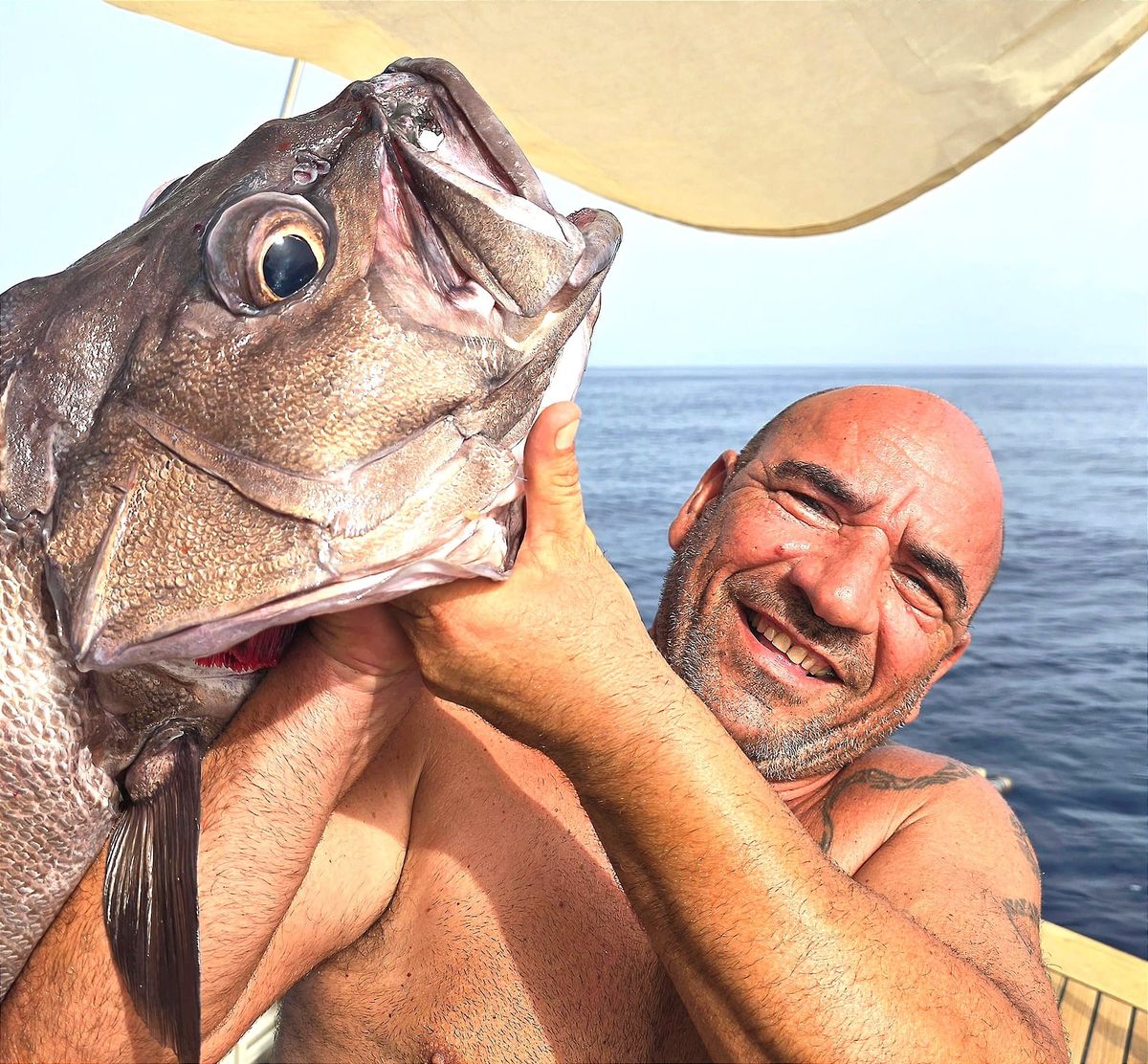
Foto in alto: i bellissimi colori bronzati di una cernia di fondale appena catturata da Paolo Milillo.
La tropicalizzazione del Mediterraneo, e un certo spostamento in avanti dei cicli stagionali, concedono a noi pescatori sportivi, la possibilità di goderci un mese di ottobre ancora piacevole dal punto di vista delle temperature, e molte giornate con condizioni meteo marine, in cui possiamo praticare le varie tecniche del bolentino di profondità, spingendoci al largo sui nostri spot preferiti, tra l’altro evitando il rischio, tipico del mese d’agosto, che qualche improvvisato cercatore di spot altrui possa seguirci, vanificando così tante giornate e litri di carburante spesi alla ricerca di qualche nuova “cigliata delle meraviglie”. D’altronde il bolentino di profondità, richiede sicuramente un’attrezzatura dedicata, (canne e mulinelli elettrici, ecoscandaglio potente, motore di prua, ecc.) ma una volta trovato il posto giusto, l’azione di pesca in sé è abbastanza semplice e l’abilità del pescatore se le nostre prede sono dell’appetito giusto, conta poco. In queste giornate di “buon mare” senza caos, e in compagnia del giusto equipaggio che non si aspetta la certezza di un risultato, ci si può dedicare all’attività di ricerca, che per mio personale parere, è più stimolante del pescare i soliti occhioni, della solita taglia, nel solito affidabile spot. Il bello di questa pesca è proprio la ricerca, l’avventura, la scoperta! E se 300 metri di profondità hanno il loro fascino misterioso, 600 ne hanno ancora di più. Ovviamente, aumentano e le difficoltà e diminuiscono, sia la varietà delle specie catturabili, sia la quantità… ma generalmente aumenta la dimensione, e ogni tanto capitano specie mai viste.
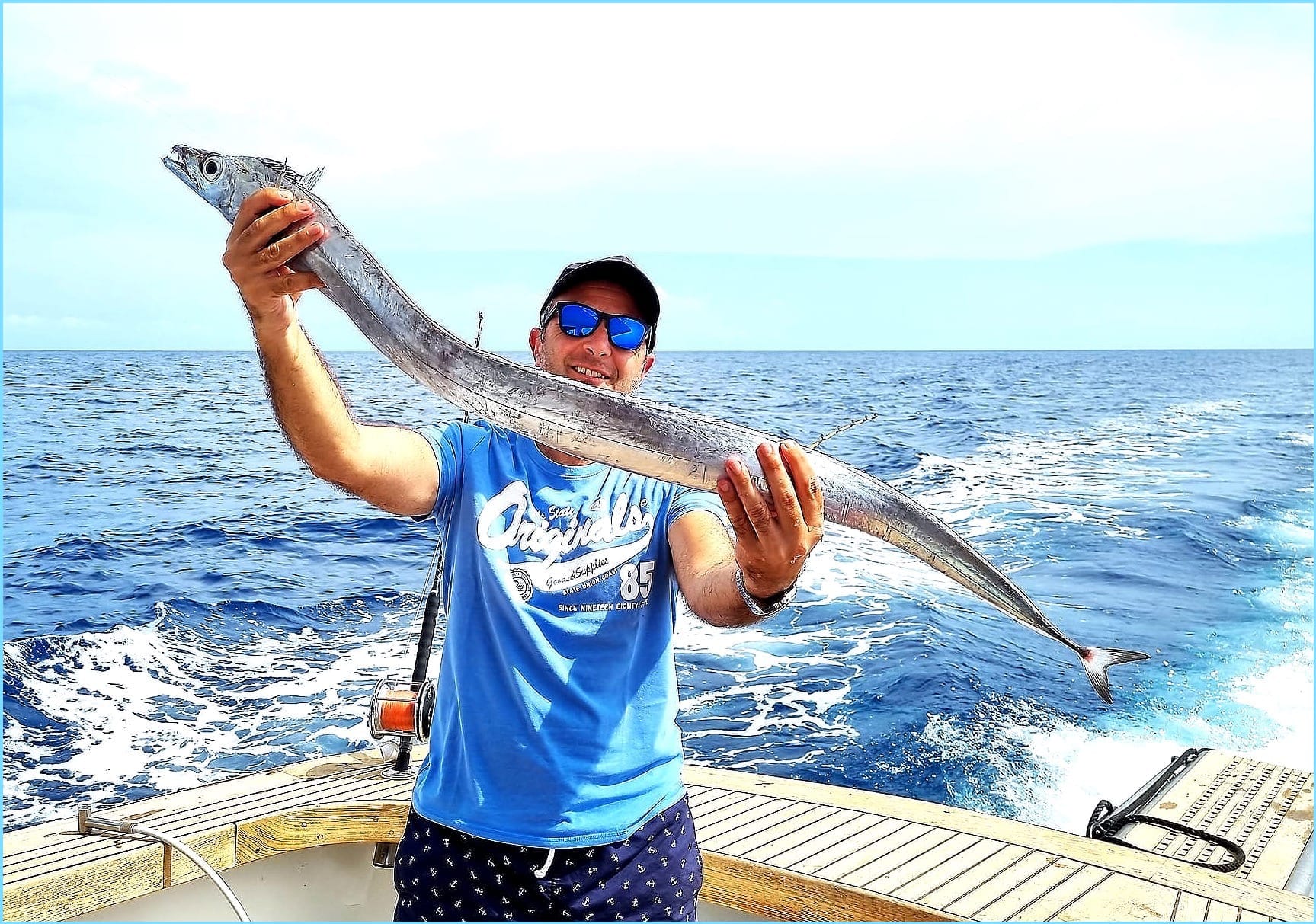
Il target - Il target principale è la cernia di fondale. Nelle nostre acque mi è capitato di pescarla sempre a partire dai 450 metri. Per molti pescatori è una vera e propria chimera, ma se si vuole raggiungere questo risultato bisogna osare e rischiare tanti cappotti. Oltre al succitato Polyprion americanus l’elenco delle specie catturabili oltre i 500 metri di profondità è comunque più nutrito di quello che si potrebbe immaginare. A partire da grossi occhioni e naselli, che iniziano ad essere meno frequenti ma sono ancora presenti, è possibile catturare spinaroli e zigrini, gronghi, ma anche specie rare come capopiatti, ruvetti, o ricciole di fondale. Per non parlare poi di tutte le specie non demersali che potremmo catturare in salita o in discesa, come pesci sciabola, pesci castagna o pesci spada… e anche totani. Infatti potrebbe essere utile, in alcuni casi, anche per ridurre la possibilità di “calate” a vuoto, sostituire il piombo finale con una totanara di pari peso, in modo da aggiungere una possibilità in più di cattura in fase di recupero.
L’azione di pesca - La prima difficoltà consiste nel trovare le zone potenzialmente valide dove provare a calare le esche, questo conviene farlo prima della partenza, identificando sulla cartografia le zone con le linee batimetriche più ravvicinate. Poi ci servirà un ecoscandaglio da 1 kW e relativa sonda a bassa frequenza: sono il minimo necessario per capirci qualcosa oltre i 500 metri. Difficilmente vedremo pesci, possiamo solo cercare salite o discese molto ripide, anomalie sul fondo, e altre cose strane che ci convinceranno a provare a calare le nostre esche. Consiglio sempre di ancorarsi con il motore di prua se lo avete a bordo, per avere la certezza di calare più o meno nel posto prescelto in modo da salvarlo per le successive “calate” o scartarlo definitivamente. Passeranno intanto almeno 10 emozionanti minuti in trepida attesa mentre le nostre generose esche scenderanno verso il blu… e poi l’attesa.
La prima verifica che faccio è quella del piombo: se si è infangato non è buon segno. A quelle profondità, ahimè, è molto più probabile trovare fango che roccia. Poi una decina di minuti sul fondo in attesa di qualche toccata o qualche movimento, che nonostante il multifibra, potrebbero non essere molto evidenti. Nel caso non si muova niente, si recupera, avremo perso almeno mezz’ora ma almeno ci abbiamo provato.
Qualche volta succede il miracolo e non c’è niente di più emozionante che fantasticare durante la risalita sperando che non sia uno spinarolo o un grongo… ma soprattutto che arrivi su! Ovviamente un grongo a 600 metri, oltre a farci provare l’emozione che sia qualcos’altro, è un indicatore di un fondale adatto ad altre specie di nostro interesse, come cernie e occhioni preistorici, essendo una specie che non troviamo in presenza di fondale fangoso.

Vi consiglio di abbondare con i diametri di trave e terminali rispettivamente mm 1,20 e 0,90 minimo e anche con la dimensione degli ami: 4/0 fino a uno o due 10/0, possibilmente in alto, vicino a una fonte luminosa. Quest’ultima di buona qualità per resistere alla pressione. I piombi che utilizzeremo saranno in genere da un chilo per cercare di scendere quanto più velocemente possibile e contrastare l’effetto della corrente. Se utilizziamo i classici mulinelli elettrici da canna è bene scegliere i modelli più grossi con una capienza di almeno 800 metri di multifibra 0,40, che rappresenta il miglior compromesso tra resistenza e attrito in acqua. La riserva di filo è necessaria perché con una corrente sostenuta a queste profondità è probabile calare anche 100 metri in più di filo. Le specie che andremo a insidiare hanno bocca grande e denti aguzzi, e qualche volta anche pelle abrasiva e spade taglienti, ed è anche per questo motivo, e non solo per la resistenza alla trazione, che conviene salire di diametro. È una pesca lenta, con molti tempi morti nell’attesa di calare e recuperare i terminali, e se aggiungiamo la distanza dalla costa e il tempo della ricerca degli spot, nonostante le tante ore di luce, il tempo di pesca effettivo non sarà tantissimo. Ma, come diceva il filosofo tedesco Gotthold Ephraim Lessing, “L’attesa del piacere è essa stessa il piacere!”.
Deeper and Deeper
by Maksimilian Capone
Fishing is unpredictable, and the deeper you go… Only by daring can you achieve great results, as the author confirms in this article, sharing his secrets and pointing us in the right direction.
The tropicalisation of the Mediterranean, together with a certain shift towards later seasonal cycles, gives recreational anglers the chance to enjoy pleasantly warm temperatures well into October, with plenty of days when sea and weather conditions allow us to head offshore to our favourite spots for deep-water bottom fishing. Another advantage is avoiding a risk typical of August: being followed by some opportunistic spot-hunter, undoing all the days and litres of fuel spent searching for a new “wonder ledge”.
Deep-water bottom fishing certainly requires specialised equipment—rods and electric reels, a powerful fishfinder, a bow-mounted trolling motor and so on—but once you have found the right spot, the fishing itself is fairly straightforward. If the fish are feeding well, the angler’s skill plays a relatively small part.
On these quiet days of calm seas, with the right crew aboard and nobody expecting a guaranteed catch, you can devote yourself to exploring. Personally, I find this more stimulating than catching the same old blackspot seabream, of the same size, on the same reliable mark. The beauty of this kind of fishing lies in the search, the adventure and the discovery! And if depths of 300 metres hold a certain mysterious appeal, 600 metres hold even more. Naturally, the challenges increase, while both the variety and number of fish you can catch decrease… but their size generally increases, and every now and then a species turns up that you have never seen before.
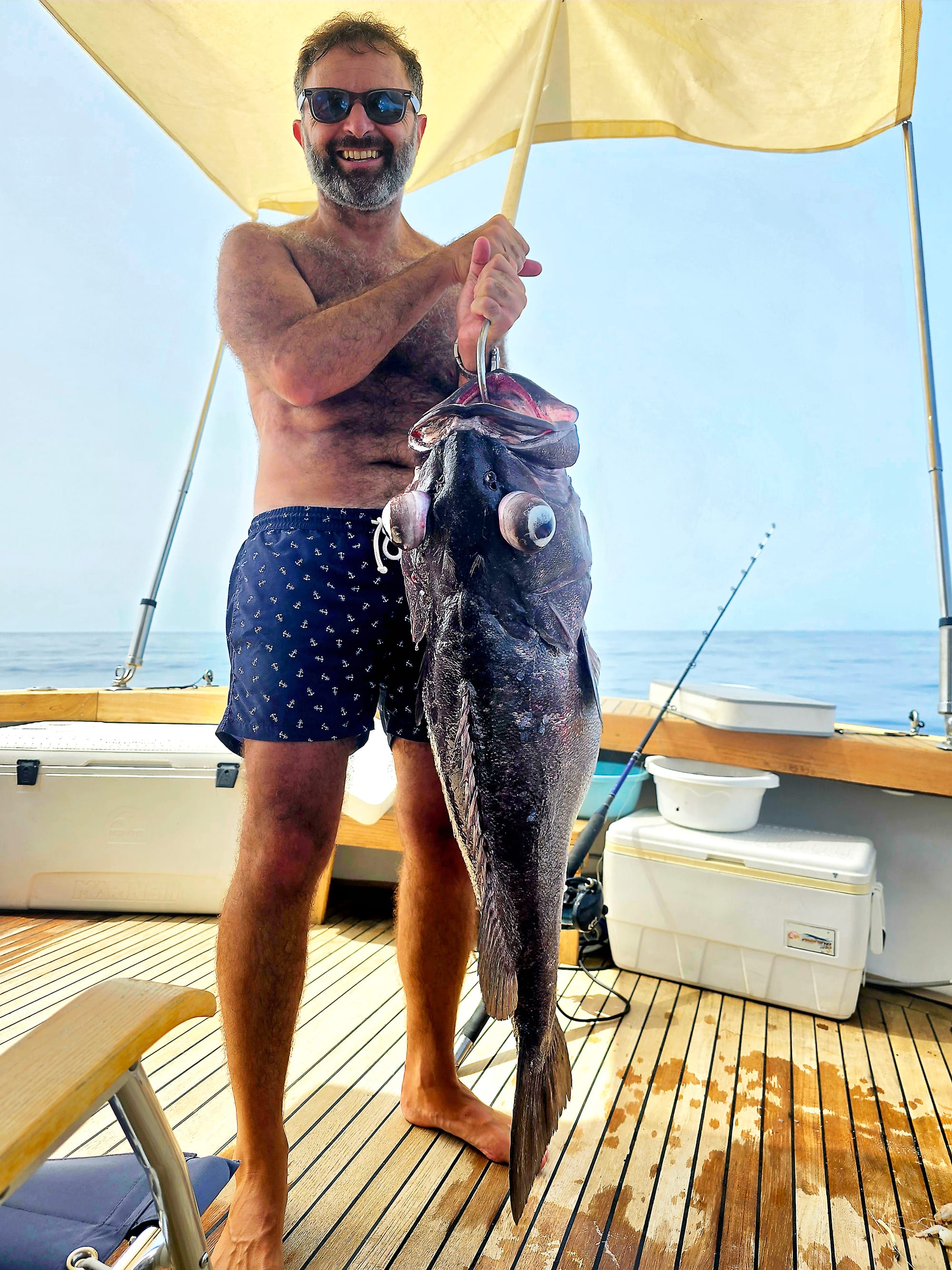
The target - The main target is the wreckfish. In our waters, I have only ever caught it at depths of 450 metres or more. For many anglers it is something of a mythical creature, but if you want to catch one, you have to venture further and accept the risk of plenty of blank trips.
Besides Polyprion americanus, the list of species you can catch below 500 metres is actually longer than you might imagine. Large blackspot seabream and hake become less common but are still present, alongside spiny dogfish, kitefin sharks and conger eels, as well as rarer species such as bluntnose sixgill sharks, oilfish and Atlantic pomfret.
Then there are all the species that do not live on the seabed and may take a bait as it descends or rises through the water: scabbardfish, other pomfret, swordfish… and squid, too. In some situations, replacing the bottom lead with a squid jig of the same weight can be useful. It gives you another chance of a catch during the retrieve and may help reduce the number of empty drops.
The fishing - The first challenge is finding promising areas in which to drop your baits. It is best to begin before leaving port, identifying places on the chart where the depth contours are packed closely together.
You will then need a 1 kW fishfinder and a suitable low-frequency transducer: these are the minimum requirements for making sense of what lies more than 500 metres below. You will rarely see individual fish. Instead, you will be looking for steep rises or drop-offs, irregularities on the seabed and anything unusual enough to persuade you to send your baits down.
If you have a bow-mounted trolling motor, I always recommend using its spot-lock function. This helps ensure that you lower your rig more or less onto the chosen mark, allowing you to save it for future drops or rule it out altogether.
At least ten minutes of eager anticipation will pass as your generous baits descend into the blue… and then the waiting begins.
The first thing I check is the lead: if it has sunk into mud, that is not a good sign. Unfortunately, at these depths you are far more likely to find mud than rock. I then leave the rig on the bottom for about ten minutes, waiting for a bite or any movement, which may be difficult to detect even with braided line.
If nothing happens, it is time to retrieve. We will have spent at least half an hour, but at least we gave it a try. Sometimes the miracle happens, and nothing is more exciting than imagining what might be on the end of the line as it comes up, hoping it is not a spiny dogfish or a conger eel… and, above all, hoping it makes it to the surface!
Of course, a conger hooked at 600 metres does more than give us the thrill of thinking it might be something else. It also indicates a seabed suitable for other species we are interested in, such as wreckfish and prehistoric-sized blackspot seabream, since congers are not a species we find over muddy ground.
I recommend using generous diameters for both the rig body and the hook snoods: at least 1.20 mm and 0.90 mm respectively. Be generous with hook sizes, too, starting at 4/0 and including one or two 10/0 hooks, preferably towards the top of the rig, close to an underwater light. Make sure the light is of good quality so that it can withstand the pressure.
We will generally use 1 kg leads to get down as quickly as possible and counteract the current. If you use conventional rod-mounted electric reels, choose the larger models, with room for at least 800 metres of 0.40 mm braid. This offers the best compromise between strength and resistance through the water. That extra line capacity is essential because, in a strong current at these depths, you may need to let out another 100 metres of line.
The species we are targeting have large mouths and sharp teeth, and sometimes abrasive skin and sharp bills as well. This is another reason to increase line diameter, beyond breaking strength alone.
It is a slow form of fishing, with plenty of downtime while lowering and retrieving the rigs. Add the distance from shore and the time spent searching for marks, and even with long daylight hours, the time actually spent fishing will be relatively limited. But, as the German philosopher Gotthold Ephraim Lessing put it, “The anticipation of pleasure is itself a pleasure!”
Commenti ()