
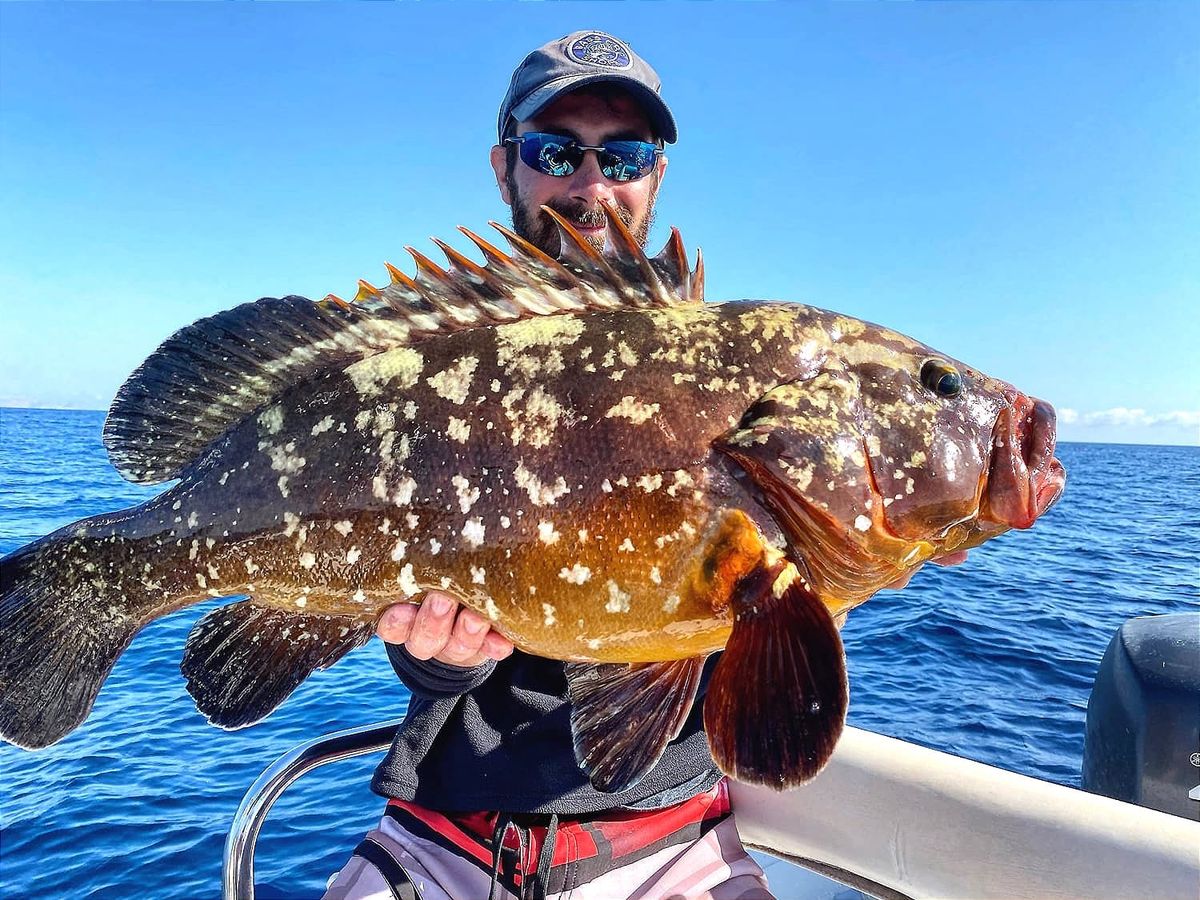
Nelle acque interne l’espressione “Naturale in verticale” è abbastanza comune, ma in mare è nota soltanto ad alcuni veterani che hanno unito la pesca a scarroccio con un’esca naturale ad alcune esche da vertical combinando l’attrazione del metallo a un cefalopode, con risultati incredibili.
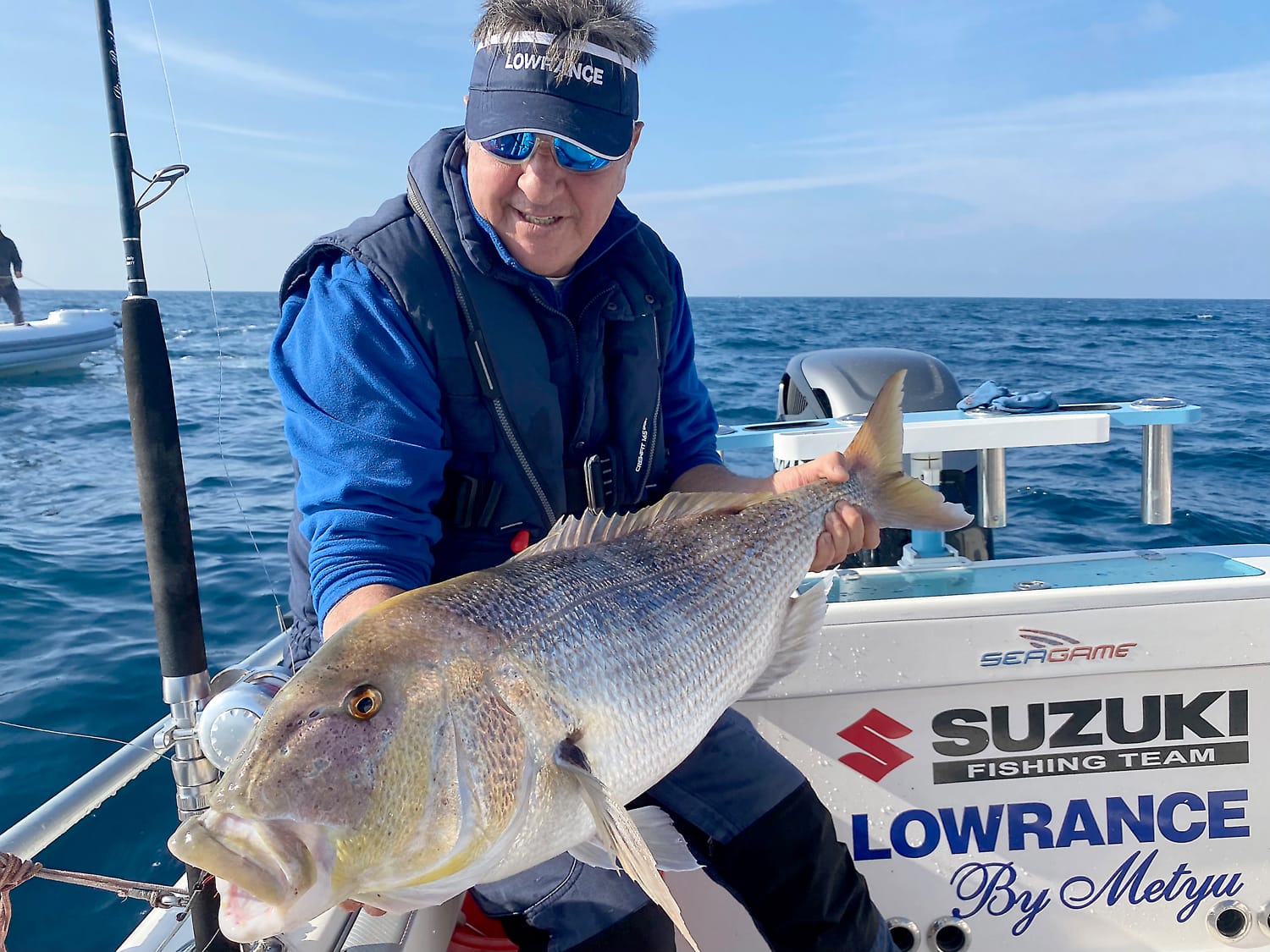
foto in alto: Alfredo Cascone con una cernia appena pescata.
La pesca col vivo o con esca naturale morta s’identifica con la traina lenta che fu la prima a nascere e rappresenta la massima espressione d’insidia da calare in profondità. Nata negli anni sessanta questa tecnica è tutt’oggi una tra le più praticate e amate dai pescatori sportivi. Fu messa a punto principalmente per insidiare le grandi ricciole, è stata poi adattata alla pesca del dentice e altri predatori di fondo. Negli anni si è evoluta soprattutto per quanto riguarda i materiali, alleggerendo attrezzature e piombi e rallentando sempre di più la velocità per riuscire a pescare quanto più radente possibile al fondo. Col tempo si è scoperto che in alcune situazioni pescando a scarroccio in una sorta di bolentino col vivo, rendeva ancora di più rispetto alla traina con la marcia inserita, proprio per la bassissima velocità della barca in deriva. Poi arrivò l’era del vertical jigging e tutti noi imparammo a pescare con la barca in deriva sulle marcature dei pesci. Il passo successivo fu breve, alcuni pionieri unirono alcune tipologie di esche da vertical con l’esca naturale.
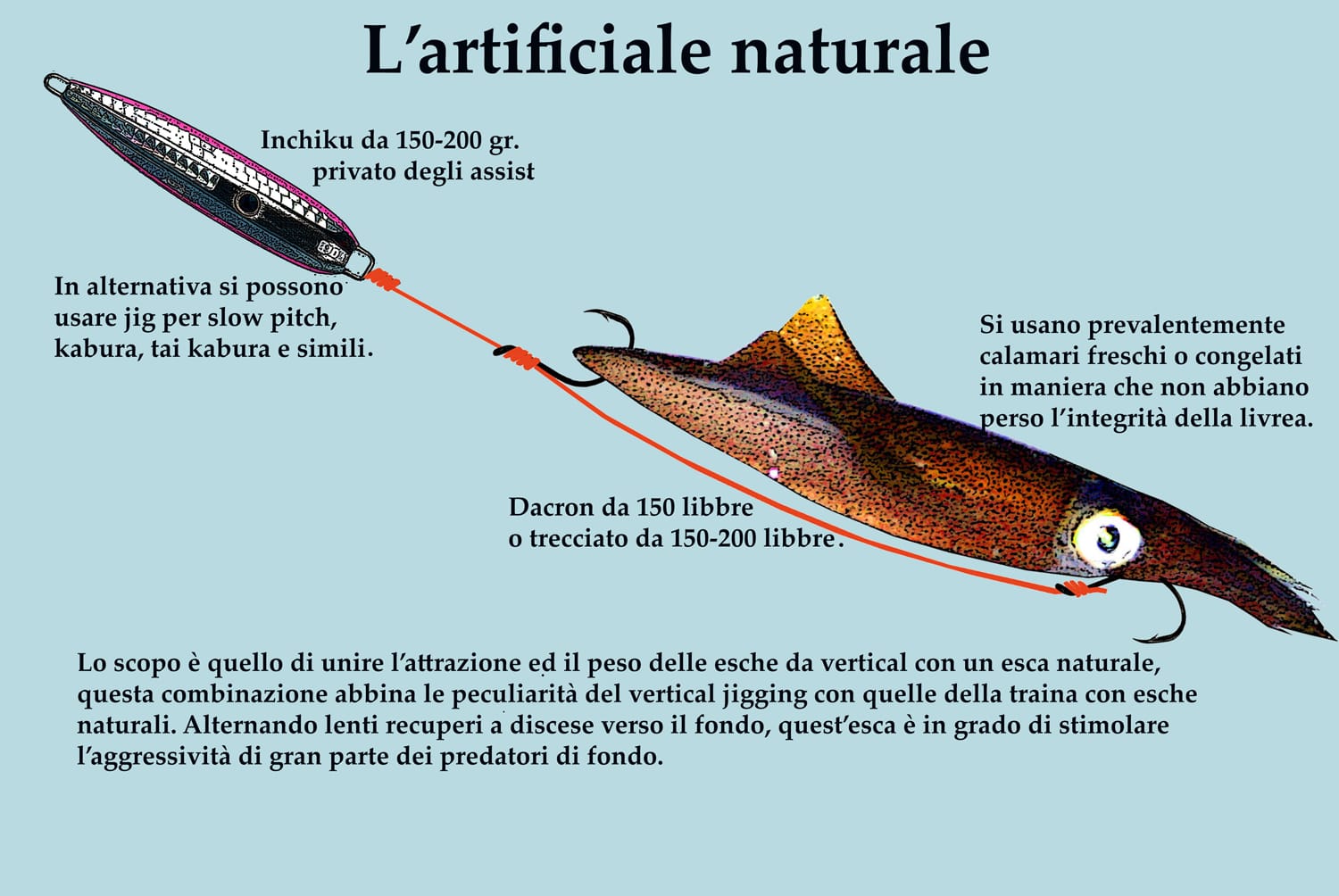
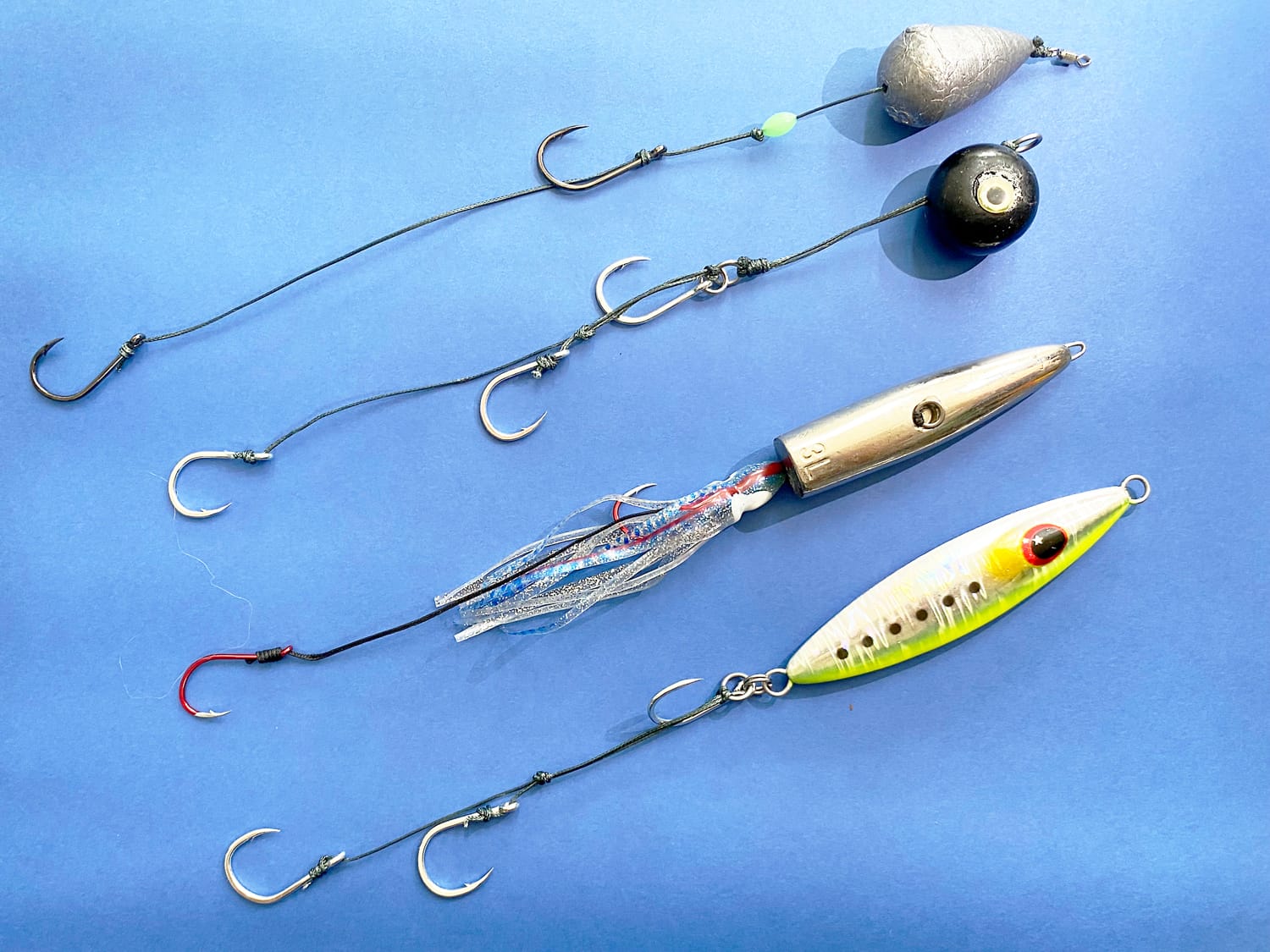
Misto artificiale - Questa tecnica esisteva già usando piombi a pera e a palla con terminali cortissimi ed esca naturale, si chiamava pesca col “pallino” e l’avvento delle vistose esche da vertical è stata la sua evoluzione. Il concetto è quello di manovrare un’esca morta mediante una zavorra che nel caso delle esche da vertical serve come richiamo grazie alla vistosità delle livree. L’artificiale più usato per questa tecnica è l’inchiku, ma si possono usare anche jig da slow pitch, kabura, tai kabura e tante altre esche metalliche. Lo scopo è quello di avere un artificiale pesante che porti l’esca naturale sul fondo e la faccia animare grazie a recuperi più o meno lenti. All’artificiale bisogna collegare un terminale realizzato con dacron da 150 libbre o trecciato da 200-250 libbre, sul quale andranno legati due o tre ami, considerando che l’amo più vicino all’esca servirà come trainante, mentre i retrostanti per ferrare il pesce. L’esca più usata è il calamaro morto, ma anche la seppia può essere molto catturante a patto che entrambi conservino inalterata la livrea. Si possono usare cefalopodi surgelati, ma mentre di calamari se ne trovano integri di origine oceanica, le seppie in genere bisogna congelarsele da soli. Per i calamari si possono acquistare quelli provenienti dall’oceano Indiano congelati a bordo uno per uno, che in genere mantengono integro il mantello e i colori.
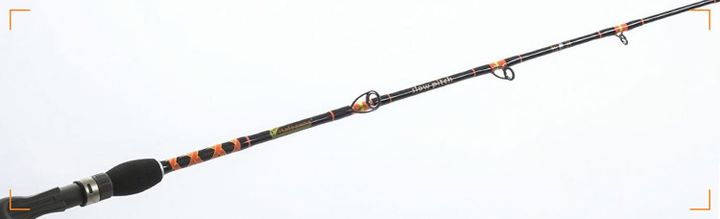
Le attrezzature - Per chi si avvicina a questa tecnica, canne e mulinelli per la traina col vivo possono andare benissimo, ma se si vuole avere un’attrezzatura che animi l’esca in maniera accattivante bisogna orientarsi su canne da jigging e mulinelli rotanti con manovella sinistra o destra a seconda della preferenza. Come canne si possono usare sia quella da jigging classico (200-300 grammi) che quella da slow pitch, ma che siano abbastanza rigide in quanto ci si potrebbe trovare a confrontarsi con prede di tutto rispetto. Si possono usare an-che canne con mulinello a bobina fissa, più gestibile per chi non ha dimestichezza con il rotante. S’imbobina trecciato da 50 libbre e come terminale si collegano 10 metri di fluorcarbon non inferiore allo 0,60. Alla parte finale del fluorcarbon si collega un solid ring e uno split ring che servirà da collegamento con l’occhiello dell’esca metallica.
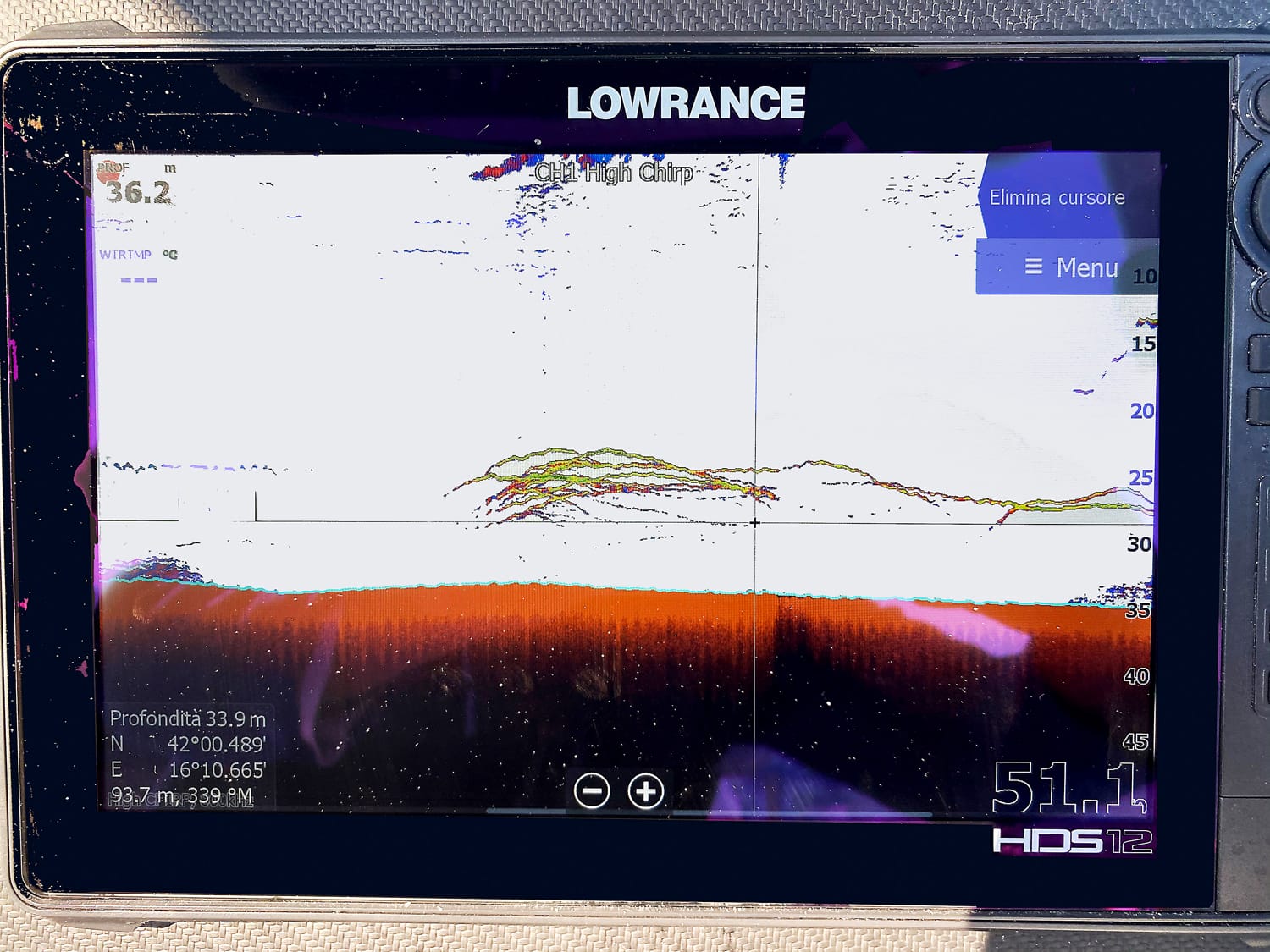
La pesca - Si tratta di una tecnica a spot, ovvero che prevede la calata dell’esca in punti ben precisi. Alla base dell’azione di pesca c’è una perfetta conoscenza dei fondali e un sapiente uso dell’ecoscandaglio. Si procede recandosi nell’area di pesca e innescando i calamari o le seppie. Con gli inneschi pronti si procede a zig zag nelle aree in cui ci potrebbero essere i predatori cercando con l’eco i segnali dei pesci o della mangianza. Fermata la barca si cala e si raggiunge il fondo. L’esca va animata con recuperi lenti alternati a piccoli scatti, ma senza mai scuoterla violentemente altrimenti potrebbe ruotare o danneggiarsi, perdendo il suo potere catturante. Molto spesso accade che non ci siano marcature evidenti e si giri a vuoto, ma non sempre l’ecoscandaglio riesce a centrare i bersagli e, come ha ampiamente dimostrato il jigging, anche calando in un apparente vuoto il pesce può comparire dal niente. È importante saper eseguire correttamente il collegamento trecciato-fluorcarbon e il nodo sul solid ring, perché si deve necessariamente pescare con la frizione abbastanza serrata (kg 5-6) e spesso bloccare la prima fuga del pesce fermando il tamburo con le mani. Alcune prede insidiabili in questa pesca come le cernie e i dentici tendono a intanarsi e se non arrestati durante la prima fuga potrebbero rompere immediatamente il terminale. Dopo la prima sfuriata, in genere la preda si lascia salpare senza tanti problemi.
Il momento magico - Come in tante altre tecniche di pesca dalla barca i momenti di sole basso (alba e tramonto) risultano essere i migliori. In questi brevi, ma intensi segmenti temporali, molti predatori approfittano della poca luce per mettersi in attività e concederci moltissime opportunità. Durante l’arco della giornata, con il sole alto, capita spesso di calare sulle marcature e non avere nessun risultato. I motivi sono abbastanza ovvi: i predatori cacciano quando hanno fame e in precisi momenti della giornata e quando non sono in attività non c’è verso di indurli all’attacco, a meno che non si riesca a stimolare la loro aggressività territoriale.
English version
Fishing with live bait or dead natural bait is identified with slow trolling, the first technique of its kind to appear and the highest expression of a deep presentation. Born in the 1960s, this technique is still one of the most practiced and loved by sport anglers. It was developed mainly to target large amberjack, then adapted to dentex and other bottom predators. Over the years it has evolved above all in materials, with lighter equipment and sinkers and increasingly slower speed, in order to fish as close to the bottom as possible.
Over time, anglers discovered that in some situations fishing while drifting, in a sort of live-bait bottom fishing, produced even better results than trolling with the engine engaged, precisely because of the extremely low speed of the drifting boat. Then came the era of vertical jigging, and all of us learned to fish with the boat drifting over fish marks. The next step was brief: some pioneers combined certain types of vertical lures with natural bait.
Mixed artificial - This technique already existed using pear-shaped and ball sinkers with very short leaders and natural bait; it was called fishing with the "pallino", the little ball, and the arrival of flashy vertical lures was its evolution. The concept is to work a dead bait by means of a weight, which in the case of vertical lures also acts as an attractor thanks to its bright colors. The artificial lure most used for this technique is the inchiku, but slow-pitch jigs, kabura, tai kabura and many other metal lures can also be used.
The purpose is to have a heavy artificial lure that takes the natural bait to the bottom and animates it through more or less slow retrieves. A leader made of 150-pound Dacron or 200- to 250-pound braid must be connected to the lure; two or three hooks are tied on it, considering that the hook closest to the bait acts as the towing hook, while the others behind it are used to hook the fish. The most used bait is dead squid, but cuttlefish can also be very productive provided both retain their natural coloration. Frozen cephalopods can be used, but while intact ocean squid can be found commercially, cuttlefish generally have to be frozen by the angler. For squid, one can buy those from the Indian Ocean, frozen on board one by one, which generally preserve the mantle and colors intact.
The equipment - For those approaching this technique, rods and reels for live-bait trolling can work very well, but if you want equipment that animates the bait attractively, you should look to jigging rods and overhead reels, with left or right handle according to preference. Both classic jigging rods of 200 to 300 grams and slow-pitch rods can be used, as long as they are fairly stiff, because one may have to face very respectable fish. Rods with fixed-spool reels can also be used, easier for those unfamiliar with overhead reels. The reel is spooled with 50-pound braid and, as leader, 10 meters of fluorocarbon no thinner than 0.60 millimeters are connected. At the end of the fluorocarbon one connects a solid ring and a split ring, which will serve as the connection to the eye of the metal lure.
Fishing action - This is a spot technique, meaning it involves lowering the bait at very precise points. At the base of the fishing action are perfect knowledge of the seabed and skillful use of the echo sounder. One proceeds by going to the fishing area and rigging the squid or cuttlefish. With the baits ready, one moves in a zigzag through the areas where predators may be, searching with the sounder for fish signals or baitfish. Once the boat is stopped, the bait is lowered until it reaches bottom. The bait must be animated with slow retrieves alternating with small jerks, but never shaken violently, otherwise it may spin or be damaged, losing its catching power.
Very often there are no evident marks and one wanders without result, but the echo sounder does not always manage to locate the targets and, as jigging has amply shown, even when lowering into apparent emptiness the fish can appear out of nowhere. It is important to know how to correctly make the braid-to-fluorocarbon connection and the knot on the solid ring, because one must necessarily fish with the drag fairly tight, five or six kilos, and often stop the fish's first run by holding the spool with the hands. Some of the prey targeted with this fishing, such as groupers and dentex, tend to hole up, and if they are not stopped during the first run they can break the leader immediately. After the first outburst, the fish generally comes up without too many problems.
The magic moment - As in many other boat-fishing techniques, low-light moments, sunrise and sunset, prove to be the best. In these brief but intense periods, many predators take advantage of the weak light to become active and give us many opportunities. During the day, with the sun high, it often happens that one lowers onto fish marks and gets no result. The reasons are fairly obvious: predators hunt when they are hungry and at precise moments of the day, and when they are not active there is no way to induce them to attack, unless one manages to stimulate their territorial aggression.

Commenti ()