
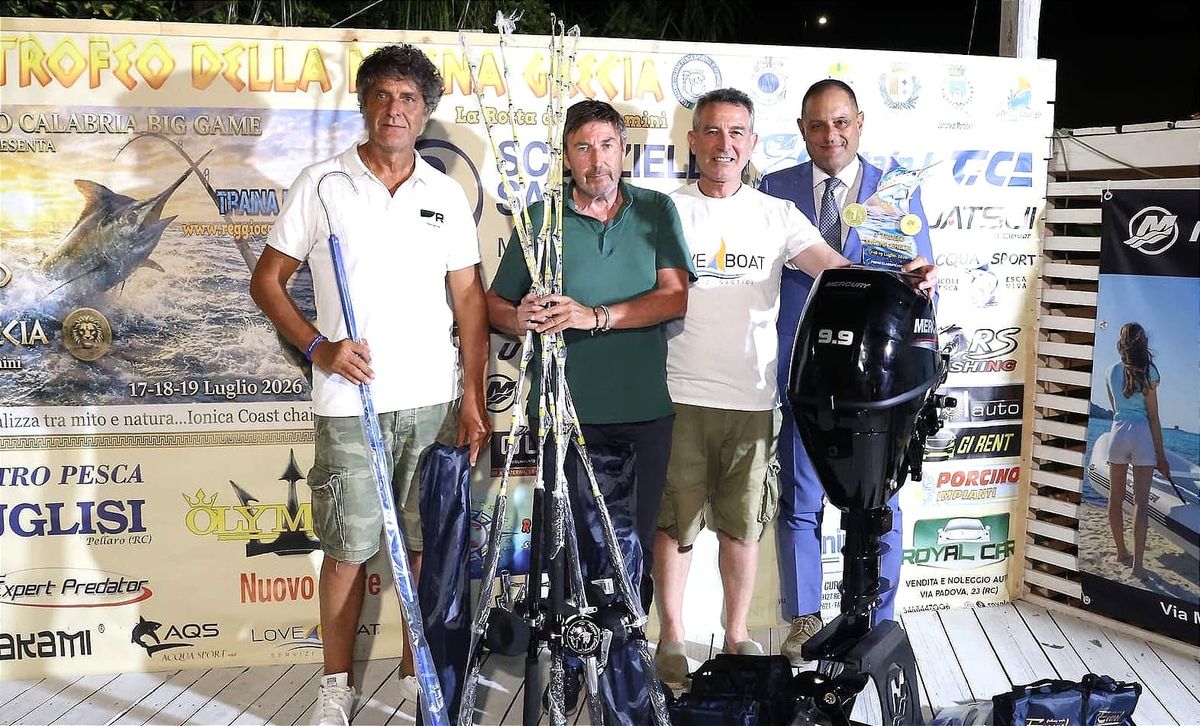
Una gara perfetta, in crescita, con tanti pesci, catture e rilasci. E un entusiasmo senza confini che già proietta l’Asd Reggio Calabria Big Game verso una prossima edizione, ancora più partecipata e spettacolare. Un evento raccomandato, da vivere in prima persona.
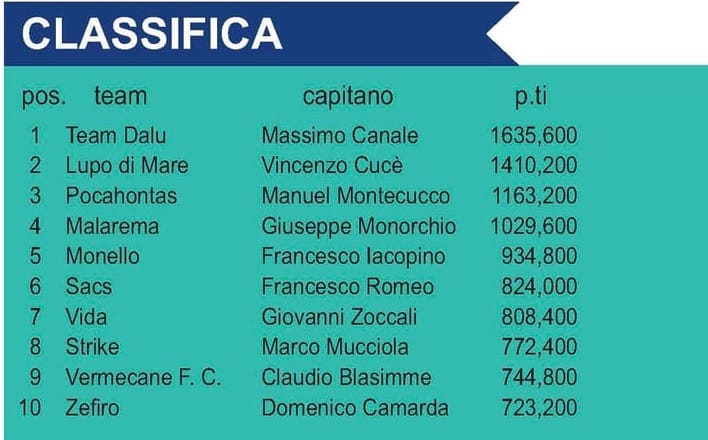
Foto in alto: il Team Dalu, primo classificato. Da sn: Paolo Palcani, Bruno Giordano, Massimo Canale e Leonardo Suraci, neo sindaco di Montebello Jonico, che premia. ph: Pasquale Garreffa (Fafo)
Ci hanno provato a rovinare la festa, ma non ci sono riusciti. La gara si è svolta domenica mattina anziché sabato sera e tutto sommato, visti i risultati e alla faccia del meteo capriccioso, meglio non poteva andare. Siamo in Calabria, a Saline Joniche, nell’estremo sud della regione. Qui nella seconda metà di luglio, si è consumata la seconda edizione del Trofeo della Magna Grecia - La Rotta dei Gelsomini, un evento di traina d’altura a cura dell’Asd Reggio Calabria Big Game.
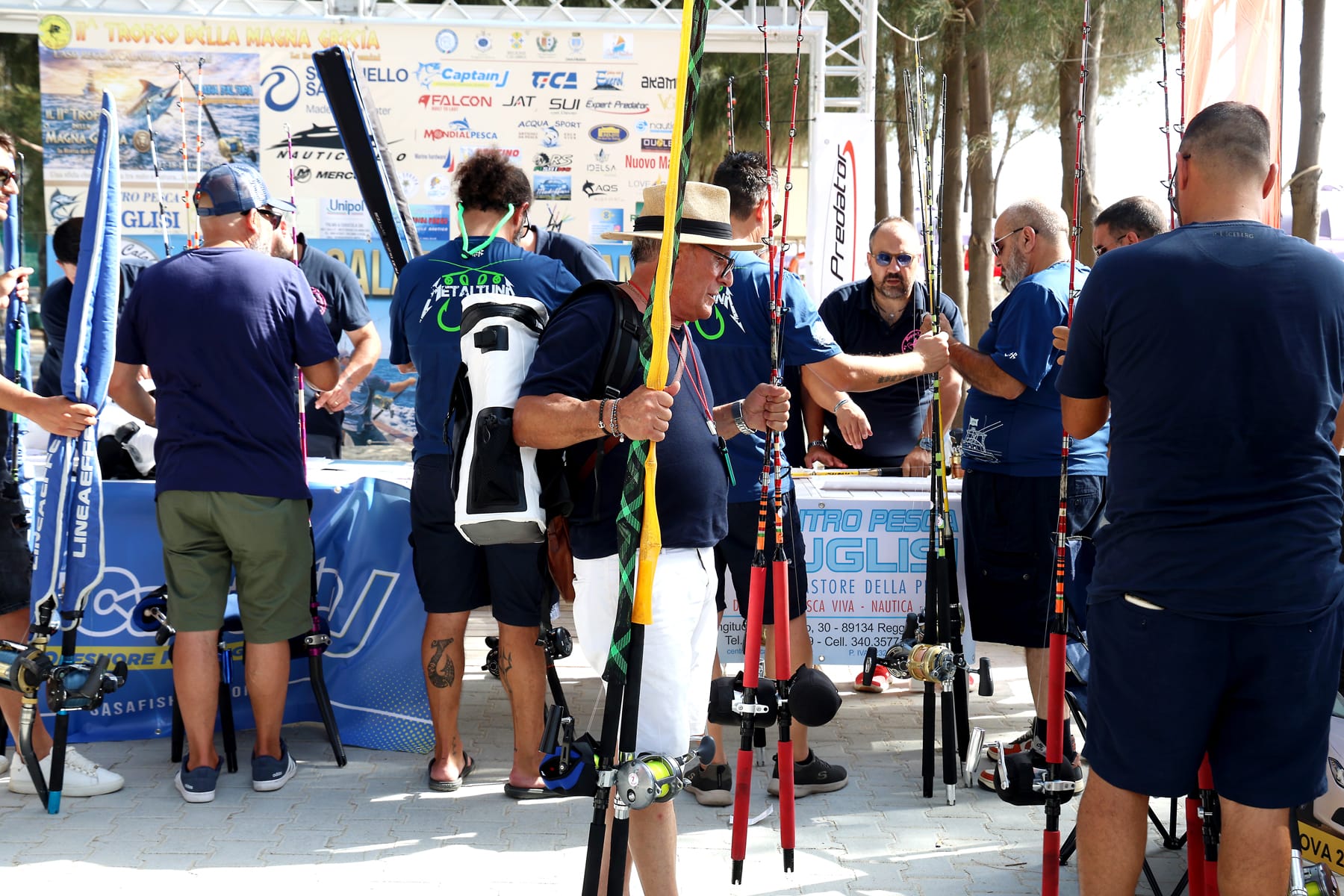
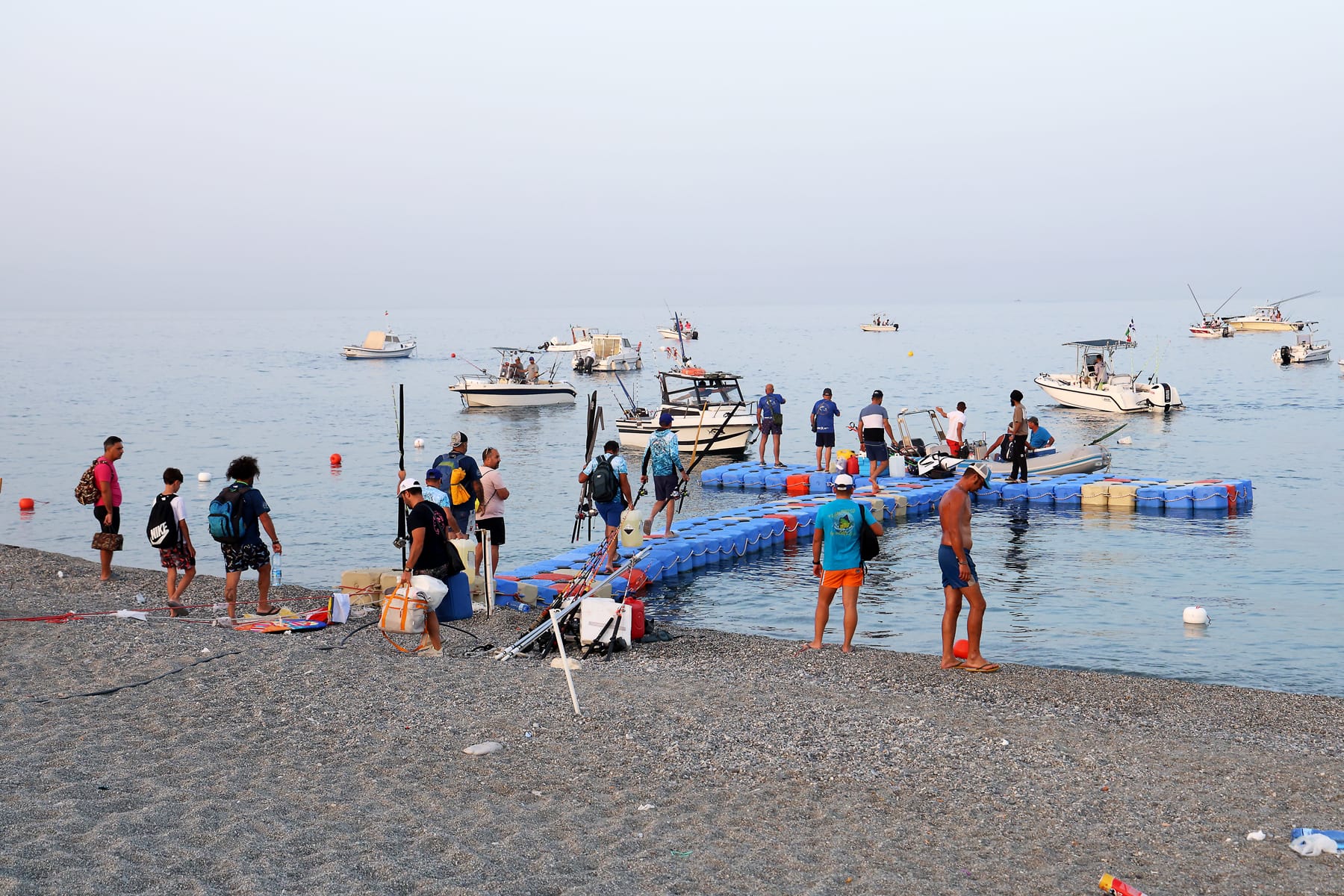
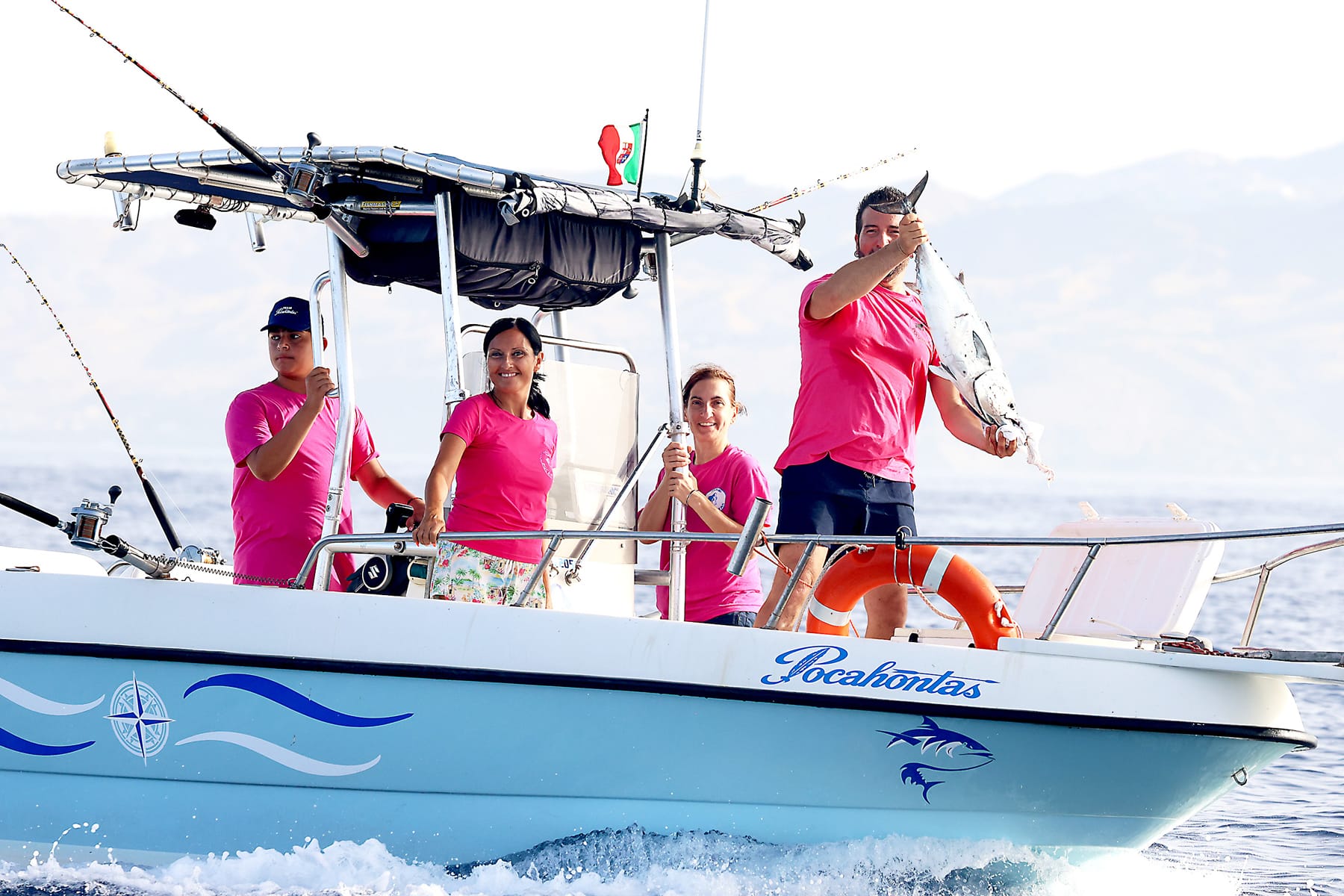
La gara - Di prima mattina una quarantina di equipaggi, salpati dal pontile Cns di Saline Joniche, attendono il via e alle sette calano in acqua le lenze. L’estesissimo campo gara è antistante il punto di ritrovo, molto vicino alla costa vista la conformazione del fondo che in poche centinaia di metri raggiunge subito profondità abissali. Non sono consentite più di otto canne e non sono previste costrizioni di classe, solo la preventiva punzonatura. L’aspirazione è quella di catturare più prede degli avversari, in particolare spada, aguglia imperiale, marlin mediterraneo, alalonga, lampuga, tonno rosso (non imbarcabile), e “altri pesci sportivi” ai quali verrà applicato il minimo coefficiente. Chi conosce queste acque sa bene che le ore favorevoli sono serali e teme, di conseguenza che aver, obtorto collo, spostato la gara alla mattina, possa costituire un serio handicap. Fortuna vuole che già alle 7:10 il gracchiare del vhf annuncia il primo strike (Pocahontas) e da qui in poi diventa tutto in discesa. Le scie delle barche continuano a imbiancare lo specchio d’acqua mentre le esche, trainate più o meno in superfice, anche a oltre 100 metri dalla poppa, si muovono a scatti e producono schizzi come pesci in fuga. Sono queste le condizioni che attirano i predatori dalle profondità e stimolano la loro aggressività. La successione delle comunicazioni sulla chat, diventa sempre più frequente: strike, pesce a bordo, ma anche pesce slamato e pesce rilasciato. E alle 07:56 su Watsapp si legge il primo “doppio strike” (Vermecane). E così, con andamento più o meno costante, e un ultimo “pesce a bordo” (Malarema) alle 14:47, la gara arriva al termine.
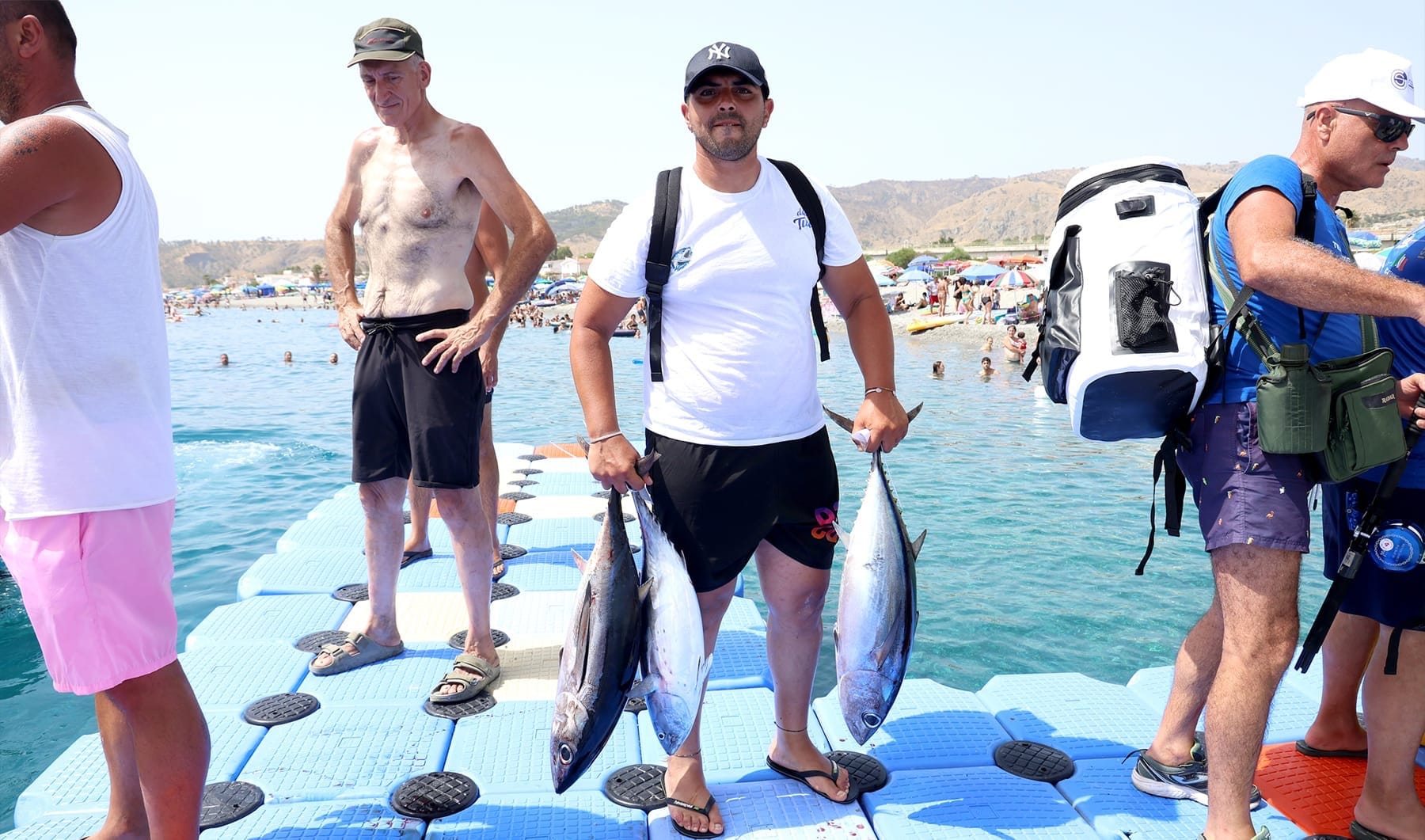
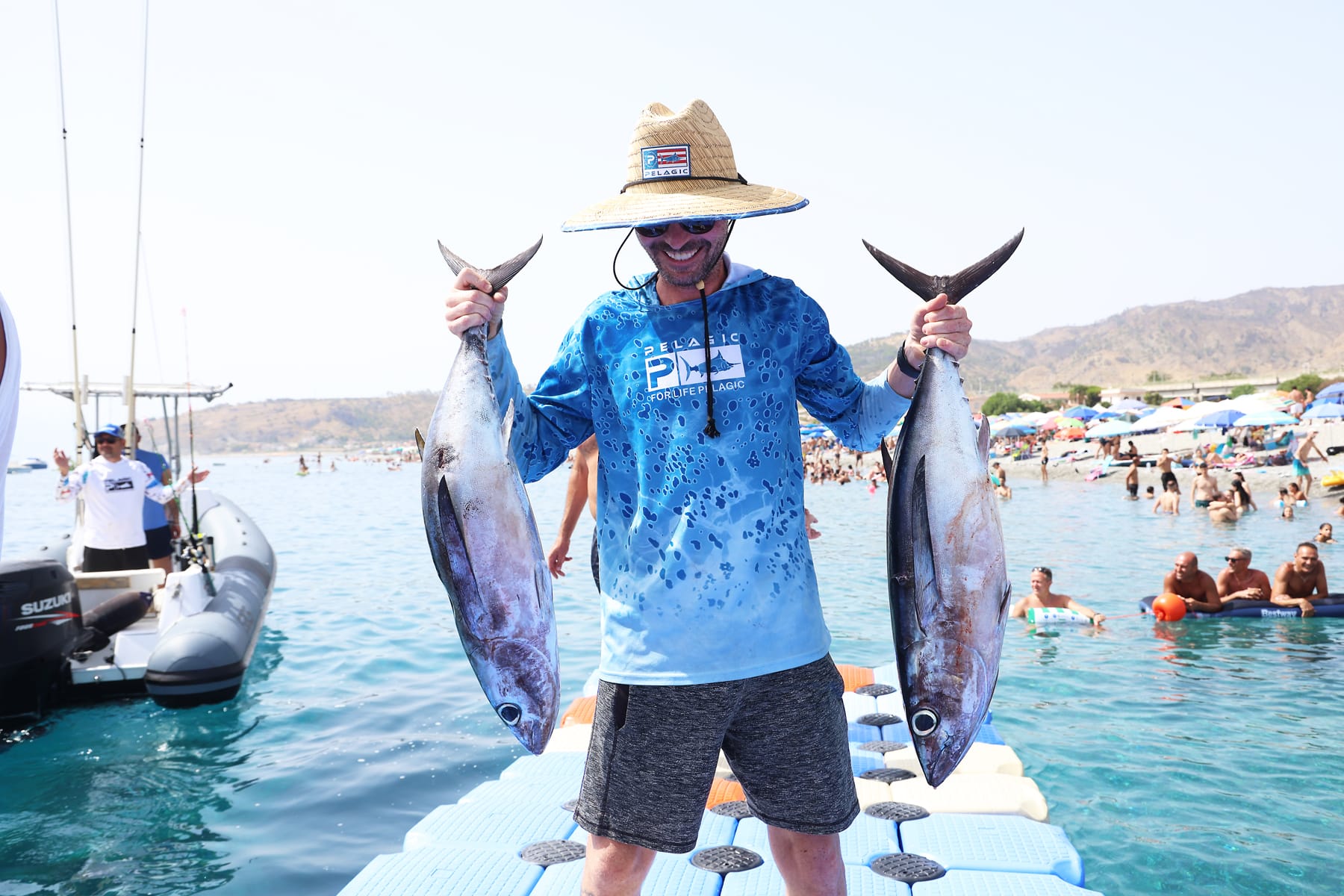
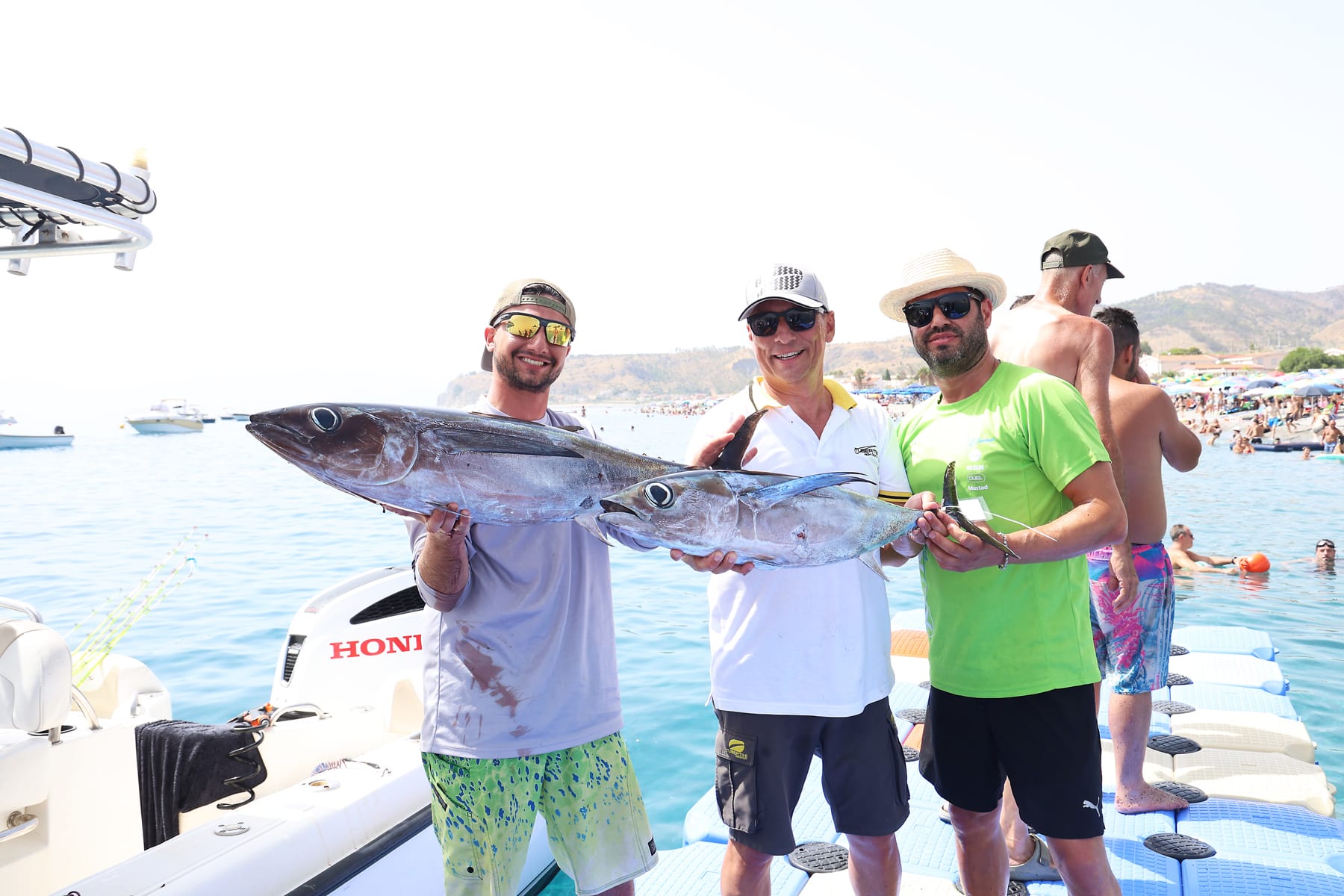
Il vincitore - “Mi hanno comunicato la vittoria nel tardo pomeriggio.” Così ci racconta Massimo Canale, comandante del Team Dalu, armatore di un Al Custom 30. “Siamo un team esordiente - prosegue il comandante - nel senso che mai siamo stati a pesca insieme. Eravamo totalmente privi di un minimo rodaggio. Chi è pratico sa bene che non è un particolare di poco conto: otto canne vanno gestite e farlo senza la scorta di un indispensabile affiatamento… “.
Beh, però ce l’avete fatta! “Sì è vero! - riprende Canale - Come è vero che singolarmente abbiamo esperienza da vendere. Ma sai, mentre Bruno Giordano è una conoscenza consolidata, Paolo Palcani, venuto da Roma, era il “perfetto sconosciuto”. Fortunatamente si è rivelato una piacevole e affidabile conoscenza. Insomma i tre galli del pollaio non si sono beccati. Devo dire che inizialmente ci siamo anche lasciati influenzare per questa “pesante verginità”, del resto mentre fioccavano gli strike da tutte le parti, noi siamo rimasti a secco per quasi due ore e mezzo. Fortunatamente alle 10:20 rompiamo il malefico incantesimo con un doppio strike liberatorio e due alalonghe a bordo. Da quel momento siamo entrati in partita con le Italcanna spesso in piega e il filo Ande teso. Kona, jet, minnow e aeroplanini hanno fatto il resto, fino a chiudere una cinquina di alalonghe. Depositato il pescato rientriamo in porto e ci riaffacciamo alla base poco prima della cena di commiato. Altra bella parentesi quest’ultima, al ristorante Perla Blue, con antipasti crudi, ottimi paccheri di mare e pesce fresco fresco che più fresco non si può. Durante le libagioni è partita la premiazione, i ringraziamenti ai partecipanti, le autorità, gli sponsor e per concludere siamo saliti sul palco, prima Pocahontas, poi Lupo di mare e infine il Team Dalu.”.
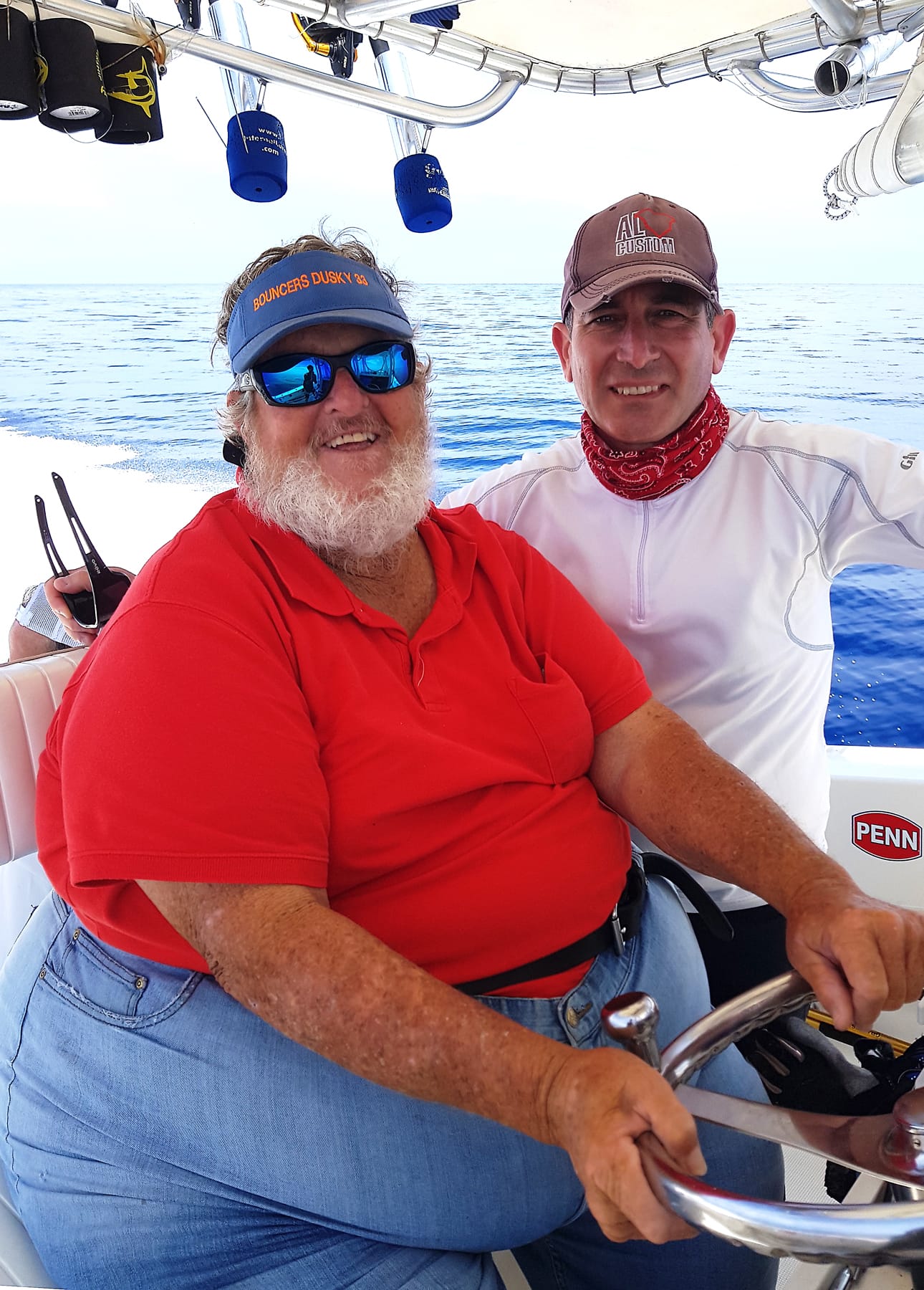
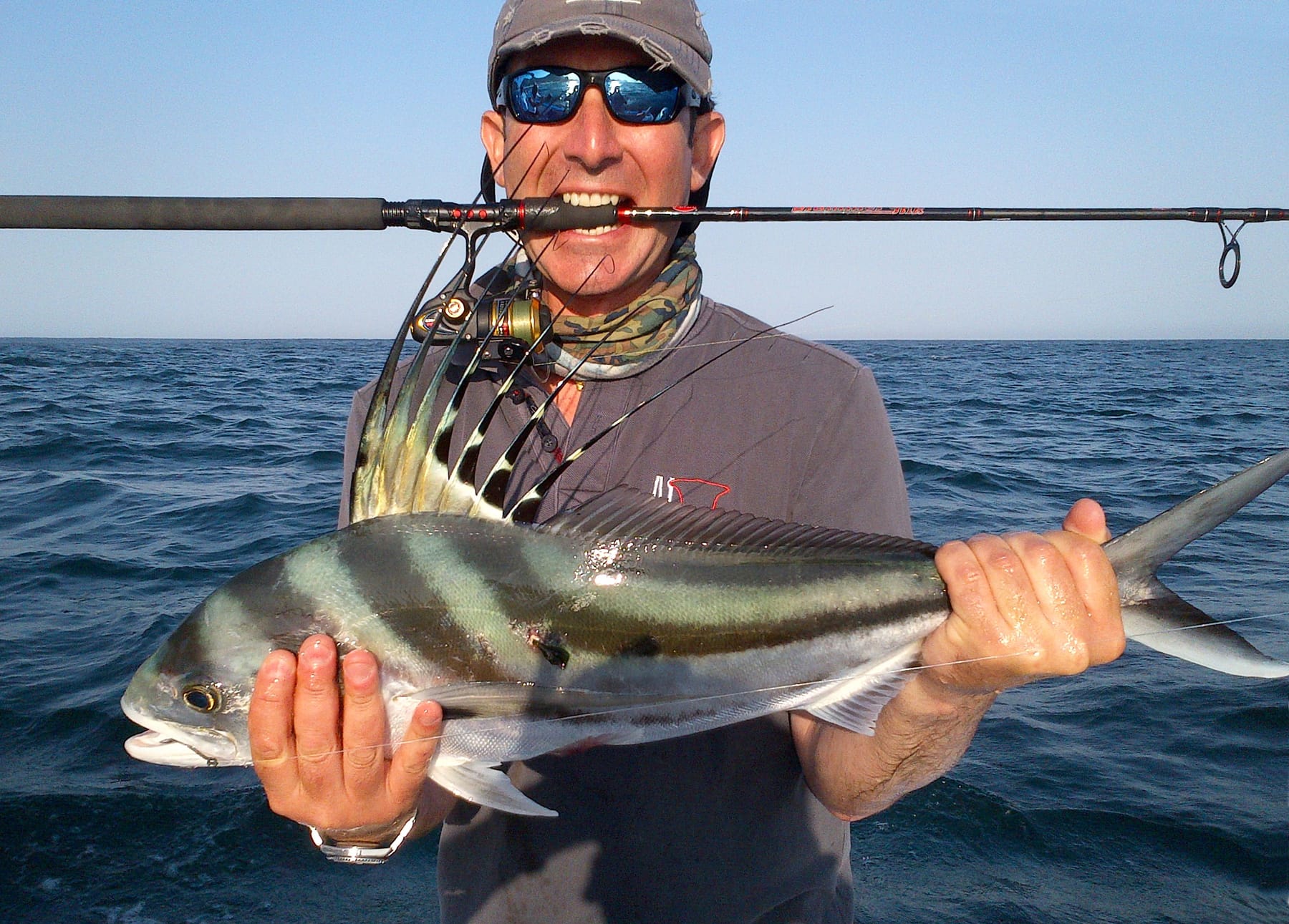
Il mito americano Bouncer Smith con Massimo Canale. Rooster fish pescato a spinning in Messico a Cabo San Lucas.
Pillole del Captain Canale - La mia formazione sportiva si è consolidata in giro per il mondo attingendo, in particolare tecnica e filosofia, da questo signore con la barba bianca, Bouncer Smith, un mito a Miami. Qui in Italia ho avuto la fortuna di pescare ai massimi livelli con Luca Cavagnano, e il compianto Giacomo Bot, ma anche con Riccardo Fanelli. Mi ricordo un campionato italiano, a Taranto, nel 2012. Personaggi tutti di grande tecnica, esperienza e umanità. Mi hanno insegnato a rispettare il mare e i pesci e pensare al futuro. Negli States, il rilascio della preda (catch & release) e in particolare del rostrato, è una pratica ormai consolidata. In Italia ci stiamo tentando, a piccoli passi. Io lo considero un contributo all’ambiente, dovuto e irrinunciabile. È nostra responsabilità trasmettere alle generazioni future il principio etico e non sarebbe inopportuno tenerne conto anche nei regolamenti delle gare promozionali e non. Concludo ringraziando, anche a nome del mio equipaggio, chi ha la costanza e la pazienza di organizzare con tanta professionalità questi eventi sportivi, per me l’unica occasione per esprimere ancora la mia non sopita voglia di agonismo.
Conclusioni - Si chiude così il II Trofeo della Magna Grecia - La rotta dei Gelsomini, in bellezza, con la piena soddisfazione dei partecipanti, di Francesco Iacopino, presidente del sodalizio organizzatore, di Antonio Scappatura, infaticabile segretario e di tutti i soci del Reggio Calabria Big Game.
English version
A perfect competition, going from strength to strength, with plenty of fish, catches and releases. And boundless enthusiasm that is already setting the ASD Reggio Calabria Big Game on course for an even more well-attended and spectacular next edition. An event well worth attending, to be experienced first-hand.
They tried to spoil the party, but they didn’t succeed. The competition took place on Sunday morning instead of Saturday evening and, all things considered – given the results and in spite of the capricious weather – it couldn’t have gone better. We are in Calabria, at Saline Joniche, in the far south of the region. Here, in the second half of July, the second edition of the Trofeo della Magna Grecia – La Rotta dei Gelsomini took place, a deep-sea trolling event organised by ASD Reggio Calabria Big Game.
The competition – Early in the morning, around forty crews set sail from the CNS jetty at Saline Joniche, awaiting the start, and at seven o’clock they cast their lines into the water. The extremely wide competition area lies directly in front of the meeting point, very close to the coast given the nature of the seabed, which drops to abyssal depths within just a few hundred metres. No more than eight rods are permitted, and there are no class restrictions, only the requirement for prior registration. The aim is to catch more fish than one’s opponents, in particular swordfish, imperial garfish, Mediterranean marlin, alalonga, dolphinfish, bluefin tuna (which cannot be landed), and ‘other sport fish’, to which the minimum coefficient will be applied. Anyone familiar with these waters knows full well that the best times are in the evening and, consequently, fears that having been forced to move the race to the morning might prove a serious handicap. As luck would have it, as early as 7.10 am, the crackling of the VHF announces the first strike (Pocahontas) and from then on it’s plain sailing. The boats’ wakes continue to whitewash the water’s surface, whilst the lures – trolled more or less near the surface, even over 100 metres astern – jerk about and send up splashes like fleeing fish. These are the conditions that lure predators from the depths and stimulate their aggression. The stream of messages on the chat becomes increasingly frequent: strikes, fish on board, but also fish that have come off the hook and fish released. And at 07:56, the first ‘double strike’ (Vermecane) appears on WhatsApp. And so, at a more or less steady pace, and with a final ‘fish on board’ (Malarema) at 14:47, the competition draws to a close.
The winner – “They told me I’d won in the late afternoon,” says Massimo Canale, skipper of Team Dalu and owner of an Al Custom 30. “ “We’re a rookie team,” continues the skipper, “in the sense that we’ve never fished together before. We had absolutely no experience to speak of. Anyone familiar with the sport knows this is no small matter: eight rods need to be managed, and doing so without the essential team spirit…” Well, but you managed it! “Yes, that’s true!” continues Canale. “Just as it’s true that , individually, we’ve got experience to spare. But you know, whilst Bruno Giordano is someone we know well, Paolo Palcani, who’d come from Rome, was a ‘complete stranger’. Fortunately, he turned out to be a pleasant and reliable chap. In short, the three roosters in the henhouse didn’t peck at one another. I must say that at first we were even a bit daunted by this ‘heavy virginity’; after all, whilst strikes were coming thick and fast from all sides, we went blank for nearly two and a half hours. Fortunately, at 10.20 am, we broke the evil spell with a liberating double strike and two alalonghe on board. From that moment on, we were well and truly in the game, with the Italcanna rods often bending and the Ande line taut. Kona lures, jets, minnows and aeroplanini did the rest, bringing our total to five alalonghe. Having unloaded our catch, we returned to port and popped back to base just before the farewell dinner. This was another lovely interlude, at the Perla Blue restaurant, with raw starters, excellent seafood paccheri and fish so fresh it couldn’t be any fresher. During the toasts, the awards ceremony began, with thanks to the participants, the authorities and the sponsors; to round things off, we took to the stage – first Pocahontas, then Lupo di mare and finally Team Dalu.”
Insights from Captain Canale - My sporting development took shape whilst travelling the world, drawing – particularly in terms of technique and philosophy – on the teachings of this gentleman with the white beard, Bouncer Smith, a legend in Miami. Here in Italy, I’ve been fortunate enough to fish at the very highest level with Luca Cavagnano and the late Giacomo Bot, as well as with Riccardo Fanelli. I remember an Italian championship in Taranto back in 2012. All of them were individuals of great technical skill, experience and humanity. They taught me to respect the sea and the fish, and to think about the future. In the States, catch-and-release – particularly for billfish – is now an established practice. In Italy, we are trying to adopt it, one small step at a time. I consider it a necessary and indispensable contribution to the environment. It is our responsibility to pass on this ethical principle to future generations, and it would be appropriate to take it into account in the regulations for both promotional and non-promotional competitions. I would like to conclude by thanking, also on behalf of my crew, those who have the perseverance and patience to organise these sporting events with such professionalism; for me, they are the only opportunity to once again express my undimmed desire for competition.
Commenti ()