
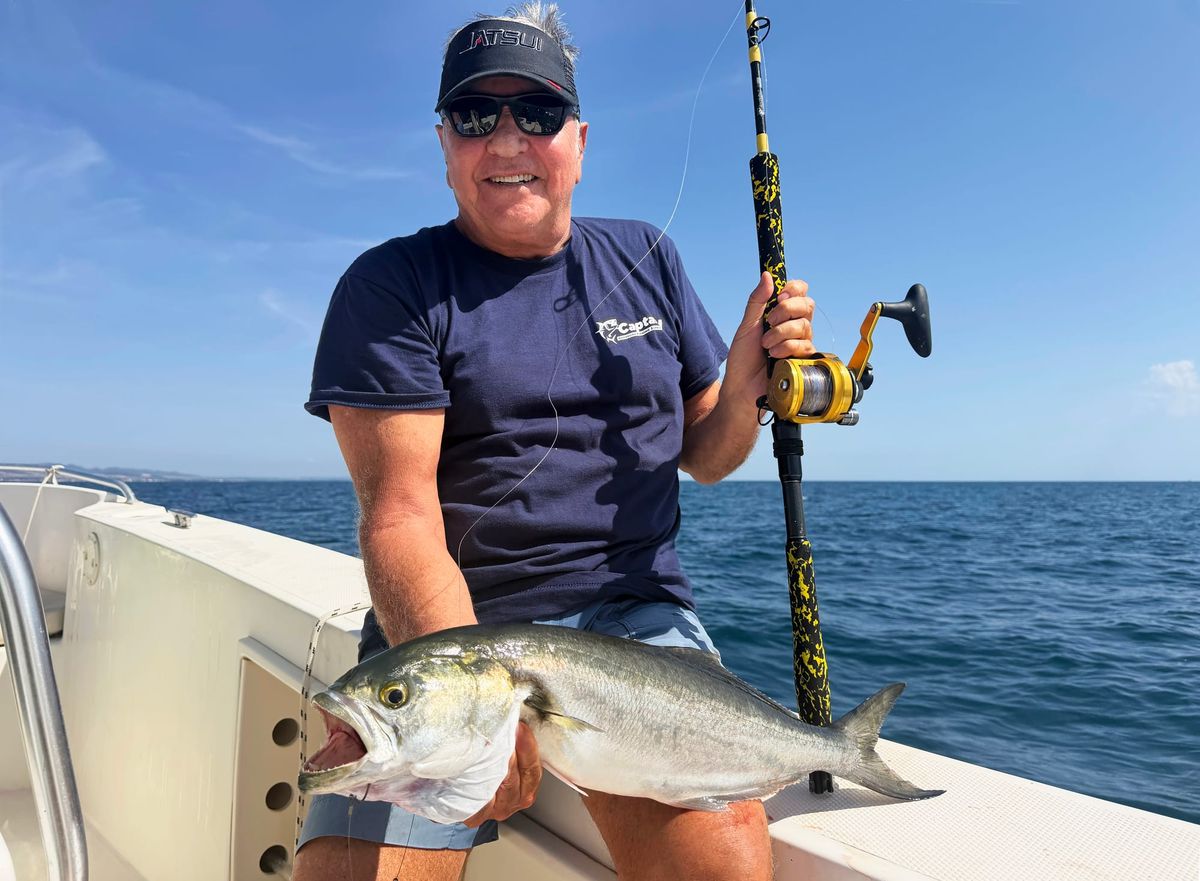
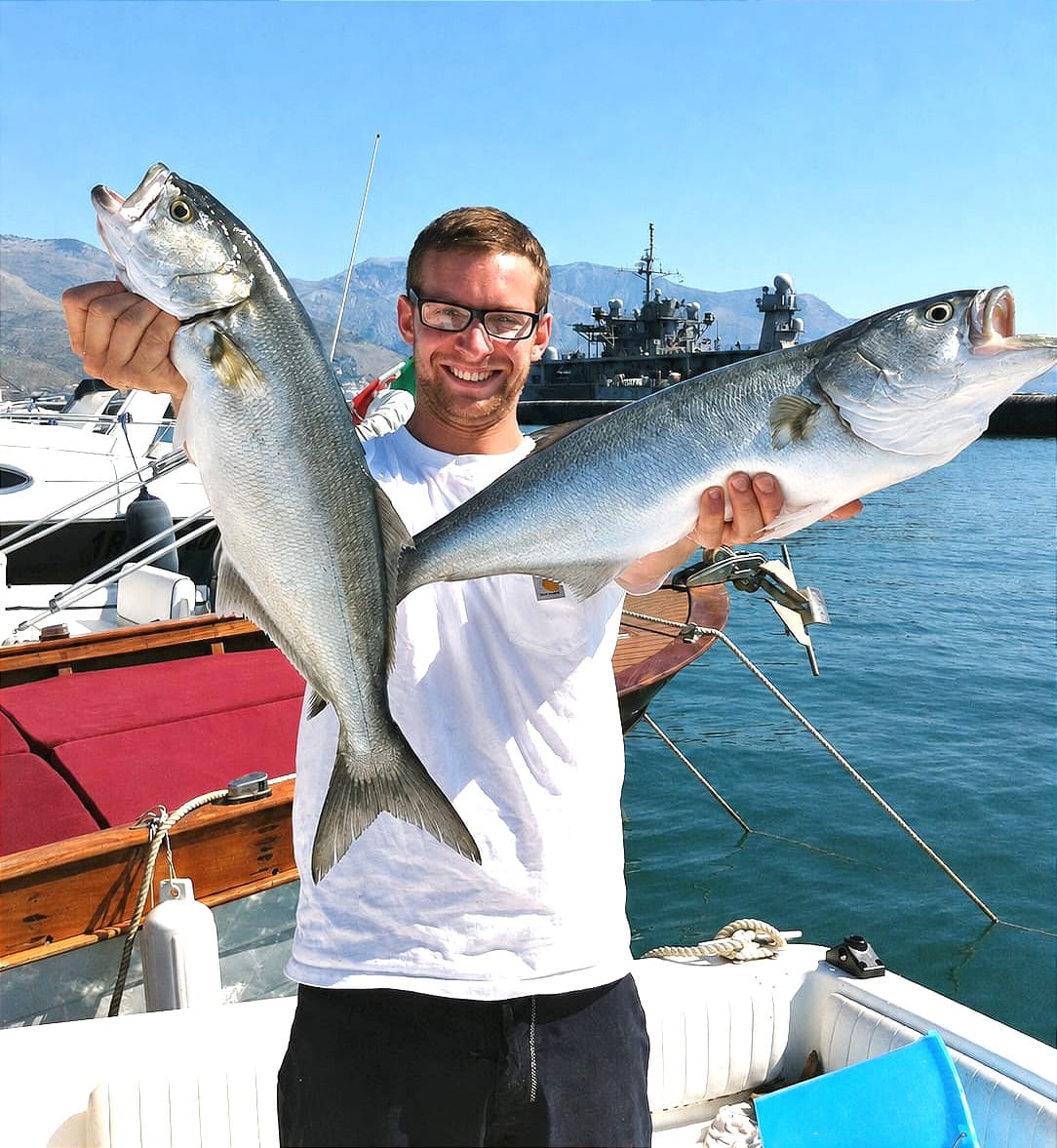
Un tempo preda rara e ricercatissima, il serra ha poi invaso le nostre coste diventando un pesce di scarso valore sportivo. Oggi la sua presenza si è pesantemente rarefatta ed è ritornato a rappresentare una sfida di tutto rispetto.
La storia del pesce serra lungo le coste italiane è abbastanza singolare e coloro che si sono avvicinati alla pesca dilettantistica da pochi anni, sicuramente non ne conoscono tutte le sfaccettature.
Storia - Il serra (Pomatomus saltatrix) compare negli anni Settanta in poche e circoscritte aree, probabilmente proveniente da una migrazione anomala dal Nord Africa. La sua presenza viene segnalata lungo le coste laziali, nella Campania settentrionale, in Sicilia e in Calabria. In quegli anni la pesca al serra diventa una vera e propria mania, attirando pescatori da tutta la penisola. La taglia minima difficilmente scendeva sotto i 2 chili, con esemplari che invece superavano i 10. Questo fece pensare che fosse un pesce migratore e che non si riproducesse lungo le nostre coste. Nel resto d'Italia il serra rimane sconosciuto fino agli anni Novanta, periodo in cui, grazie a un leggero surriscaldamento del Mediterraneo settentrionale, lentamente comincia a occupare tutto il Tirreno. Forte della sua aggressività e soprattutto delle sue mascelle, diventa ben presto un predatore dominante, spodestando dal sottocosta i predatori autoctoni, primo fra tutti la spigola. Con l'arrivo del ventunesimo secolo si avventura anche in Adriatico, arrivando fino al delta del Po. Predilige senza distinzione le co-ste sabbiose in prossimità di foci con pochi metri d'acqua e le limpide acque delle secche rocciose. Difficilmente lo si trova nelle isole piccole minori distanti dalla costa. Improvvisamente s'iniziano a catturare anche gli esemplari giovani sotto i 500 grammi, segno evidente della sua riproduzione lungo le nostre coste, cosa che prima non avveniva. Poi improvvisamente, senza apparente motivo, inizia a farsi sempre più raro e a scomparire in alcune aree in cui era molto presente, come certe foci considerate veri e propri hot spot. Oggi la specie è tornata, soprattutto in alcune aree ed è di nuovo una preda molto impegnativa nella traina col vivo.
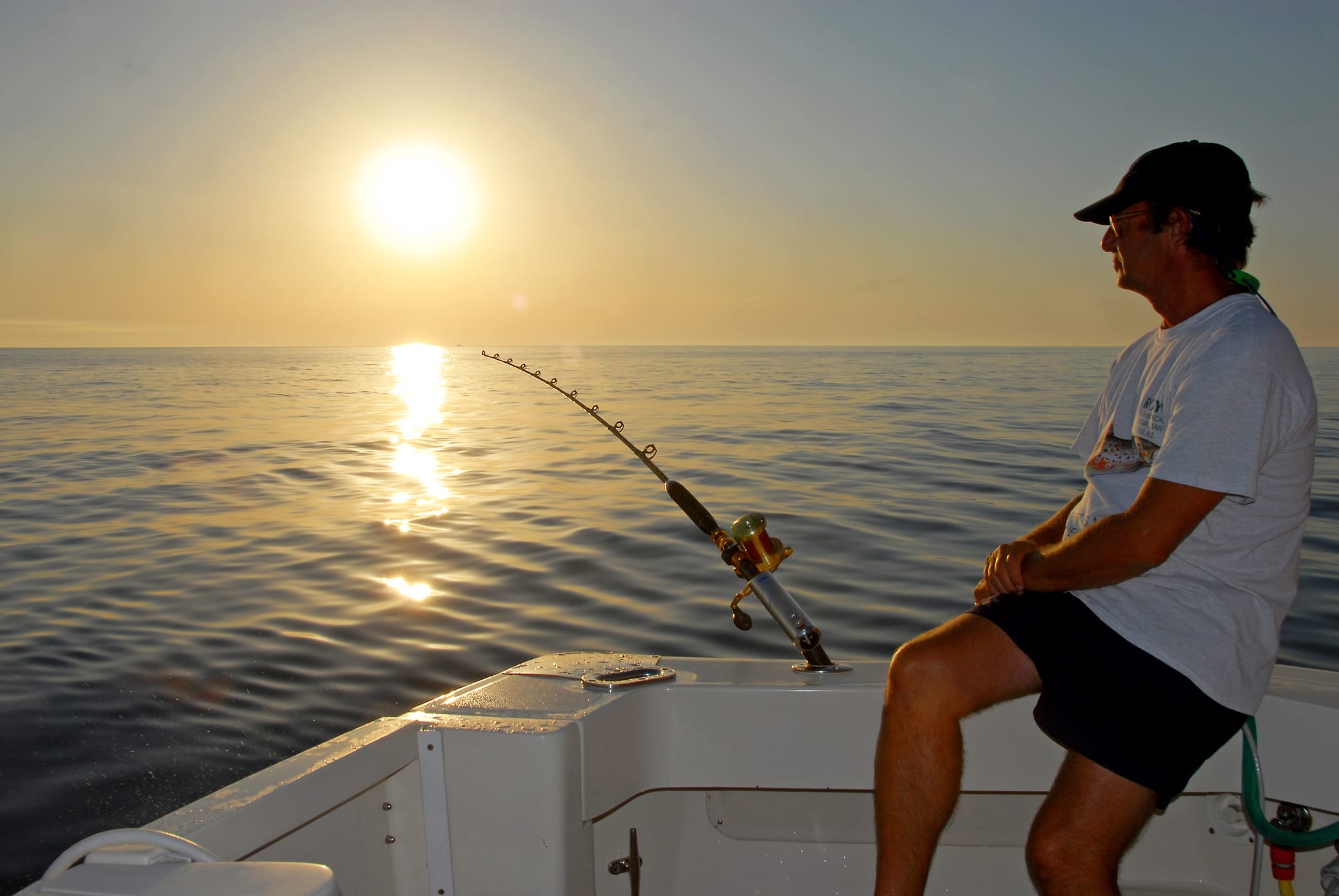
Abitudini - Le sue abitudini gregarie lo portano a spostamenti considerevoli lungo batimetriche profonde, fino ad accostare per la riproduzione in primavera. Il primo avvicinamento consistente avviene a maggio, con centinaia di esemplari che invadono letteralmente le coste. Sparisce senza motivo apparente in giugno, per ripopolare le coste, con l’arrivo dell’estate, terminata la riproduzione. Il serra sceglie la sua area di caccia e si stabilisce lì per tutta la stagione estiva con scorribande nel sotto costa e disturbando tutti gli altri predatori, escluse le ricciole, che teme e di cui a volte diventa preda. Non di rado lungo le coste sabbiose si unisce alle lecce, con le quali presenta diverse affinità comportamentali. Il pesce serra è sicuramente uno tra i più feroci abitatori del mare. Il suo metodo di caccia consiste nell’accerchiamento delle prede perpetrato da diversi individui, con il conseguente attacco a galla. Forte dei suoi micidiali denti, spesso non ingoia le prede, ma le divide in più parti per poi ingerirle in un secondo tempo. Si sposta sempre in banchi, quindi, individuata la zona di caccia, si possono effettuare più catture. Le dimensioni medie del serra si aggirano tra i 2 e i 5 chili, ma sono stati pescati esemplari di oltre dieci chili. Le catture più significative sono state effettuate nel mar di Marmara con esemplari molto vicini ai 20 chilogrammi.
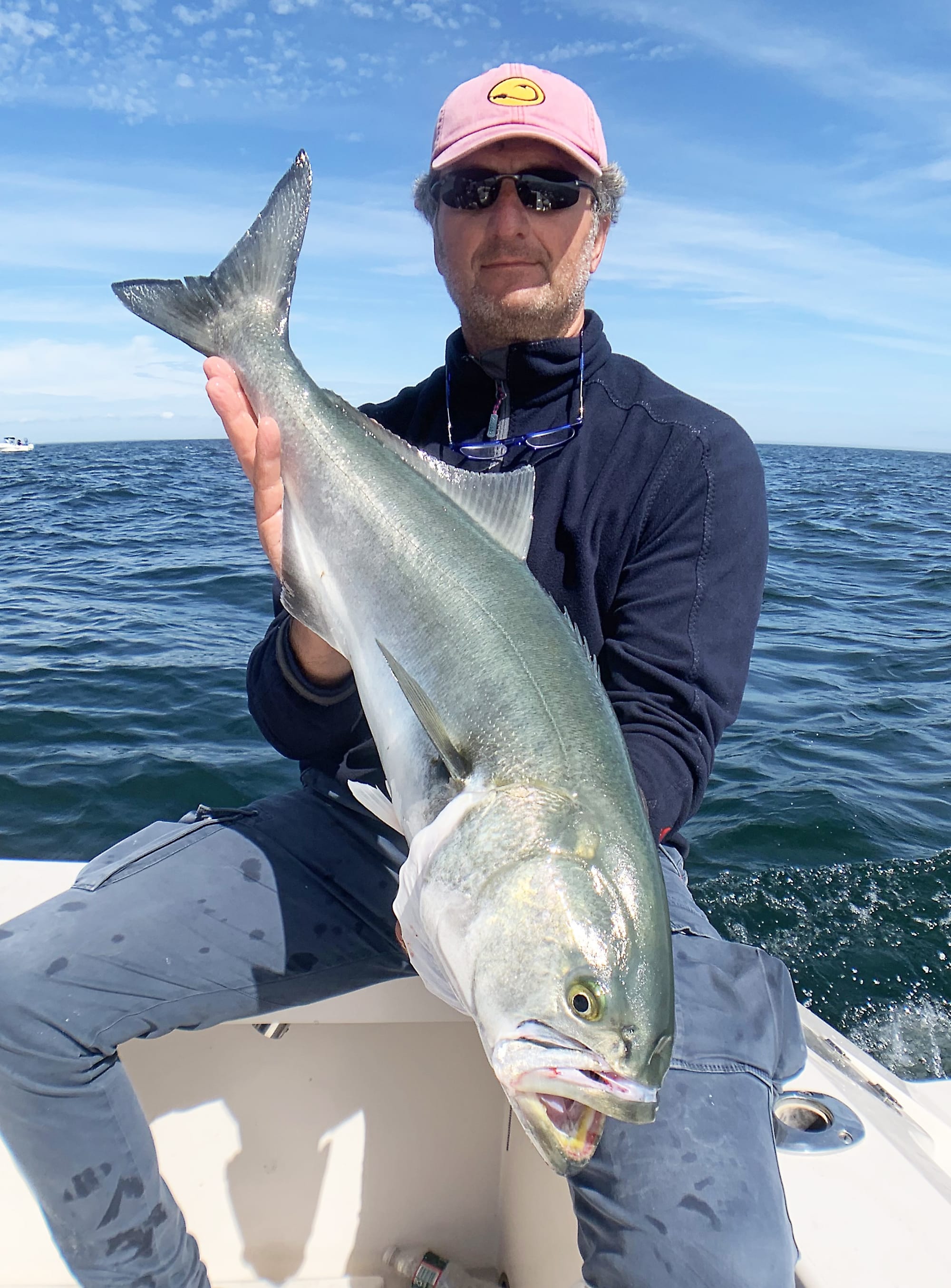
L’attrezzatura - Come accennato si tratta di una preda che s’incontra in acqua bassa, si può quindi insidiare con zavorre leggere e con attrezzature ultra light. Per i neofiti sono preferibili le 12 libbre, mentre i più navigati possono impiegare le 6 e le 4 libbre. Valido anche il trecciato in bobina, che trasferisce immediatamente la ferrata sul pesce.
Il terminale - La cattura di un serra con il terminale in nylon è del tutto casuale. Questo pesce, infatti, è in grado di tagliare di netto anche un monofilo dello 0,90. Pertanto il terminale è composto solo in parte di nylon (10 metri circa di 0,35 - 0,40), mentre il finale vicino all’esca è in acciaio. Kevlar, dacron e altri materiali sintetici, non hanno nessuna resistenza contro i denti di questo pesce. Il cavetto d’acciaio può essere sia del tipo termosaldante, che la semplice treccia multifilo. La bocca di questo pesce oltre a essere munita di denti è anche molto dura. È necessario quindi utilizzare degli ami di ridotta sezione e alta penetrazione. I più usati sono quelli in acciaio, storti, con la punta ad artiglio d’aquila e l’occhiello disassato. Anche alcuni modelli di “live bite” possono andar bene, ma non con canne flessibili per via della ferrata non potente. Il terminale considerato sportivo deve essere con massimo due ami. Da non considerare le ancorette che in caso di rottura condannerebbero il serra a morte certa. Il primo amo ha soltanto funzione trainante (il serra mangia in coda o a metà corpo), mentre il secondo è quello ferrante. Il terminale in acciaio deve essere di almeno 5 centimetri più lungo dell’esca, in quanto il serra potrebbe arrivare al nylon con i denti. Sia l’amo finale che la girella che collega il cavetto al terminale in nylon, vanno assicurati facendo passare il cavetto due volte dentro l’occhiello per ottenere una maggior tenuta dell’impiombatura.
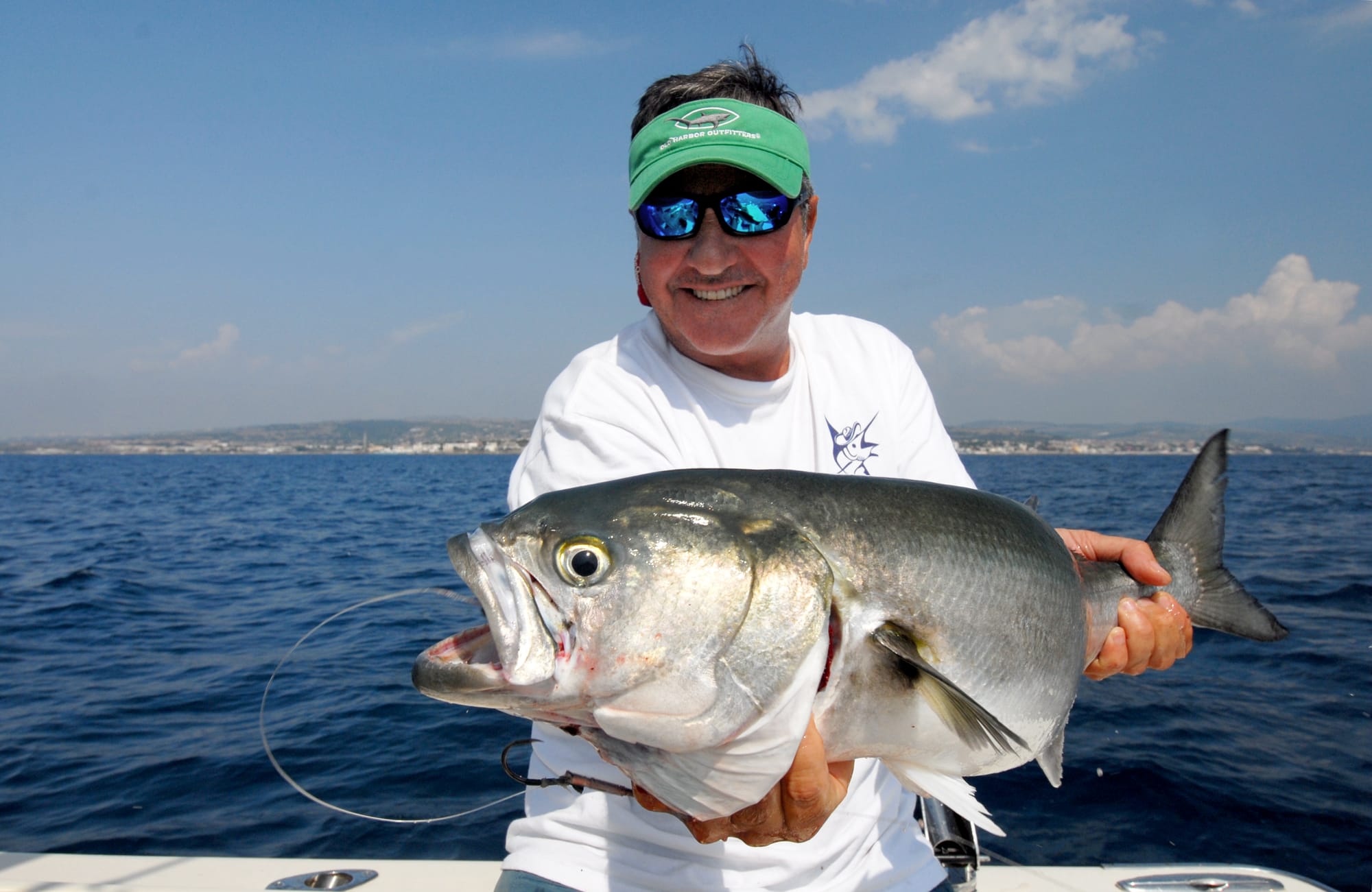
La pesca - Il serra si pesca con l’esca naturale, preferibilmente viva, a velocità bassissima. Le esche più valide sono quelle vive: cefalo, aguglia, sugherello, occhiata, salpa e boga. L’aguglia può essere utilizzata anche morta, in questo caso si deve procedere a 2 - 2,5 nodi. Generalmente si filano le esche a galla, ma su fondali superiori ai 5 metri, un leggero affondamento può essere più producente. Per affondare le esche si può usare un semplice piombo a sgancio rapido da 50-250 grammi a seconda della profondità di pesca. Su fondali particolarmente accidentati è preferibile usare il piombo guardiano. Il serra non è un predatore sospettoso come la ricciola o la spigola, ma il suo attacco sulle esche è incredibilmente singolare. Individuata l’esca la segue per qualche metro, per poi avventarsi contro con una rapidità incredibile. Pescando con la frizione sullo strike è difficilissimo che il pesce si ferri da solo, in genere dilania l’esca e l’abbandona in una frazione di secondo. Il sistema più efficace per ferrare il pesce serra è quello di lasciare il freno aperto con la cicalina inserita, bloccando la lenza con una pinzetta da downrigger fissata al mulinello o alla barca. Non appena il serra aggredisce l’esca, la lenza si sgancia e il pesce si prende filo. Presa la canna in mano e atteso che il serra abbia fatto una decina di metri ingerendo l’esca e l’amo, si blocca la bobina con la mano e si ferra. Quando si sente il pesce in fuga si porta la leva della frizione sullo strike, già tarato per la lenza impiegata e si inizia il combattimento. Il serra è un nuotatore velocissimo e per tentare di recidere il terminale compie salti ed evoluzioni fuori dall’acqua. Nonostante di rado superi i dieci chili e la taglia media si aggiri tra i due e i quattro, è un combattente formidabile e divertentissimo. Anche sotto bordo continua a dare filo da torcere, rendendo complicata la raffiata. Il serra come già accennato, è un pesce di una ferocia spropositata, ma non per questo non si insospettisce quando nota un’esca trainata che non reagisce alla sua presenza. Nonostante questo, se il serra è in caccia, non è difficile effettuare numerose catture, cosa da non sfruttare per inutili stragi.
Bluefish Revival
By Riccardo Fanelli
Once a rare and highly sought-after catch, bluefish went on to invade our coasts, becoming a fish of little sporting prestige. Today, their numbers have fallen sharply, and they once again represent a worthy challenge.
The history of bluefish along the Italian coast is rather unusual, and those who have taken up recreational fishing only in recent years will certainly not know every aspect of it.
History — Bluefish (Pomatomus saltatrix) appeared in the 1970s in a few isolated areas, probably as a result of an unusual migration from North Africa. Their presence was reported along the coast of Lazio, in northern Campania, Sicily and Calabria. In those years, bluefish fishing became a genuine craze, attracting anglers from across the peninsula.
The smallest fish rarely weighed less than 2 kilograms, while some exceeded 10. This suggested that they were migratory fish that did not reproduce along our coasts. In the rest of Italy, bluefish remained unknown until the 1990s, when a slight warming of the northern Mediterranean allowed them to begin slowly spreading throughout the Tyrrhenian Sea. Thanks to their aggression and, above all, their jaws, they soon became a dominant predator, displacing native inshore predators, especially seabass.
With the arrival of the twenty-first century, they also ventured into the Adriatic, reaching as far as the Po Delta. They are equally at home along sandy coasts near river mouths, in just a few metres of water, and in the clear waters of rocky shoals. They are rarely found around small islands far from the mainland.
Suddenly, young fish weighing under 500 grams began to appear in catches too: clear evidence that bluefish were now reproducing along our coasts, something that had not happened before. Then, just as suddenly and for no apparent reason, they became increasingly scarce, disappearing from some areas where they had been very common, such as certain river mouths regarded as true hotspots. Today, the species has returned, particularly in some areas, and is once again a highly challenging target when trolling live bait.
Habits — Their schooling behaviour takes them on considerable journeys along deep-water contours before they move inshore to breed in spring. The first major arrival takes place in May, when hundreds of fish literally invade the coast. They disappear for no apparent reason in June, then repopulate coastal waters with the arrival of summer, once spawning is over.
Bluefish choose their hunting grounds and remain there throughout the summer, raiding the shallows and harassing all other predators except amberjack, which they fear and sometimes fall prey to. Along sandy coasts, they often join leerfish, with which they share several behavioural traits.
Bluefish are certainly among the sea’s fiercest inhabitants. They hunt by surrounding prey in groups and then attacking at the surface. Armed with deadly teeth, they often do not swallow their prey immediately, instead cutting it into pieces to eat afterwards.
They always move in schools, so once you have located their hunting ground, several catches are possible. Bluefish average between 2 and 5 kilograms, although specimens weighing more than 10 kilograms have been caught. The largest notable catches have come from the Sea of Marmara, with fish approaching 20 kilograms.
Tackle — As mentioned, this is a fish found in shallow water, so it can be targeted with light weights and ultralight tackle. Beginners are better served by 12 lb tackle, while more experienced anglers can use 6 lb or 4 lb outfits. Braid on the reel is also a good option, transmitting the strike immediately to the fish.
The leader — Landing a bluefish on a nylon leader is a matter of luck. This fish can bite clean through even 0.90 mm monofilament. The leader should therefore be only partly nylon—around 10 metres of 0.35–0.40 mm—with a wire bite trace next to the bait.
Kevlar, Dacron and other synthetic materials offer no resistance to this fish’s teeth. The wire can be either the heat-sealable type or ordinary multi-strand wire.
Besides being full of teeth, the bluefish’s mouth is very hard. Fine-wire hooks with excellent penetration are therefore essential. The most commonly used are offset steel hooks with an eagle-claw point and an angled eye. Some live-bait hook models can also work, but not with flexible rods, which lack the power for a strong hookset.
A sporting rig should have no more than two hooks. Treble hooks should be ruled out, as a break-off would condemn the bluefish to certain death. The first hook serves only to tow the bait—bluefish attack the tail or midsection—while the second is the hook that takes hold.
The wire trace must be at least 5 centimetres longer than the bait, otherwise the fish may reach the nylon with its teeth. Both the end hook and the swivel connecting the wire to the nylon leader should be secured by passing the wire through the eye twice, improving the strength of the connection.
The fishing — Bluefish are caught by trolling natural bait, preferably live, at very low speed. The best live baits are mullet, garfish, horse mackerel, saddled seabream, salema and bogue. Garfish can also be used dead, in which case the trolling speed should be 2–2.5 knots.
Baits are generally run at the surface, but in water deeper than 5 metres, fishing them slightly below the surface can be more productive. A simple quick-release sinker weighing 50–250 grams, depending on the fishing depth, can be used to take the bait down. Over particularly rough ground, a sinker suspended from a dropper is preferable.
Bluefish are not as wary as amberjack or seabass, but the way they attack a bait is remarkably distinctive. Once they spot it, they follow for a few metres before striking with incredible speed. If you fish with the drag set to strike, the fish is very unlikely to hook itself: it usually tears the bait apart and abandons it in a fraction of a second.
The most effective way to hook a bluefish is to leave the reel in free spool with the clicker engaged, holding the line in a downrigger release clip attached to the reel or boat. As soon as the fish attacks, the line comes free and the fish takes line. Pick up the rod and wait until the bluefish has travelled about ten metres, swallowing the bait and hook. Then stop the spool with your hand and strike.
When you feel the fish running, move the drag lever to the strike position, already calibrated for the line in use, and begin the fight. Bluefish swim extremely fast and leap and twist out of the water as they try to sever the leader. Although they rarely exceed 10 kilograms and average between 2 and 4, they are formidable fighters and tremendous fun. Even alongside the boat they continue to put up a struggle, making gaffing difficult.
As mentioned, bluefish are extraordinarily fierce, but that does not mean they will not become suspicious of a trolled bait that fails to react to their presence. Nevertheless, when they are feeding, catching several is not difficult—an opportunity that should never be exploited for needless slaughter.


Commenti ()