
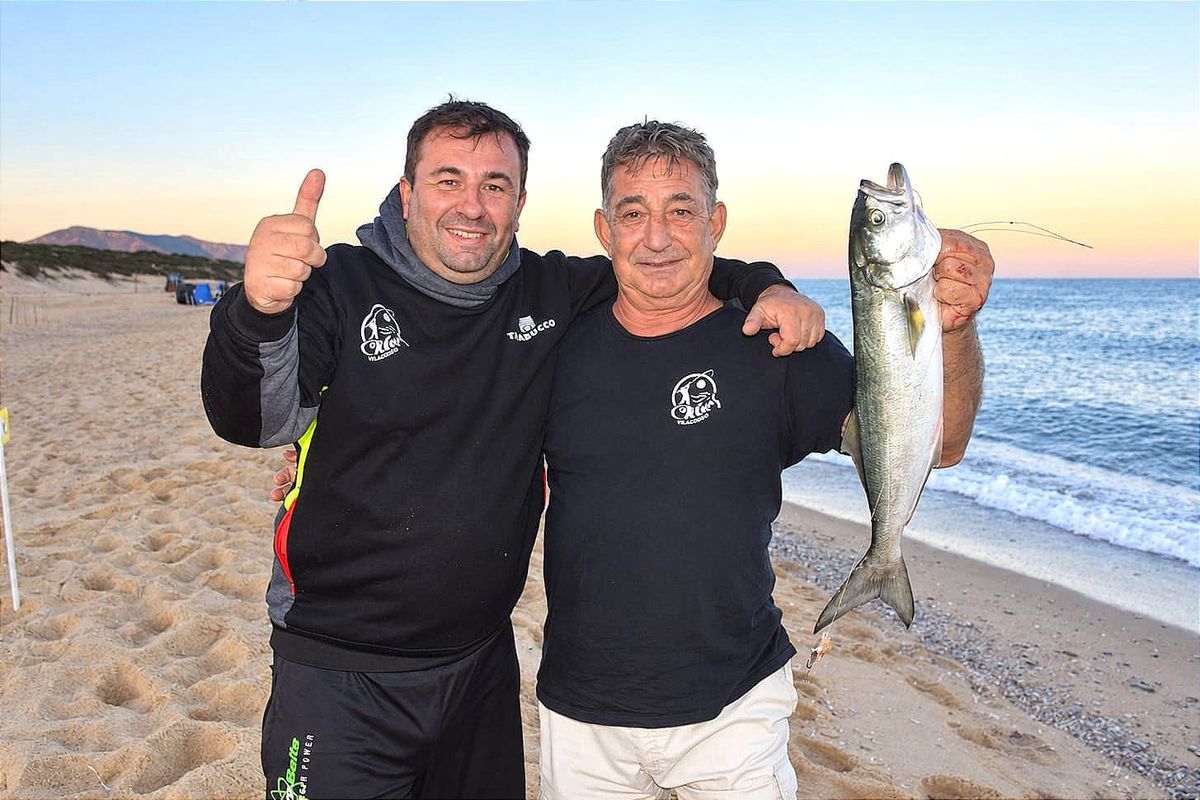
È di Marco Mossa e Fabrizio Caddeo il serra più grande, il big fish che ha regalato loro la vittoria. Questa volta la splendida spiaggia di Piscinas è stata avara di catture con tutti i garisti arrivati da ogni angolo della Sardegna e pure dal “continente”.
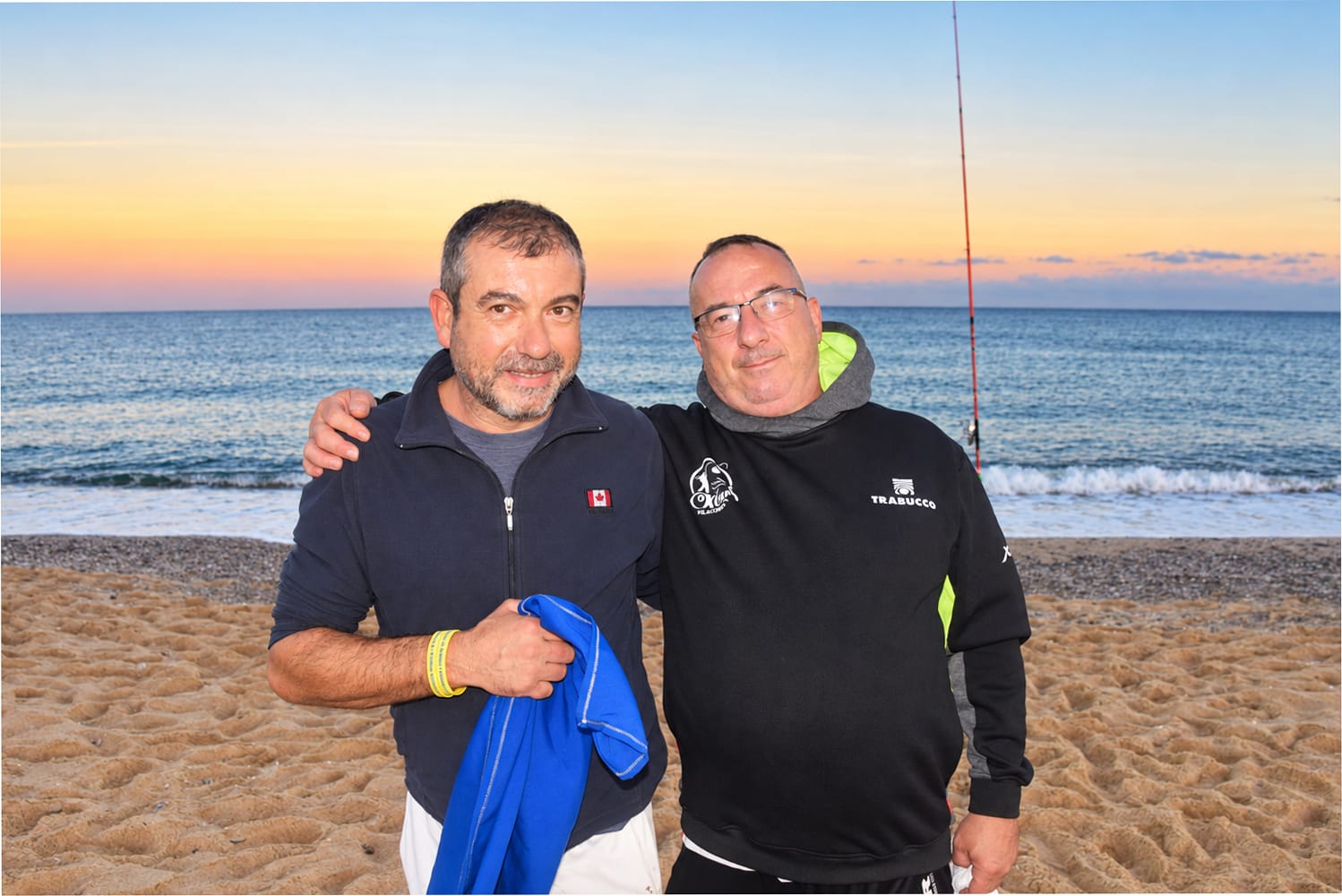
Foto in alto: Fabrizio Caddeo e Marco Mossa, stanchi dopo una faticosa notte di pesca, posano con il serra, preda più grossa della manifestazione. Oltre a questa cattura, Fabrizio e Marco hanno portato alla bilancia altre 5 prede valide che gli hanno garantito la vittoria del trofeo.
Fabrizio Caddeo and Marco Mossa, exhausted after a demanding night of fishing, pose with their bluefish, the biggest fish of the event. They also brought five other qualifying fish to the scales, securing victory in the trophy.
Il vento soffia da est, alle spalle dei pescatori e trasporta i profumi dell’elicriso e della macchia mediterranea fino alla riva. C’è freddo all’alba di domenica 6 settembre, un freddo benvenuto dopo troppi mesi di caldo anomalo e insopportabile; la felpa che quasi dimenticavo di portare con me e che ho lanciato sul sedile posteriore distrattamente, adesso mi trasmette un minimo di calore, indispensabile per raggiungere i picchetti più lontani. Sono qui per seguire il Big Fish, una classica del surfcasting che nei decenni ha costruito la sua fama sulla bellezza dello spot, Piscinas, e sulla particolare formula che prevede il trasporto dei concorrenti alle postazioni con l’aiuto dei trattori e la cena di mezza notte che di fatto divide la pescata in due manche. Raggiungo i primi pescatori, ancora assonnati.
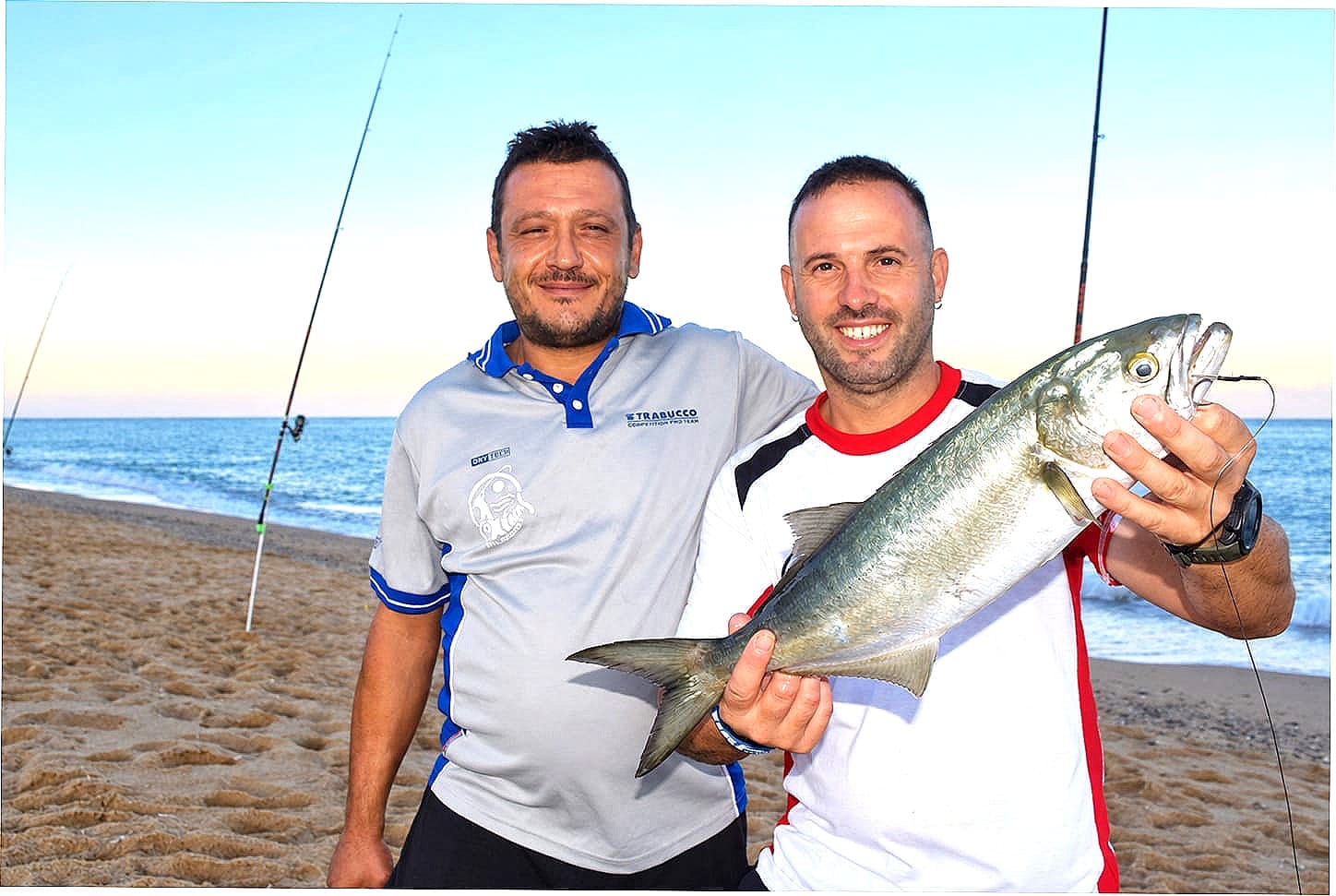
Tutto prima dell’alba - A guardare il mare nelle deboli luci dell’alba imminente, si intuisce subito che deve essere stata una notte dura: mare piatto con un vento teso che soffia da terra e non permette neanche la formazione di poca schiuma nella impercettibile risacca; non proprio l’ideale per questo spot con un digrado veloce che regala il meglio nelle giornate di scaduta di maestrale. Ecco Stefano Ghiani e Andrea Muntoni, portacolori della società organizzatrice, le Aquile di Mare di Arbus. Stefano conferma le mie impressioni: “Abbiamo dato il via alla gara al tramonto, ma sino alla pausa per la cena praticamente non ci sono state catture. E proprio durante la cena mi hanno raccontato di alcuni attacchi a vuoto sul trancio di muggine, segno che i serra, anche se poco, erano presenti. Con Andrea abbiamo iniziato a vedere qualche tocca intorno alle 4 del mattino, ma nulla di grosso”. I 44 box partecipanti, provenienti da tuttta la Sardegna e anche da oltre Tirreno, sono posizionati prima e dopo il vecchio molo, retaggio di un passato minerario e ormai distrutto dalle mareggiate. Storicamente questa gara è stata vinta quasi sempre dai picchetti più a sud e quindi mi sposto in quella direzione, sperando di trovare qualche pescatore intento in un recupero fruttuoso.
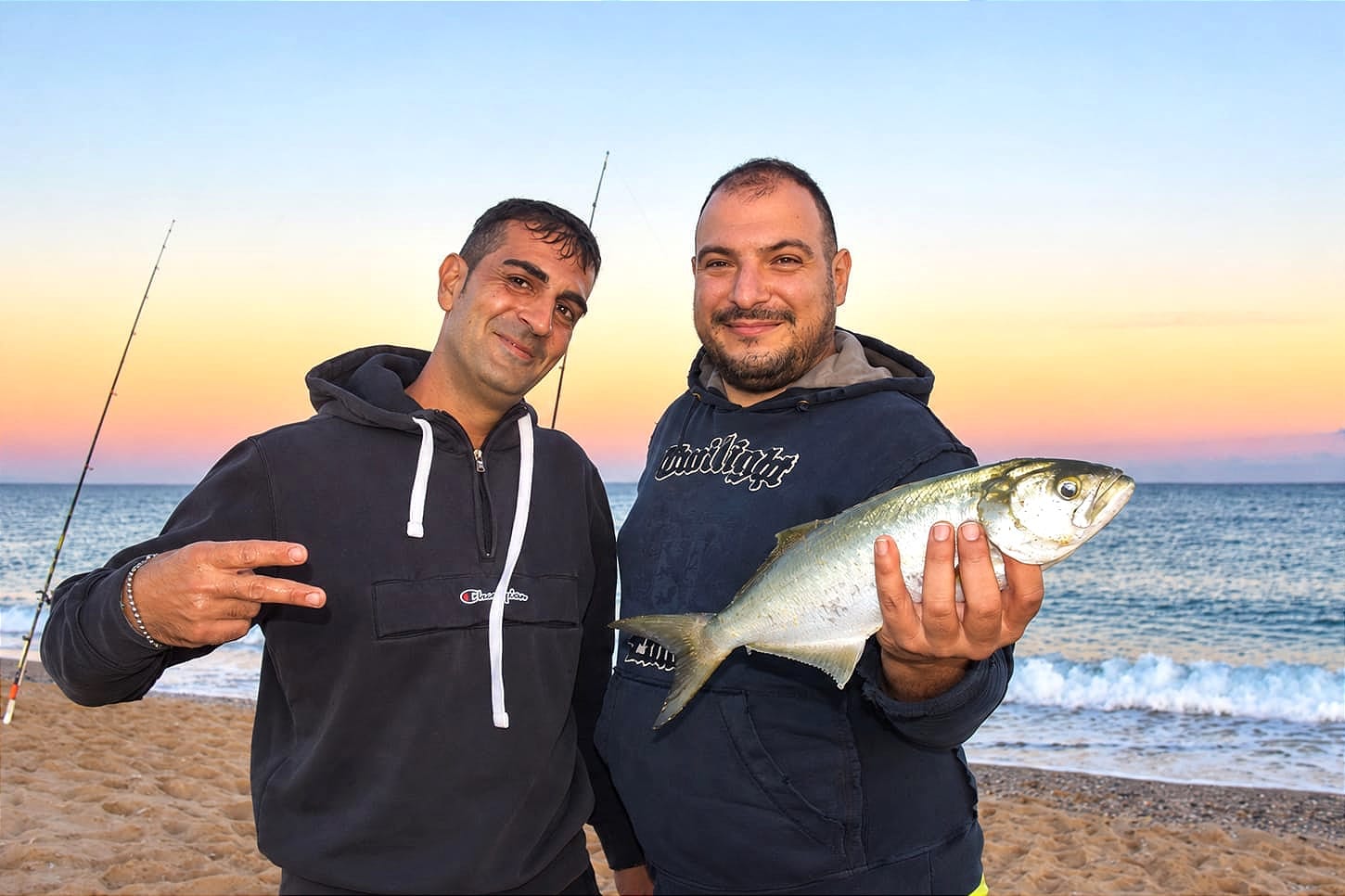
Il cielo adesso è chiaro a est e i partecipanti combattono il sonno tentando le ultime carte prima del fine gara. Raggiungo Andrea Cotza e Alessandro Atzeni che mi mostrano la loro unica cattura, un serra pescato poco prima del mio arrivo; non sono certo euforici perché la preda non raggiunge il chilo, ma quando io, nel ruolo di Radio Pesca, li informo che basterà poco per andare in premiazione, gli si illuminano gli occhi. La loro unica, sudatissima cattura gli regalerà infatti il terzo posto assoluto. Oramai manca meno di un’ora alla fine della gara; chi nella notte le ha provate tutte senza risultati, adesso si affida al trancio di muggine (compaiono anche tranci di spigola e di pollo…), nel tentativo di estrarre il “serra” dal cilindro. Scorgo e mi avvicino al picchetto di Marco Mossa e Fabrizio Caddeo, due scafati pescatori che di certo non si fanno intimorire da condizioni di pesca difficili.
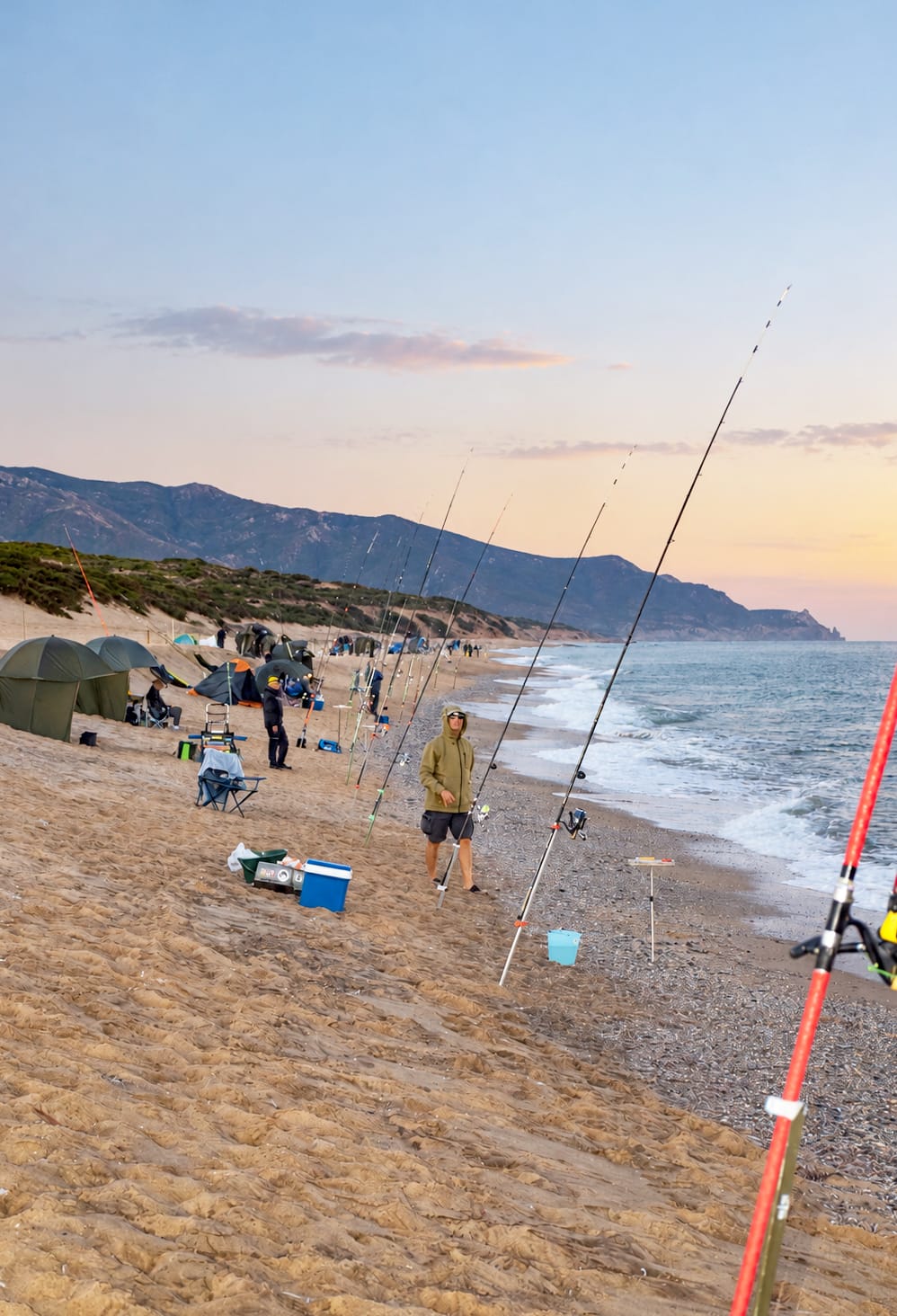
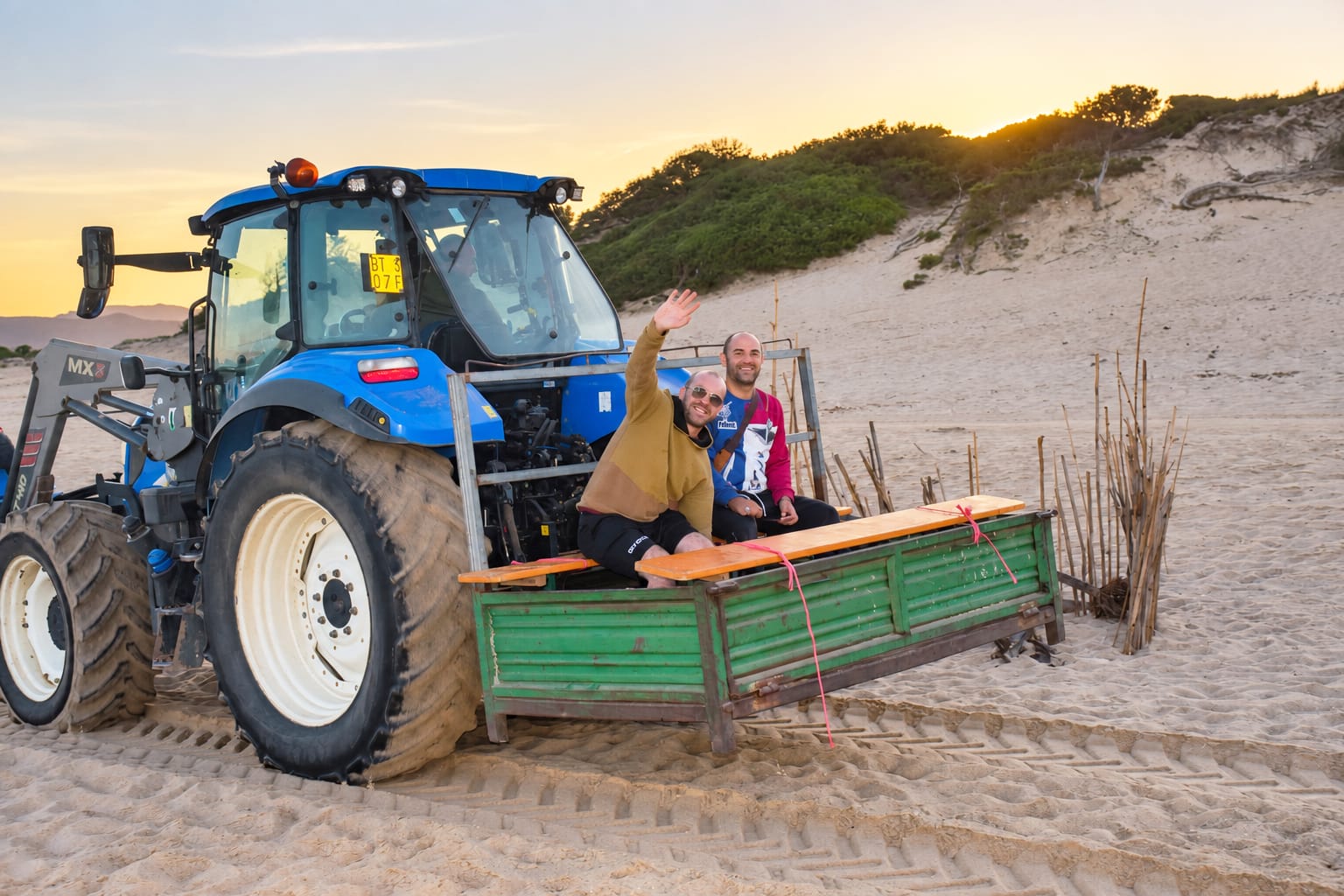
Uno scorcio del campo gara nella stupenda spiaggia di Piscinas. Il trattore riporta i pescatori al campo base dove si è svolta la colazione, la pesatura e la premiazione. A view of the competition stretch on the magnificent beach of Piscinas. The tractor takes the anglers back to base camp for breakfast, the weigh-in and the prize-giving.
E infatti hanno un secchio promettente con 6 prede valide da cui spunta la coda di un serra di 1,3 chili. La cattura è arrivata intorno alle 3 di notte dopo che però Fabrizio e Marco avevano avuto tutti e due altri attacchi a vuoto. I quasi 2 chili di pescato totale sono abbastanza per sperare e infatti alla fine la vittoria sarà loro. Ma con un po’ di suspense, visto che poco più in là, quasi alla fine del campo gara, ci sono Andrea Tocco e Nicola Porta, anche loro con un serra che però la bilancia confermerà essere più piccolo di quello pescato da Marco. Il podio è fatto, il sole giallo oro sorge dalle alte dune dello stesso colore e in un attimo la felpa è superflua. La colazione premia i coraggiosi pescatori che hanno voluto rinnovare il rito del Big Fish. Visto che ormai è chiaro che le estati saranno sempre più lunghe e calde, in futuro sarebbe meglio spostare la manifestazione in autunno. Lo merita il Big Fish e il suo popolo.
English version
The Big Fish Diehards
By Federico Melis
Marco Mossa and Fabrizio Caddeo landed the biggest bluefish—the “big fish” that secured their victory. This time, the stunning beach of Piscinas yielded few catches for the competitors who had travelled from every corner of Sardinia and even from mainland Italy.
The wind blows from the east, behind the anglers, carrying the scent of helichrysum and Mediterranean scrub down to the shore. It is cold at dawn on Sunday, 6 September, a welcome chill after too many months of unusually intense, unbearable heat. The sweatshirt I almost forgot to bring, casually tossed onto the back seat, now provides just enough warmth for the walk to the most distant pegs.
I am here to cover Big Fish, a classic surfcasting competition whose reputation has grown over the decades thanks to the beauty of Piscinas and its distinctive format. Tractors transport competitors to their pegs, while a midnight dinner effectively divides the fishing into two sessions. I reach the first anglers, still bleary-eyed.
All Before Dawn
A glance at the sea in the faint light of approaching dawn tells me it must have been a tough night. The water is flat, with a brisk offshore wind preventing even the slightest foam from forming in the barely perceptible surf. These are hardly ideal conditions for this steeply shelving beach, which fishes best as the swell subsides after a mistral.
Here are Stefano Ghiani and Andrea Muntoni, representing the organising club, Aquile di Mare from Arbus. Stefano confirms my impressions: “We started the competition at sunset, but there were virtually no catches before the dinner break. During dinner, I heard about a few missed strikes on mullet chunks—a sign that there were at least some bluefish around. Andrea and I started getting a few bites at around four in the morning, but nothing big.”
The 44 competing pairs, from all over Sardinia and across the Tyrrhenian Sea, are stationed on either side of the old pier, a relic of the area’s mining past, now destroyed by storms. Historically, this competition has almost always been won from the southernmost pegs, so I head in that direction, hoping to find someone reeling in a worthwhile fish.
The sky is now brightening in the east, and competitors are fighting off sleep as they try their last few tricks before the competition ends. I reach Andrea Cotza and Alessandro Atzeni, who show me their only catch, a bluefish landed shortly before my arrival. They are hardly elated, as it weighs less than a kilo. But when I take on the role of “Fishing Radio” and tell them that even a modest catch could earn them a prize, their eyes light up. Indeed, that single, hard-earned fish will secure them third place overall.
There is now less than an hour left. Those who tried everything overnight without success are turning to mullet chunks—though pieces of sea bass and chicken also make an appearance—in the hope of pulling a bluefish out of the hat.
I spot Marco Mossa and Fabrizio Caddeo and walk over to their peg. These two seasoned anglers are certainly not intimidated by difficult fishing conditions. Sure enough, their bucket looks promising: it contains six qualifying fish, with the tail of a 1.3 kg bluefish sticking out. That fish was caught at around three in the morning, after both Fabrizio and Marco had already missed other strikes.
Their total catch of almost 2 kg gives them reason to hope, and victory will indeed be theirs. There is a little suspense first, though: a short distance away, almost at the far end of the competition stretch, Andrea Tocco and Nicola Porta also have a bluefish. The scales will confirm that theirs is smaller than Marco’s.
The podium places are settled. The golden sun rises above the equally golden dunes, and suddenly my sweatshirt is no longer needed. Breakfast rewards the hardy anglers who have once again upheld the Big Fish tradition. With summers clearly becoming longer and hotter, moving the event to autumn would be a better option in future. Big Fish and its faithful competitors deserve it.
Commenti ()